Loading blog post...


How Private Blockchain Networks Improve Enterprise Security
While public blockchains prioritize radical decentralization, enterprise security requires a different approach: control. As digital risk surfaces expand, organizations are turning to private blockchain networks to eliminate single points of failure while maintaining strict data confidentiality. By limiting participation to verified entities and enforcing granular access controls, private blockchains offer a secure, scalable architecture for supply chains, finance, and global operations.
Security is now a strategic priority. As enterprises digitize operations, supply chains, and financial processes, the risk surface expands. Centralized databases, while familiar, create single points of failure that are increasingly targeted.
This is where the concept of a private blockchain becomes highly relevant. Unlike open networks, private blockchain systems are designed with controlled participation, stronger governance, and enterprise-grade compliance in mind.
While discussions often focus on public blockchain, many enterprises are turning to private blockchain networks to strengthen internal security, streamline access control, and protect sensitive operational data.
Understanding Public Blockchain and Private Blockchain Differences
Before diving into enterprise benefits, it helps to understand the distinction between a public blockchain and private blockchain model.
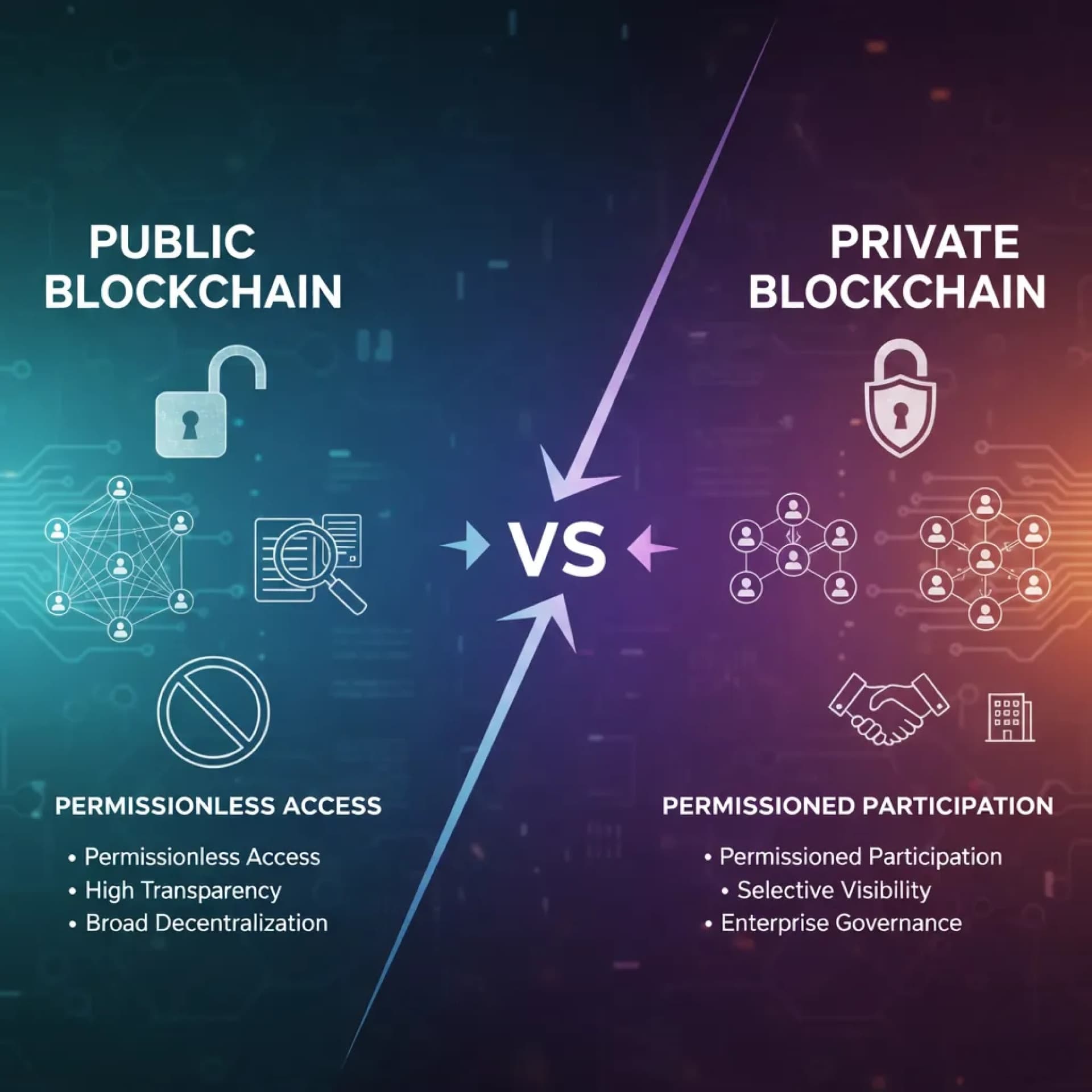
A public blockchain allows anyone to participate, validate transactions, and access data. It operates as a transparent public ledger in blockchain systems where decentralization is maximized.
A private blockchain, by contrast, restricts participation to approved entities. It emphasizes controlled access rather than full openness.
Here’s where pointers clarify the difference:
Public blockchain:
- permissionless access
- high transparency
- broad decentralization
Private blockchain:
- permissioned participation
- selective visibility
- enterprise-level governance
Both models serve different purposes, but enterprises often prioritize security, compliance and controlled access over total openness.
Why Enterprise Environments Favor Private Blockchain Security
In enterprise environments, data confidentiality is critical. Financial records, internal communications, and intellectual property cannot be exposed publicly.
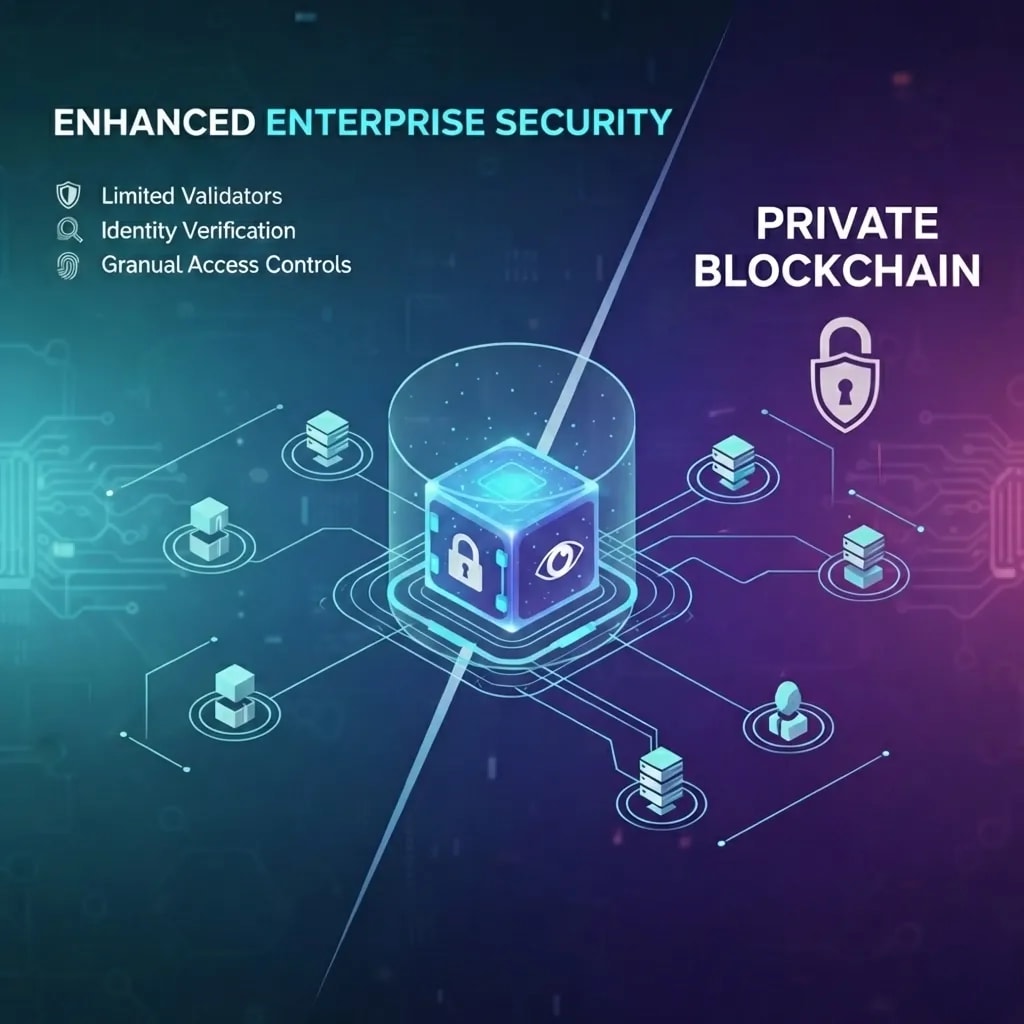
A private blockchain improves blockchain security by:
- limiting validator participation
- enforcing identity verification
- enabling granular access controls
Because only authorized participants interact with the network, attack vectors are significantly reduced compared to fully open systems.
This is why many enterprise leaders view private networks as a more practical application of blockchain and security principles.
For organizations exploring enterprise deployments, our blockchain consulting services help design secure private infrastructures. Get in touch today.
Private Blockchain Example: Secure Supply Chain Tracking
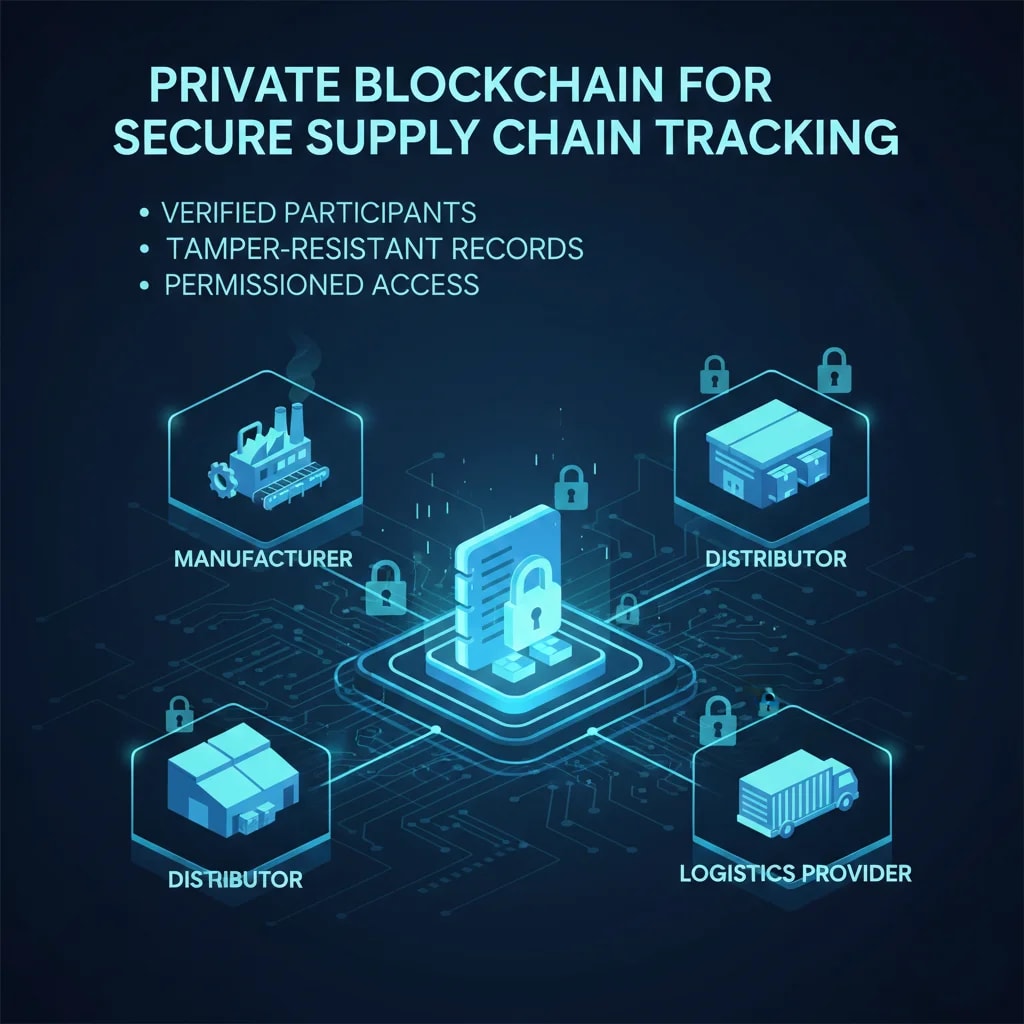
A common private blockchain example can be found in enterprise supply chains. Multiple stakeholders: manufacturers, distributors and logistics providers need shared visibility without exposing sensitive data publicly.
A private blockchain allows:
- verified participants only
- tamper-resistant transaction records
- shared but permissioned access
Unlike a blockchain public model, this system balances transparency within the network while maintaining confidentiality externally.
For companies building such systems, our custom blockchain application development services support secure enterprise implementations.
How Public and Private Blockchain Models Impact Risk Exposure
Risk management differs dramatically between public and private blockchain networks.
Public blockchains benefit from large validator networks and economic incentives that reinforce integrity. However, they also operate in fully transparent environments.
Private blockchains, on the other hand, reduce exposure by limiting participants and enforcing strict governance rules.
Enterprise risk reduction includes:
- reduced data leakage
- tighter compliance oversight
- faster incident containment
For organizations handling regulated data, these features are critical components of enterprise security strategy.
Blockchain Is Secure But Context Matters
It is often said that blockchain is secure, and this statement holds true when the network is properly designed. However, security is not just about cryptography, it’s about governance and architecture.
In enterprise settings, security requires:
- defined access policies
- robust identity management
- monitoring and audit capabilities
Private blockchains allow companies to align distributed ledger technology with internal compliance frameworks, strengthening both transparency and control.
For enterprises implementing advanced governance models, EthElite’s blockchain development services provide end-to-end security architecture.
Balancing Decentralization With Enterprise Control
One concern often raised is whether a private blockchain undermines decentralization. The answer depends on context.
While public systems maximize decentralization, enterprise networks prioritize operational integrity and accountability. In many cases, a hybrid approach combines:
- internal private networks for sensitive operations
- public blockchain integration for transparency or tokenization
This balance ensures security without sacrificing interoperability.

Blockchain and Security in Enterprise Governance
Enterprise adoption of blockchain extends beyond IT departments. Governance models must adapt as well.
Private blockchain systems support:
- controlled validator nodes
- predefined consensus rules
- transparent audit trails
These features align with broader enterprise governance needs, ensuring that distributed systems strengthen rather than complicate organizational control.
The Strategic Role of Private Blockchain in Enterprise Growth
As enterprises expand globally, secure collaboration becomes more complex. Shared infrastructure that maintains data integrity across borders is increasingly necessary.
Private blockchain networks provide:
- consistent recordkeeping across departments
- real-time synchronization
- reduced reconciliation errors
In high-stakes industries like finance, healthcare, and logistics, this security-first architecture supports both operational efficiency and regulatory compliance.
FAQ: Private Blockchain and Enterprise Security
Q: What is a private blockchain?
A: A permissioned blockchain network restricted to authorized participants.
Q: How does it differ from a public blockchain?
A: Public networks are open to anyone, while private networks limit access.
Q: Is blockchain secure for enterprise use?
A: Yes, especially when combined with strong governance and access control.
Q: Can enterprises use both public and private blockchain?
A: Yes, hybrid models are increasingly common.
Q: Why do enterprises prefer private blockchain?
A: For enhanced security, compliance and operational control.
Conclusion
The debate between public blockchain and private blockchain is not about which model is better, it’s about which model fits the use case.
For enterprises, governance, controlled access, and regulatory alignment often matter more than radical transparency. A private blockchain delivers the structure needed to safeguard sensitive operations while still leveraging the advantages of distributed ledger systems.
As organizations continue digitizing critical infrastructure, private blockchain networks will increasingly shape enterprise security strategies not by rejecting decentralization, but by tailoring it to operational realities. This is the lens EthElite bring to enterprise blockchain consulting: aligning architecture with business risk, compliance needs, and long-term scalability rather than ideology.
Share with your community!