Loading blog post...


How DeFi Staking Platforms Distribute Rewards Through Onchain Logic
Ever wondered how your staking rewards actually land in your wallet? Behind the high APYs of DeFi lies a complex engine of immutable onchain logic. This guide pulls back the curtain on the smart contracts that automate reward calculations, ensuring transparency and fairness in the decentralized ecosystem without the need for traditional middlemen.
Staking has become one of the most widely used mechanisms in decentralized finance. From earning passive income to securing networks, crypto staking sits at the heart of many DeFi platforms. But while users focus on APYs and staking rewards, the real story unfolds behind the scenes inside smart contracts executing onchain logic.
Understanding how DeFi staking actually distributes rewards helps users trust platforms and helps Web3 developers design systems that are fair, transparent, and sustainable. This guide breaks down how modern DeFi staking platforms work under the hood and why onchain logic is essential for reward distribution.
What Staking Means in DeFi Applications
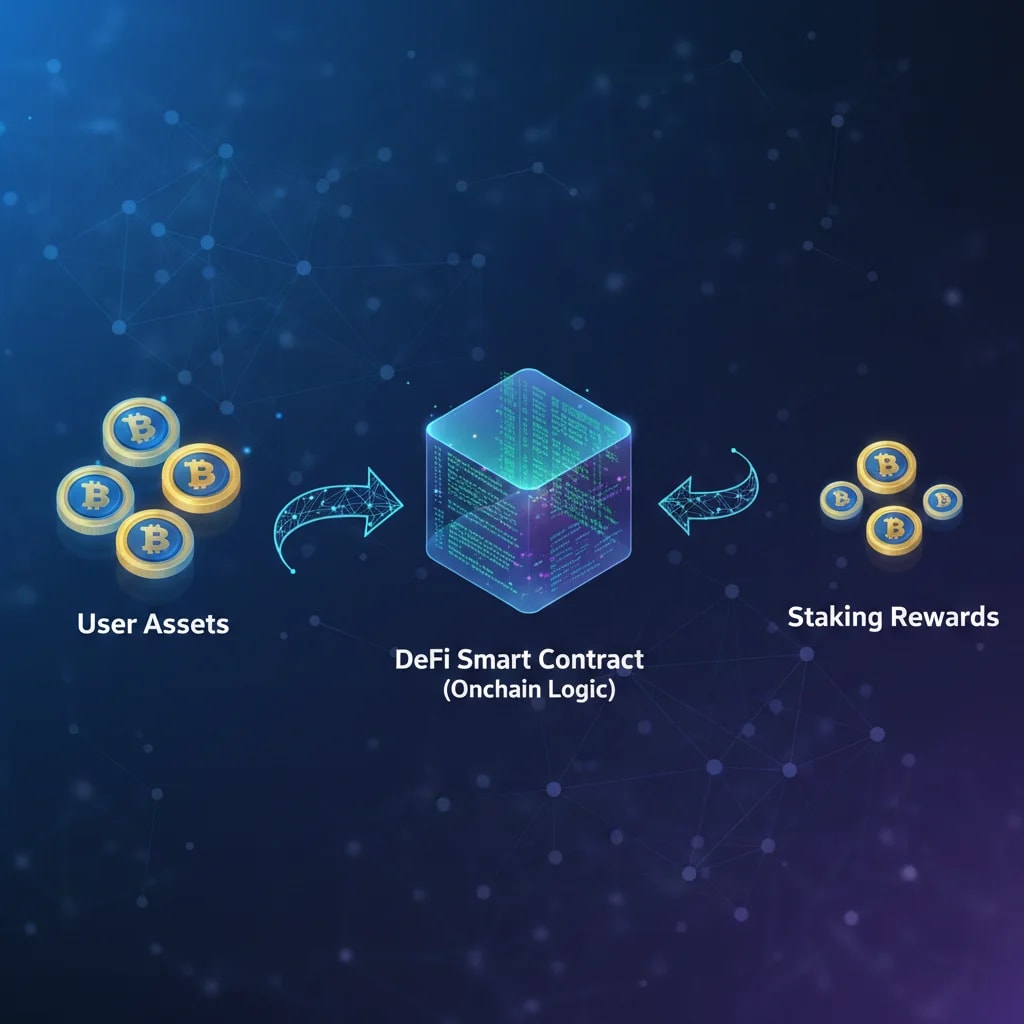
At its core, staking in decentralized finance is the act of locking assets into a DeFi application to support protocol operations such as liquidity provisioning, validation, or governance in exchange for rewards.
Unlike centralized yield programs, staking crypto in DeFi relies entirely on smart contracts. These contracts define:
- how assets are locked
- how rewards accrue
- when withdrawals are allowed
This automated structure is what allows DeFi projects to operate without intermediaries.
Teams designing secure staking flows, check out our custom Web3 development services that help translate financial logic into reliable onchain systems. Get a free consultation.
Onchain Logic as the Backbone of DeFi Staking Rewards
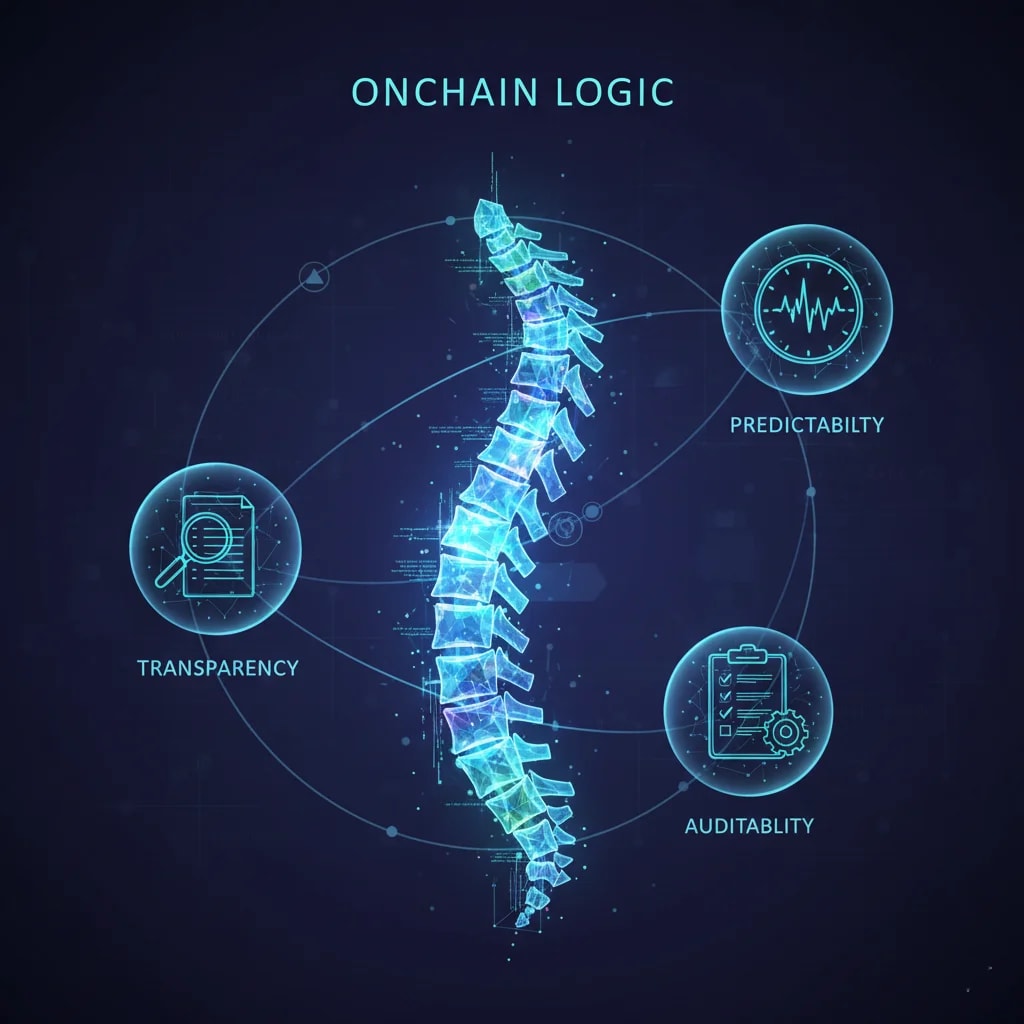
Every DeFi staking platform distributes rewards using deterministic onchain rules. There is no manual calculation or discretionary payout. Everything is encoded into smart contracts.
These rules typically govern:
- reward rates
- distribution frequency
- eligibility conditions
Here, pointers help clarify why this matters:
Onchain logic ensures:
- transparency for users
- predictability for protocols
- auditability for developers
For any web3 development company, this is what separates trustless systems from opaque yield products.
How Smart Contracts Calculate Staking Rewards
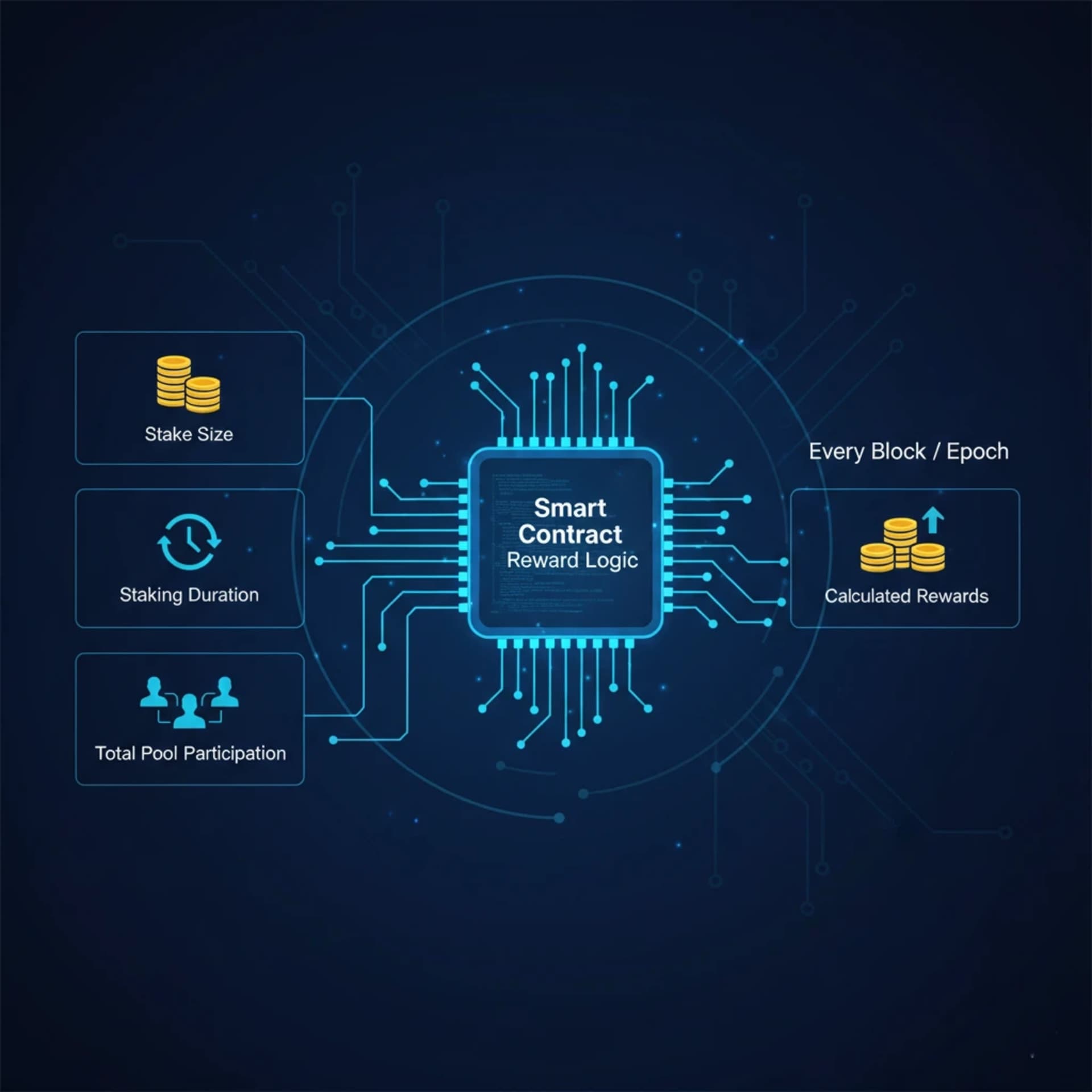
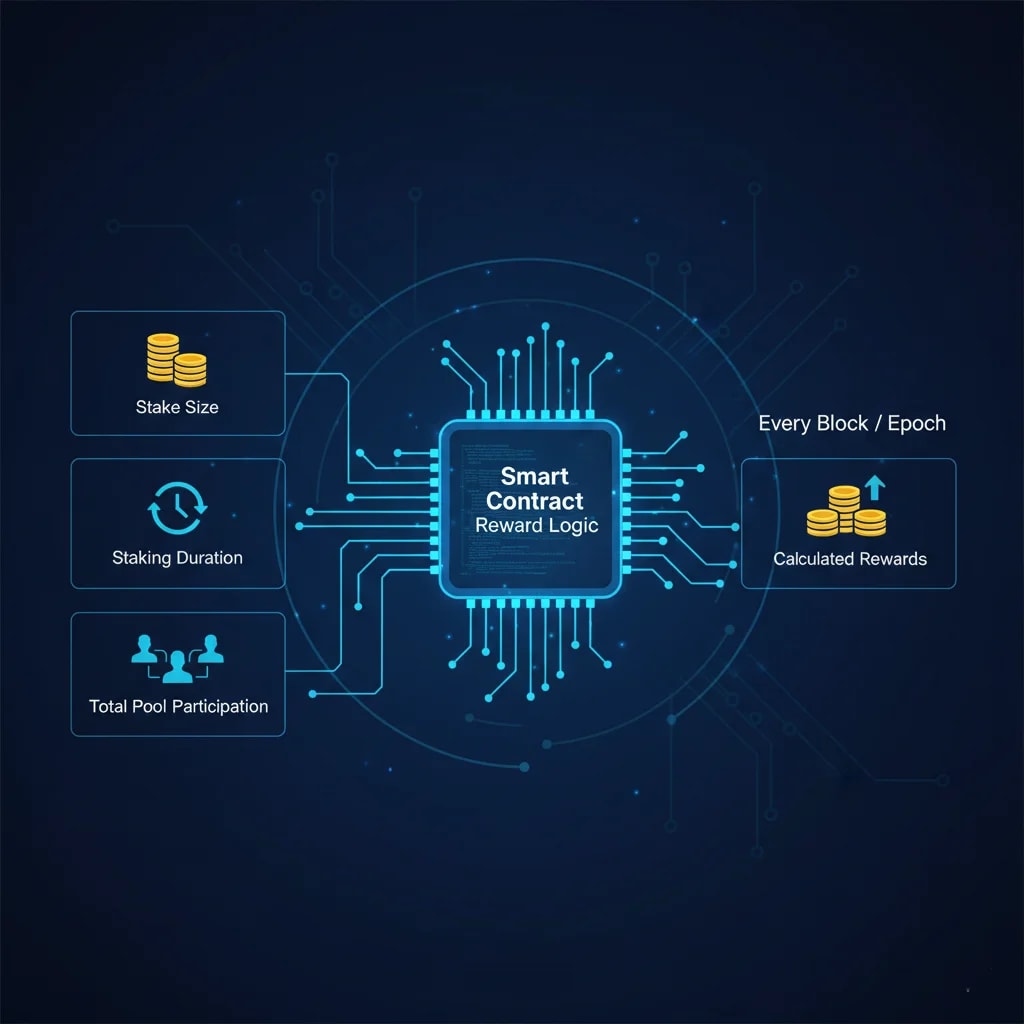
Reward calculation is one of the most sensitive parts of any DeFi app. Even small errors can lead to over-distribution or unfair allocation.
Most DeFi staking systems calculate rewards based on:
- stake size
- staking duration
- total pool participation
These calculations happen every block or epoch, depending on the protocol. Because everything is onchain, users can verify reward logic independently, one of the key advantages of decentralised finance.
For teams building staking mechanisms, our smart contract development services focus on precision and safety.
Reasons for Reward Distribution Occurring Without Custodians
In traditional finance, rewards are distributed by centralized entities but in DeFi platforms, distribution is done by code.
After user stakes assets:
- the contract tracks ownership
- rewards accumulate programmatically
- withdrawals follow predefined rules
This eliminates counterparty risk and allows defi crypto to scale globally.
This is why crypto staking remains one of the strongest use cases for decentralized finance.
Tokens in DeFi Staking Systems
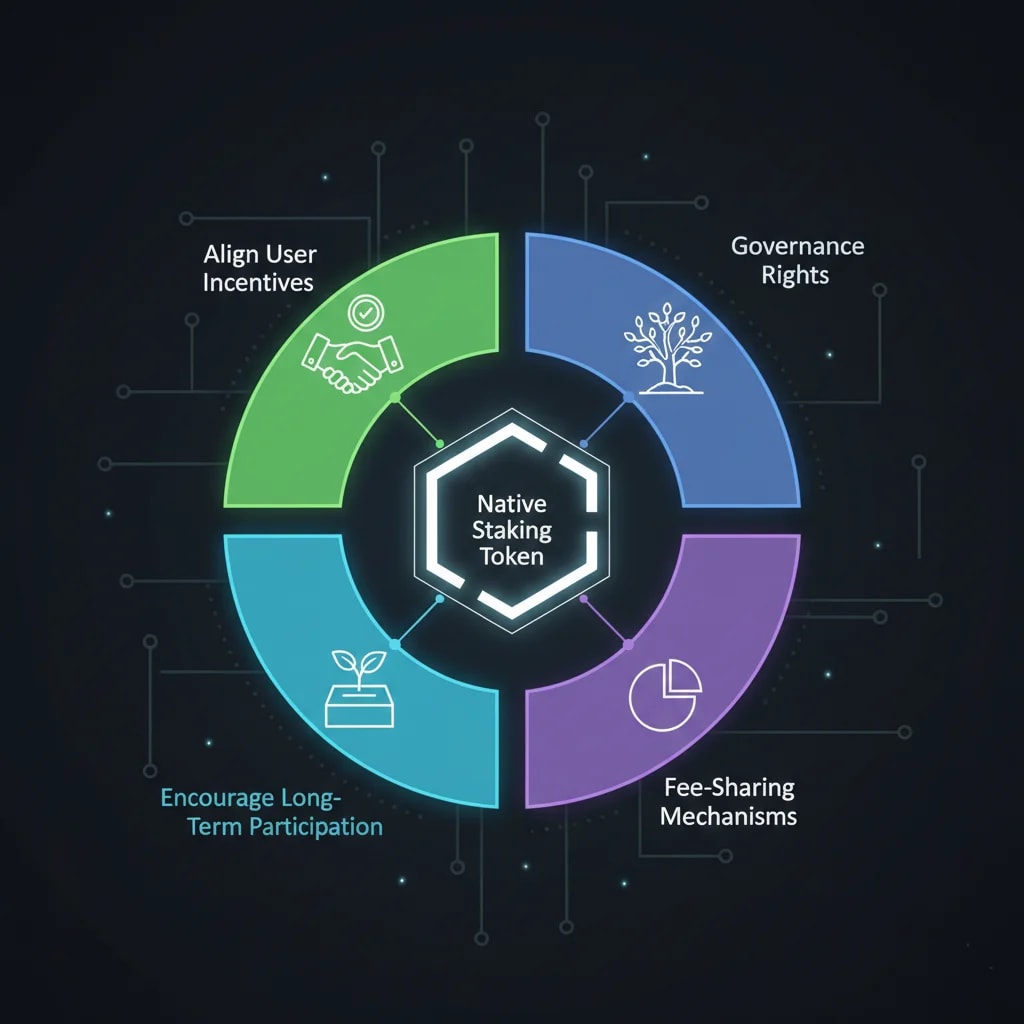
Numerous DeFi staking models use native tokens called DeFi coins to distribute rewards. These tokens represent participation, governance rights or fee-sharing mechanisms.
In practice, staking tokens:
- align user incentives
- encourage long-term participation
- reduce speculative churn
For Web3 devs, token design and staking logic must evolve together. Poor alignment between the two can destabilize even popular DeFi projects.
For sustainable token systems, our token design services help align economics with protocol goals.
Why Web3 Development Choices Matter for Staking Platforms
The performance of a staking platform depends heavily on its underlying blockchain. Factors like transaction speed, fees, and finality affect user experience.
Chains like Solana (SOL) are increasingly popular for DeFi staking platforms because they allow:
- frequent reward updates
- low-cost transactions
- real-time interactions
For blockchain developers, infrastructure selection directly influences staking efficiency and scalability.
Security and Risk Management in DeFi Staking Applications
While onchain logic provides transparency, it must also be secure. Vulnerabilities in staking contracts can lead to reward manipulation or asset loss.
Well-designed DeFi applications implement:
- capped reward rates
- withdrawal cooldowns
- emergency pause mechanisms
These safeguards protect both users and protocols, reinforcing trust in defi platforms.
How DeFi Staking Platforms Maintain Fairness Over Time
As participation grows, staking systems must adapt. Onchain logic allows protocols to adjust reward rates dynamically based on usage and supply.
This adaptability ensures:
- rewards remain sustainable
- early users aren’t unfairly diluted
- long-term contributors are incentivized
For web 3 development companies like EthElite, designing adaptive reward logic is key to platform longevity.
FAQ: DeFi Staking and Onchain Rewards
Q: What is DeFi staking?
A: Locking crypto assets in smart contracts to earn rewards in decentralized finance.
Q: How are staking rewards calculated?
A: Through onchain logic based on stake size, duration, and pool parameters.
Q: Are DeFi staking rewards guaranteed?
A: No. Rewards depend on protocol rules and participation levels.
Q: Why is onchain logic important?
A: It ensures transparency, automation, and trustless execution.
Q: Do Web3 developers control reward distribution?
A: Only through code. Once deployed, smart contracts execute autonomously.
Conclusion
DeFi staking platforms don’t distribute rewards through promises or discretion, they do it through immutable onchain logic. This design is what gives decentralized finance its transparency, predictability, and global reach.
For users, knowing how staking rewards are calculated builds confidence in the protocol. For Web3 developers and Web3 development companies, staking design is a systems problem—where security, incentive alignment, and edge-case handling matter as much as yield mechanics. It’s the kind of work experienced build teams like EthElite tend to approach with an audit-first, logic-before-marketing mindset.
As DeFi continues to mature, the protocols that last will be the ones whose onchain logic earns trust block by block, not just attention at launch.
Share with your community!