Loading blog post...


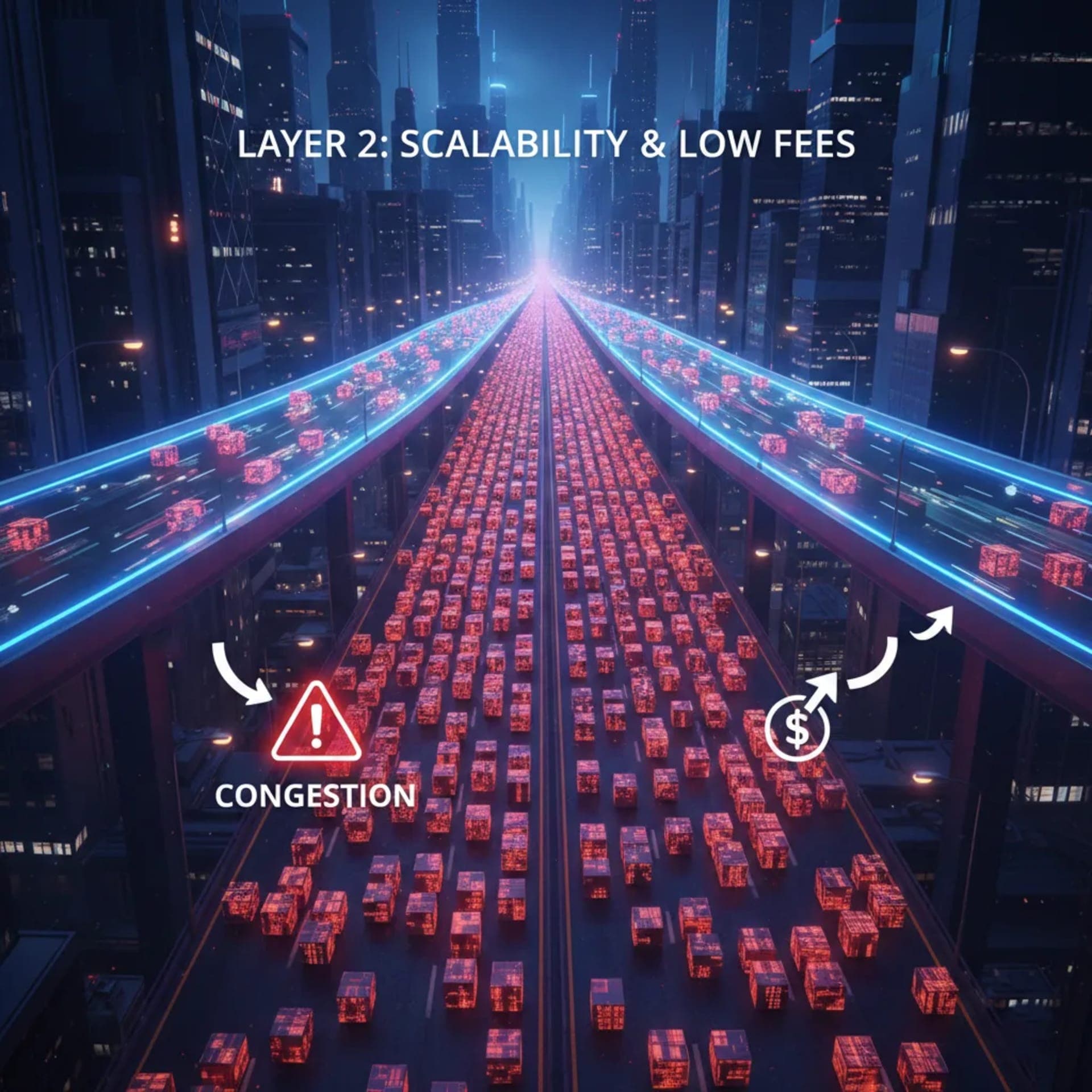
6 Ways Blockchain Layer 2 Reduces Gas Fees and Improves Scalability
In 2026, blockchain development has evolved from simple smart contract scripting into a sophisticated multi-layered architecture. Success no longer depends on a single language, but on a cohesive stack that balances EVM compatibility, high-performance execution, and seamless user interfaces. Whether you are engineering a modular Layer-2, a high-throughput Solana program, or a ZK-powered dApp, choosing the right tool for the right layer is critical. Explore the 6 essential languages defining the decentralized web this year.
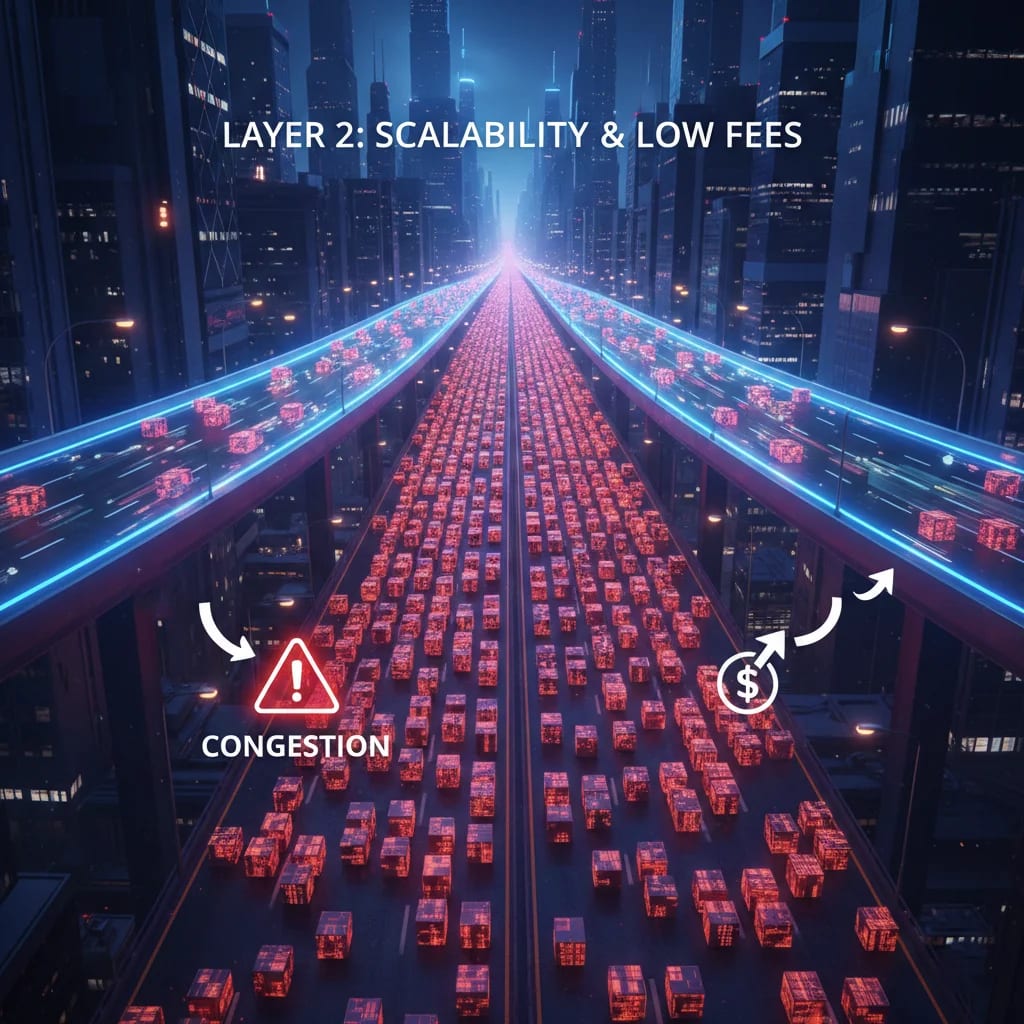
Public blockchains changed digital trust forever. But as adoption increased, so did congestion, rising gas fees, and performance bottlenecks.
This is where blockchain layer 2 solutions step in.
Instead of replacing the base blockchain layer, Layer 2 builds on top of it, improving performance without compromising decentralization. Today, layer 2 blockchains are central to achieving real scalability and long-term network scalability.
Let’s break down six powerful ways L2 transforms blockchain performance.
1. Off-Chain Transaction Processing in Blockchain Layer 2
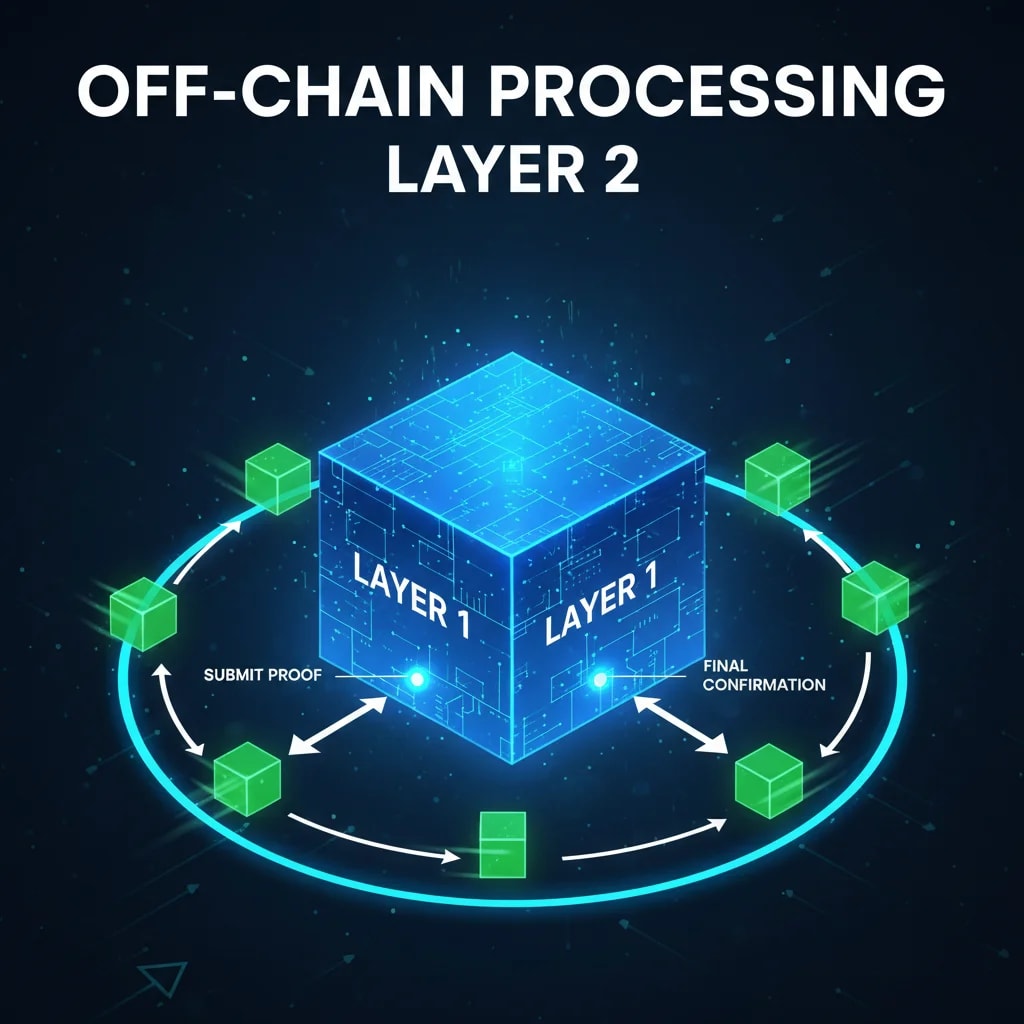
One of the core advantages of blockchain layer 2 is moving transactions off the main chain while still leveraging its security.
Instead of recording every action directly on Layer 1:
- Transactions are processed off-chain.
- Only final proofs or summaries are submitted to the base blockchain layer.
- This drastically reduces on-chain congestion.
Fewer on-chain transactions = lower gas fees.
This model improves network scalability by allowing thousands of operations to occur without overwhelming the primary network.
If you're exploring scaling infrastructure, visit our web for Blockchain Scaling Solutions and connect today to get started.
2. Rollup Technology in Layer 2 Blockchains
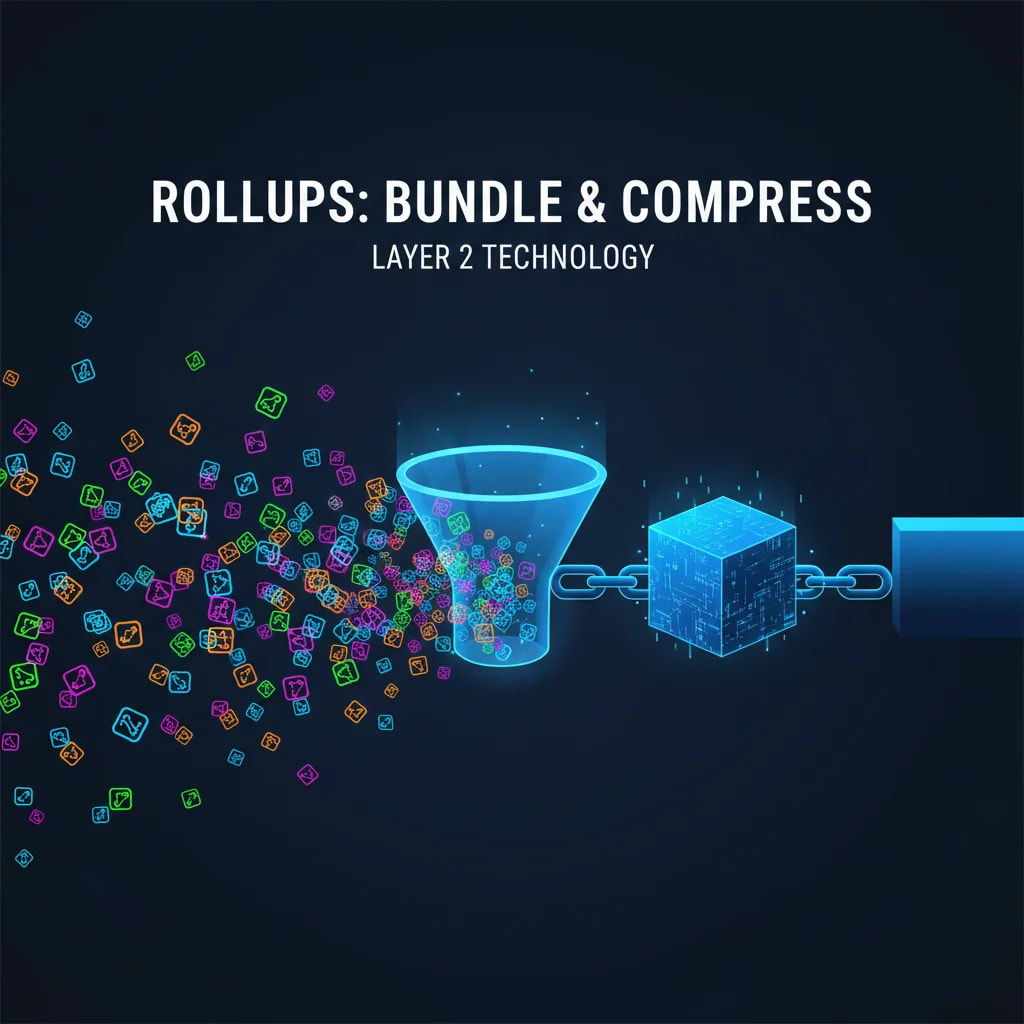
Rollups are one of the most widely adopted mechanisms in layer 2 blockchains.
They work by:
- Bundling multiple transactions together
- Compressing them into a single proof
- Submitting that proof to Layer 1
Instead of paying gas for each transaction, users share costs across bundled operations.
Benefits include:
- Significantly lower gas fees
- Faster transaction confirmation
- Improved overall scalability
Rollups preserve security because transaction data is still anchored to the main blockchain layer, but the heavy processing occurs in L2 environments.
3. State Channels for Instant, Low-Cost Transactions
Another method used in blockchain layer 2 infrastructure is state channels.
State channels allow participants to:
- Conduct multiple transactions privately
- Finalize results on-chain only once
- Avoid repetitive gas charges
For example, in high-frequency environments such as gaming or micropayments, L2 channels ensure smooth execution without repeated exposure to fluctuating gas fees.
This approach strengthens network scalability by minimizing load on the base blockchain.
4. Optimized Data Compression & Scalable Database Architecture
Modern layer 2 blockchains integrate advanced data compression techniques, making them behave like a more scalable database system layered over the base network.
Instead of storing every detail on-chain:
- Transaction data is compressed.
- Only essential information is anchored.
- Redundant storage is minimized.
This reduces computational overhead while maintaining integrity.
A more efficient data structure means:
- Reduced storage costs
- Improved throughput
- Sustainable long-term scalability
The combination of L2 compression and Layer 1 security creates a hybrid model that is secure yet performance-oriented.
5. Parallel Execution for Network Scalability
Traditional blockchains process transactions sequentially, limiting throughput.
Some advanced blockchain layer 2 architectures introduce parallel processing models.
This means:
- Multiple transactions are validated simultaneously
- Congestion is reduced
- Confirmation times improve
Parallel execution significantly enhances network scalability, especially during peak demand.
Rather than increasing the load on the base blockchain layer, L2 distributes computational work intelligently.
Explore how optimized blockchain architectures function in our custom Blockchain Development Services.
6. L2 Ecosystems Reduce Gas Fee Dependency
One overlooked advantage of L2 adoption is ecosystem-level efficiency.
As more decentralized applications migrate to layer 2 blockchains:
- User activity shifts away from expensive Layer 1 execution
- Demand pressure on the base chain decreases
- Average gas fees stabilize
This migration supports sustainable growth.
Instead of scaling vertically (increasing base chain capacity), blockchain layer 2 scales horizontally, expanding ecosystem capacity without compromising decentralization.
This architectural evolution strengthens both cost efficiency and performance.
Why Blockchain Layer 2 Is Essential for Future Scalability
Without Layer 2, mass adoption would strain existing blockchain infrastructure.
To support global-scale applications, networks need:
- Lower transaction costs
- Faster execution speeds
- Efficient data handling
- Improved scalable database behavior
- Strong network scalability
Blockchain layer 2 delivers these capabilities while maintaining the integrity of the underlying chain. It basically enhances the foundation.
FAQs on Blockchain Layer 2
Q: What is blockchain layer 2?
A: Blockchain layer 2 refers to scaling solutions built on top of a base blockchain layer to improve scalability and reduce gas fees while inheriting Layer 1 security.
Q: How do layer 2 blockchains reduce gas fees?
A: They process transactions off-chain, bundle multiple operations together, and submit compressed proofs to Layer 1, significantly lowering individual transaction costs.
Q: Is Layer 2 secure?
A: Yes. Most layer 2 blockchains anchor transaction data or proofs to the main blockchain layer, ensuring strong security guarantees.
Q: Why is scalability important in blockchain networks?
A: Without scalability and strong network scalability, blockchains face congestion, slower transactions, and rising gas fees during peak usage.
Conclusion
The future of blockchain adoption will hinge on performance, not promise.
From rollups and state channels to data compression and parallel execution, layer 2 blockchains are reshaping what scalable decentralized systems can realistically achieve.
By lowering gas fees and improving scalability, L2 solutions open the door to use cases that were previously impractical from high-frequency DeFi interactions to gaming economies and enterprise workflows. But scaling isn’t automatic. It requires thoughtful integration between base-layer security and second-layer execution, something build-focused teams like EthElite increasingly prioritize when architecting modern Web3 systems.
As blockchain ecosystems mature, growth will come from intelligently expanding what’s built on top of the base layer.
Share with your community!