Loading blog post...


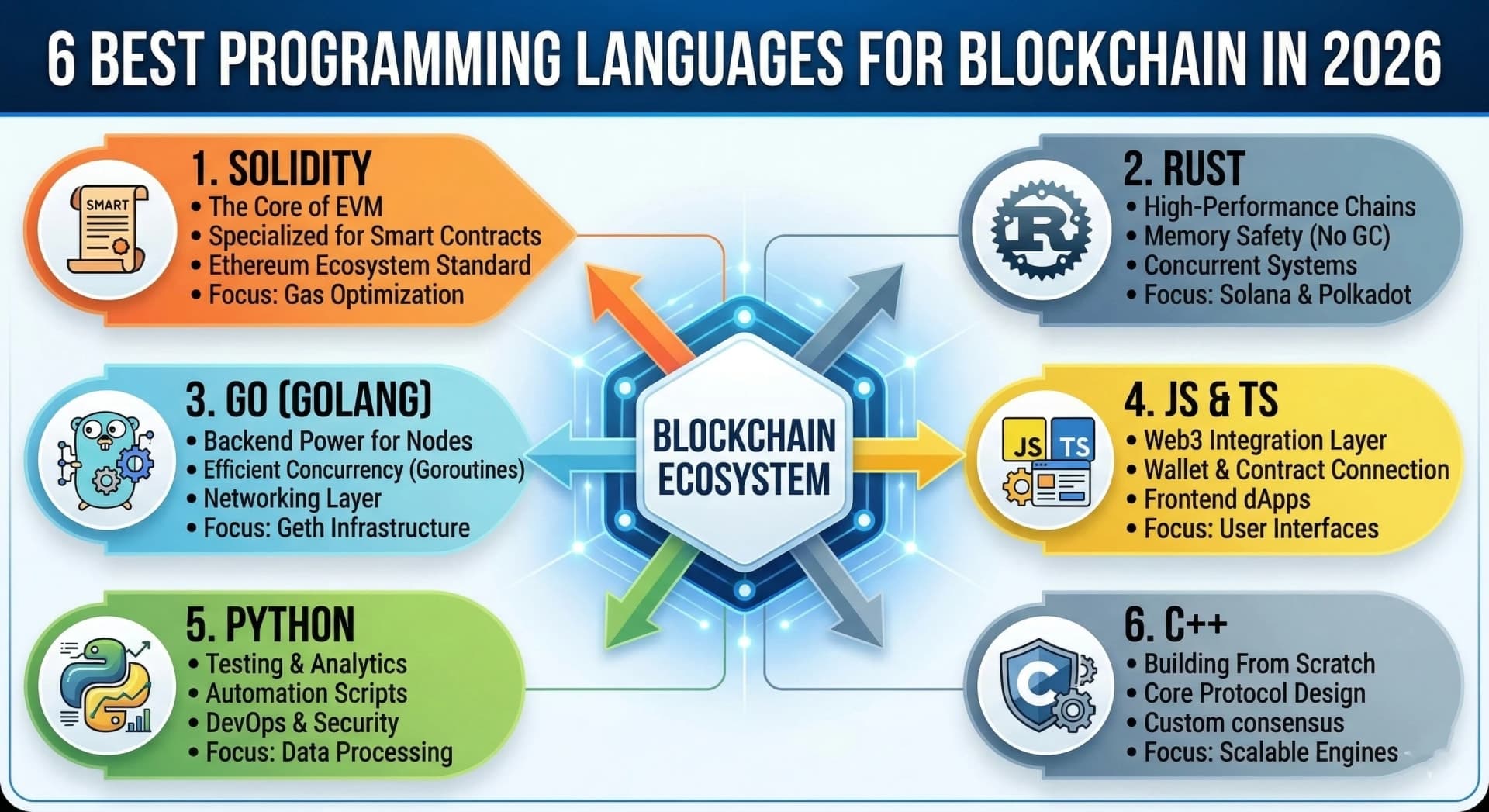
6 Best Programming Languages for Blockchain Development in 2026
In 2026, blockchain development has evolved far beyond simple smart contracts. Building a modern decentralized ecosystem requires a strategic mix of performance, security, and scalability. Whether you are engineering high-speed Layer-1 networks in Rust, dominating the EVM with Solidity, or bridging Web2 users with TypeScript, choosing the right language is your first step toward impact. Explore the 6 essential languages defining the Web3 landscape this year.
Blockchain development in 2026 is no longer limited to writing smart contracts. Modern blockchain development involves backend architecture, frontend integration, node infrastructure, analytics, automation, and even building entirely new chains from scratch.
Choosing the right programming language depends on what you are building:
- Smart contracts
- Blockchain nodes
- Web3 frontend interfaces
- Automation tools
- Full blockchain architecture
Here are the 6 best programming languages for blockchain development in 2026, and where each one fits.
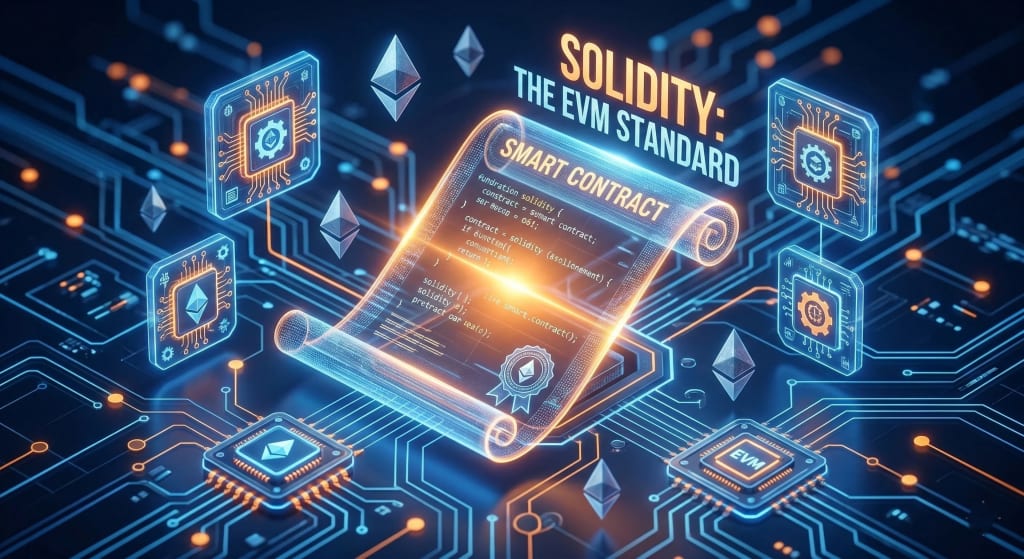
1. Solidity Programming Language – The Core of EVM in Blockchain
When discussing smart contracts, Solidity remains dominant.
The solidity programming language is specifically designed for writing smart contracts on EVM-compatible chains. The EVM in blockchain (Ethereum Virtual Machine) executes Solidity-based contracts across networks like Ethereum and other EVM-supported chains.
Why Solidity matters:
- Designed specifically for smart contracts
- Deep integration with Ethereum ecosystem
- Massive developer community
- Mature tooling and audits
If you're learning Solidity, focus on:
- Contract structure
- Gas optimization
- Security patterns
- Event logging
Effective solidity coding requires understanding reentrancy protection, access control, and safe token standards.
For hands-on execution, explore our Smart Contract Development Services.
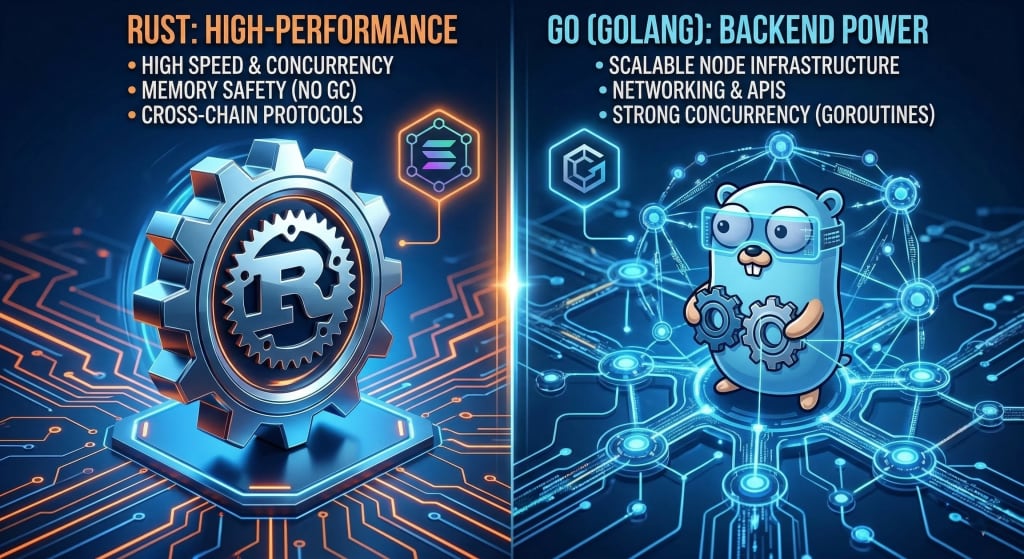
2. Rust for Blockchain Development – High Performance & Security
Rust has become the preferred language for high-performance blockchain ecosystems.
Projects like Solana and Polkadot rely heavily on Rust because it offers:
- Memory safety without garbage collection
- High throughput performance
- Strong concurrency support
- Low-level control with modern syntax
Rust for blockchain development is ideal when building:
- High-speed Layer-1 chains
- Performance-intensive smart contracts
- Cross-chain protocols
Rust balances security with speed, making it a strong choice for scalable blockchain systems.
3. Go Programming Language – Backend Power for Blockchain Nodes
The Go programming language (often called Golang) plays a major role in blockchain infrastructure.
Ethereum’s node implementation (Geth) is built using Go, which highlights its reliability for backend systems.
Why choose golang programming for blockchain?
- Efficient concurrency model
- Lightweight execution
- Strong networking capabilities
- Clean syntax
Developers involved in go development often build:
- Blockchain nodes
- Networking layers
- Backend APIs
- Distributed systems
For those learning golang, mastering goroutines and channel communication is critical. Additionally, golang security practices are essential when building blockchain backends.
If you're planning infrastructure-level architecture, consult our team for custom Blockchain Development Services.
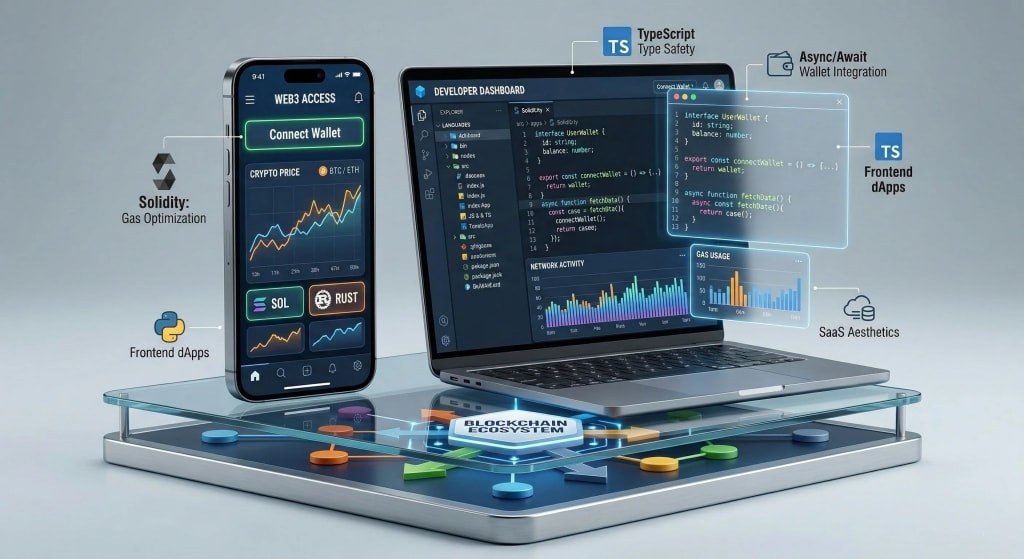
4. JavaScript & TypeScript – Web2 to Web3 Integration Layer
While smart contracts run on-chain, users interact through frontends. That’s where JavaScript and TypeScript dominate.
JavaScript Node JS environments connect wallets, smart contracts, and user interfaces.
Why JavaScript matters in Web3:
- Primary language for frontend dApps
- Integration with wallet APIs
- Seamless Web2-Web3 bridging
- Massive ecosystem support
If you're looking to learn JavaScript, start with:
- A structured javascript tutorial
- Understanding async/await
- Exploring Web3 libraries
- Working with node js
For newcomers, javascript for beginners resources and learn javascript online platforms make entry accessible. The best way to learn javascript is building small Web3 integrations, a smarter way to learn javascript is by connecting a frontend to a deployed smart contract.
TypeScript improves maintainability in large-scale web3 development projects.
5. Python Programming – Testing, Automation & Analytics
While Python is not typically used for writing blockchain core infrastructure, it plays a critical supporting role.
Python programming is widely used for:
- Smart contract testing
- Automation scripts
- Blockchain analytics
- Security research
- Tooling development
If you want to learn python programming, focus on:
- API integration
- Automation frameworks
- Data processing
- Scripting blockchain interactions
Many developers start with python for beginners courses or a python bootcamp before moving into Web3 tooling.
In blockchain ecosystems, python coding often supports DevOps and analytics rather than core protocol logic.
6. C++ Programming – Building Blockchain from Scratch
When designing a blockchain at the protocol level, C++ programming remains one of the most powerful options.
C++ offers:
- Extremely fast execution
- Low-level hardware control
- Memory management flexibility
- Performance optimization
If you're planning to build a new blockchain from the ground up, learn C++ and focus on:
- Distributed systems
- Cryptographic libraries
- Consensus mechanisms
- Network architecture
While complex, C++ provides the performance needed for custom blockchain engines.
Choosing the Right Language for Your Blockchain Project
Different goals require different stacks:
- Smart contracts → Solidity language
- High-performance chains → Rust
- Node infrastructure → Golang programming language
- Web3 frontend integration → JavaScript & TypeScript
- Automation & analytics → Python programming
- Core protocol development → C++ programming
Modern blockchain development companies often combine multiple languages within one project.
FAQs on Blockchain Programming Languages
Q: Which language is best for blockchain development in 2026?
A: It depends on the use case. Solidity is best for EVM smart contracts, Rust for high-performance chains, Go for nodes, JavaScript for Web3 frontend, Python for automation, and C++ for core architecture.
Q: Is learning Solidity enough for blockchain development?
A: No. Solidity is essential for EVM contracts, but full-stack blockchain development often requires JavaScript, Go, or Rust.
Q: Is Rust better than Solidity?
A: They serve different purposes. Solidity is specialized for EVM smart contracts, while Rust is used for high-performance blockchain networks like Solana.
Q: Should beginners start with JavaScript or Python for Web3?
A: For frontend integration, JavaScript is ideal. For automation and analytics, Python is more beginner-friendly.
Conclusion
Blockchain development in 2026 is no longer about choosing a single “best” programming language. It’s about building a cohesive technology stack that aligns with performance goals, security standards, and long-term scalability.
Smart contract execution, backend infrastructure, frontend integration, automation layers, and core protocol architecture all demand different technical strengths. The real advantage lies in knowing when and how to combine them effectively.
EthElite focus on selecting the right architecture for the right use case whether it’s launching an EVM-based decentralized application, engineering a high-performance chain, or building custom blockchain infrastructure from scratch. The objective isn’t just writing code. It’s designing systems that scale, remain secure under pressure, and evolve with the Web3 ecosystem. Avail a free consultation to get started.
In blockchain development, tools are important but architectural clarity is what creates long-term impact.
Share with your community!