Loading blog post...


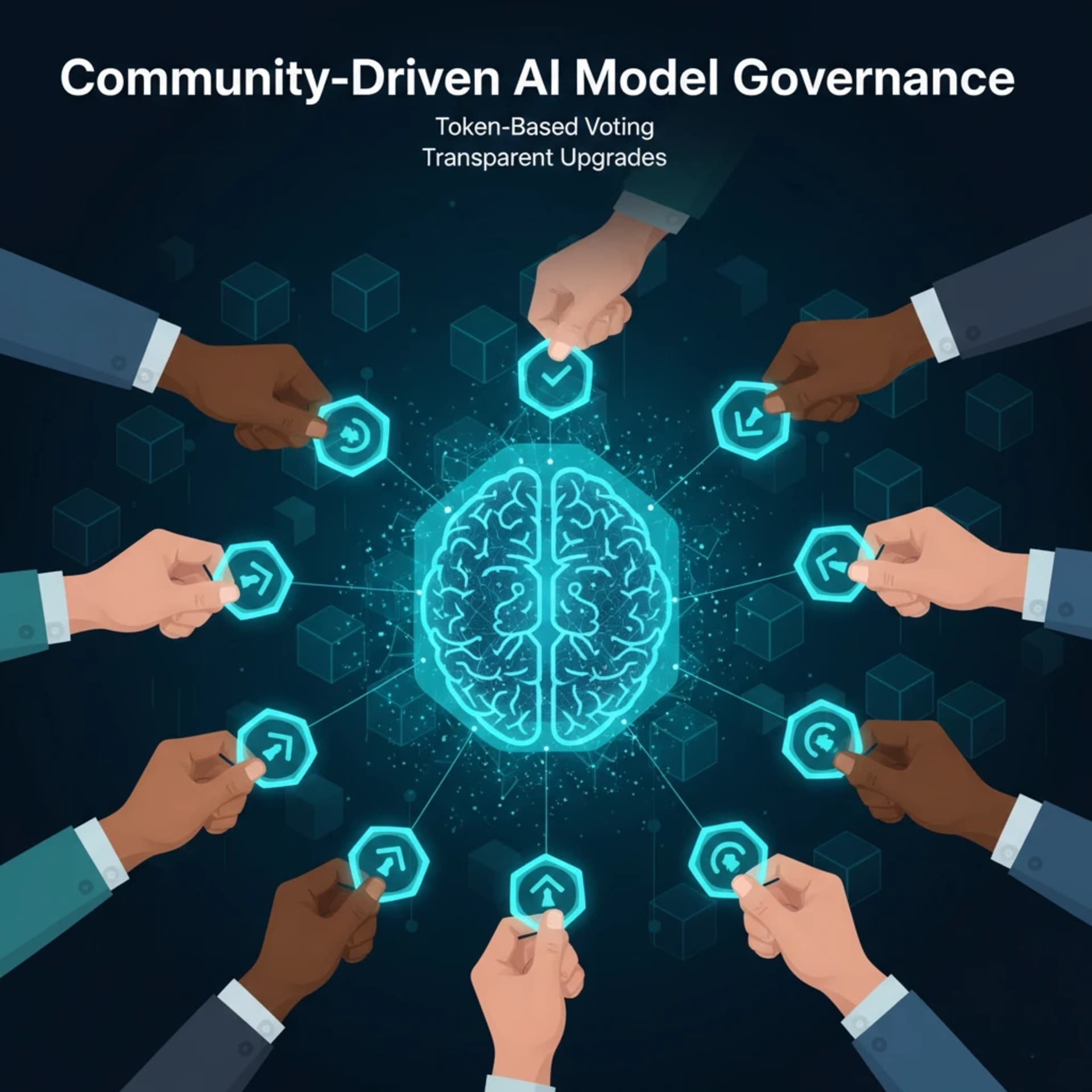
5 Key Use Cases of Decentralized AI in Blockchain
The convergence of Decentralized AI and blockchain is no longer theoretical; it is actively reshaping digital governance. Discover the five most impactful real-world applications from trustless data management to autonomous marketplaces that are moving intelligence away from centralized silos and onto the secure, transparent execution layer of the blockchain.
The convergence of Decentralized AI with blockchain technology is no longer theoretical. It is actively reshaping how intelligence is deployed, governed, and monetized across digital ecosystems.
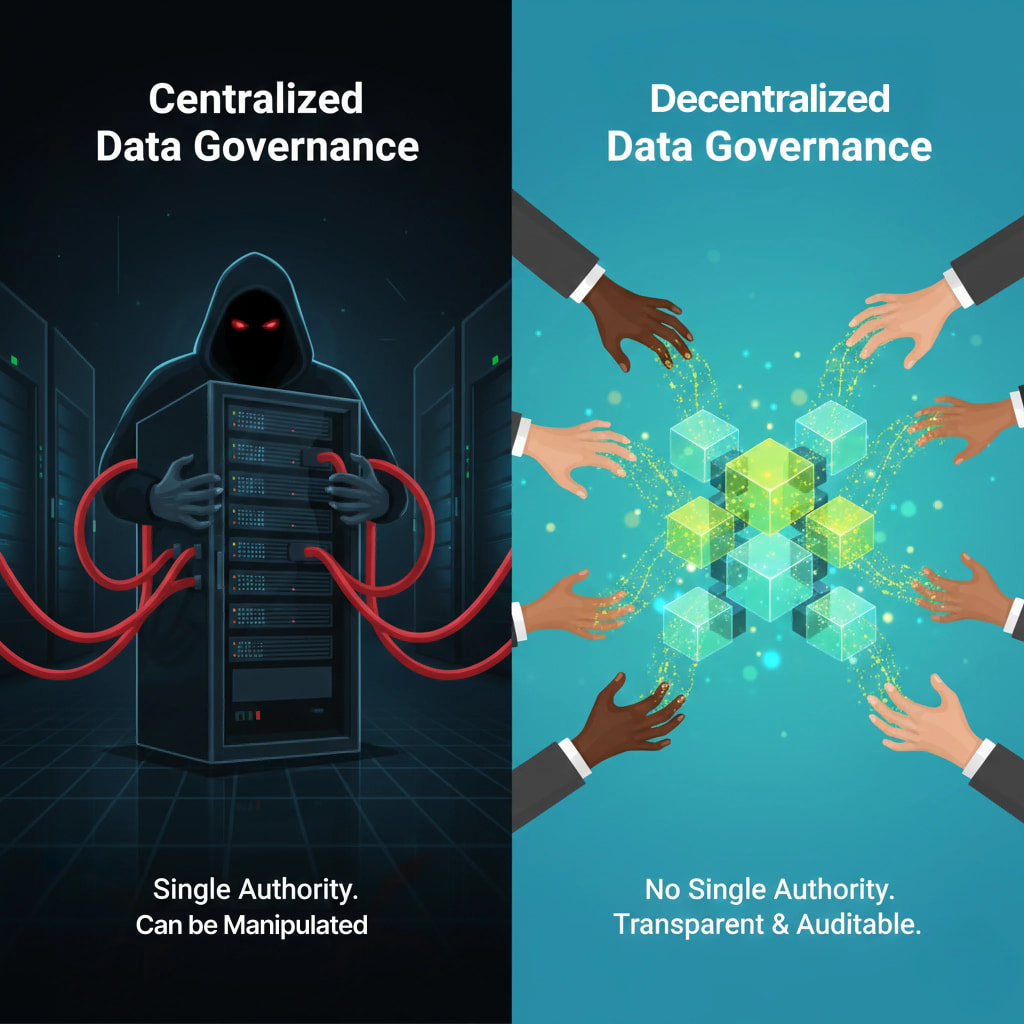
To understand the shift, we must first examine what decentralized truly implies in today’s infrastructure landscape. Traditional AI systems operate under centralized control, data is stored in isolated servers, models are governed by single entities, and decisions lack transparent verification.
In contrast, Decentralized AI distributes model training, validation, and execution across a blockchain network, ensuring transparency, security, and trustless coordination.
Let’s explore the five most impactful real-world applications driving this evolution.
1. Decentralized AI for Trustless Data Governance in Blockchain Systems
Before diving into applications, it’s important to clarify decentralization meaning in technical terms.
Decentralisation meaning refers to distributing authority, decision-making, and data control away from a central entity. In digital infrastructure, this translates into:
- Distributed validation mechanisms
- Shared governance models
- Transparent execution layers
When applied to artificial intelligence, decentralisation ensures that:
- No single authority manipulates training data
- AI model updates are verified on-chain
- Decisions can be audited through the blockchain system
Using smart contracts, AI training contributions can be validated and rewarded automatically. This eliminates centralized manipulation and strengthens integrity across the ecosystem.
To make governance automation work for your blockchain project, check our Smart Contract Development Solutions.
2. Administrative Decentralization in AI Model Governance
One of the most overlooked aspects of decentralisation is administrative decentralization, the transfer of operational authority from a central body to distributed participants.
In Decentralized AI, this means:
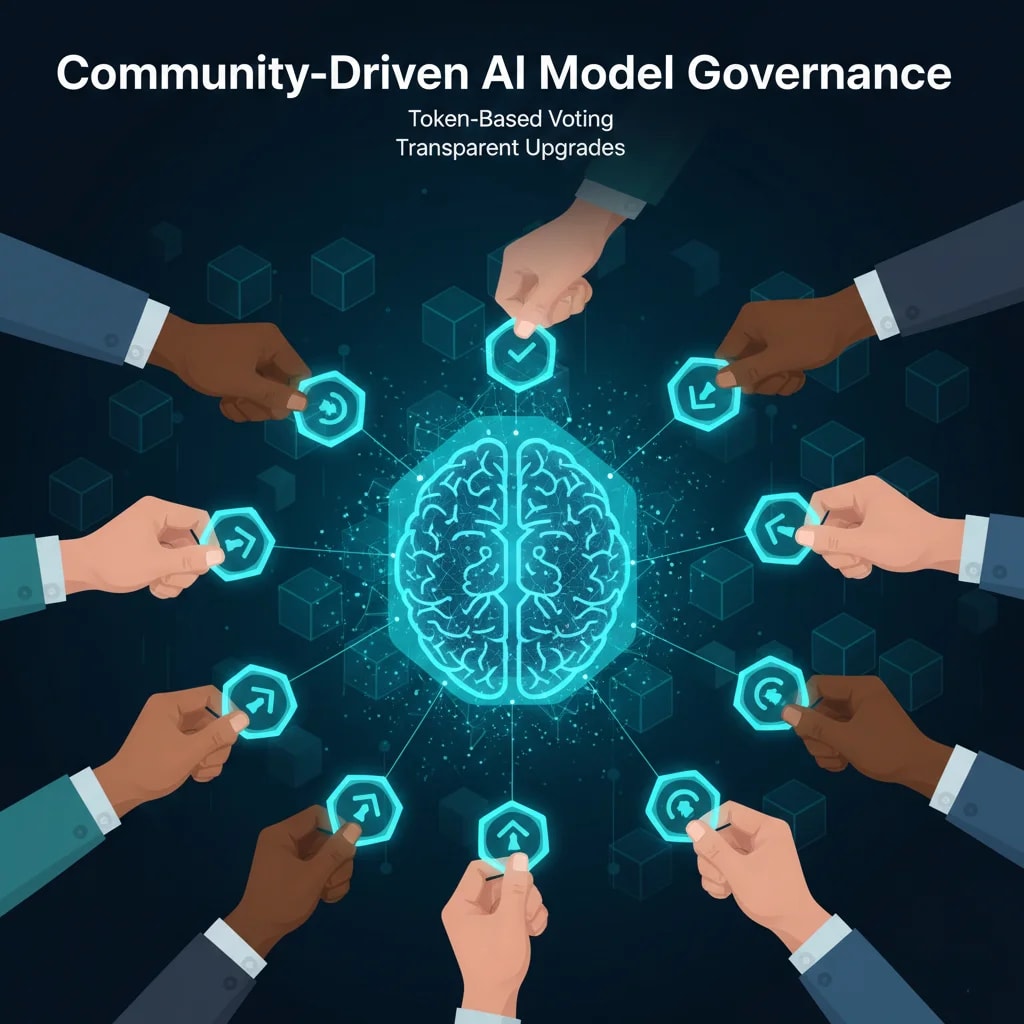
- Community-driven model upgrades
- Token-based voting mechanisms
- Distributed model parameter adjustments
Instead of a corporate board controlling an AI algorithm, governance decisions occur across a blockchain network, enforced by transparent smart contracts.
This reflects the broader decentralisation of power, where authority shifts from institutions to protocol-level governance.
The outcome? AI systems that are:
- Transparent
- Community-auditable
- Resistant to unilateral manipulation
3. Decentralised Planning for Autonomous AI Marketplaces
Another critical use case lies in decentralised planning within AI-driven marketplaces.
In centralized AI platforms:
- Data providers have limited control
- Revenue distribution lacks transparency
- Platform owners capture disproportionate value
With Decentralized AI on blockchain, planning and execution are governed programmatically.
For example:
- AI model creators upload algorithms to a blockchain system
- Users access services via token payments
- Revenue distribution is handled automatically through smart contracts
This structure supports true decentralisation of economic control while maintaining operational efficiency.
If you're exploring decentralized marketplaces, get a free consultation from EthElite on Blockchain Network Development.
4. Types of Decentralization Applied to AI Infrastructure
Understanding the types of decentralization clarifies why Decentralized AI is transformative.
There are typically three structural layers:
- Political Decentralization
Token holders influence protocol direction.
- Administrative Decentralization
Operational control is distributed across nodes.
- Fiscal Decentralization
Revenue flows transparently through smart contract logic.
When these layers combine within a blockchain network, AI systems gain:
- Transparent governance
- Automated compliance
- Economic fairness
- Immutable audit trails
This multi-layered decentralisation strengthens both artificial intelligence performance and accountability.
5. Secure AI Automation Through Smart Contracts & Blockchain Technology
The most powerful application of Decentralized AI lies in autonomous execution.
Here’s how it works:
- AI models generate predictive outputs.
- Smart contracts verify predefined conditions.
- Execution occurs automatically on the blockchain network.
This removes human intervention in critical decision flows.
Industries already benefiting include:
- Decentralized finance (risk modeling & automated lending)
- Supply chain optimization
- Fraud detection systems
- Autonomous trading algorithms
By combining AI with blockchain technology, organizations achieve:
- Transparent logic enforcement
- Reduced operational risk
- Immutable execution records
This synergy transforms the traditional blockchain system from a passive ledger into an intelligent execution layer.
Why Decentralized AI Represents the Future of Blockchain Technology
The real power of Decentralized AI lies in structural transformation.
It enables:
- Decentralisation of power in data economies
- Administrative decentralization in AI governance
- Decentralised planning for scalable ecosystems
- Automated execution through smart contracts
Unlike centralized AI models, decentralized architectures embed trust directly into infrastructure.
For organizations aiming to integrate AI within secure distributed systems, understanding the intersection of artificial intelligence, blockchain, and decentralisation is critical.
Learn more about implementation strategies in our resource on AI & Blockchain Integration Services.
FAQs
Q: What is Decentralized AI?
A: Decentralized AI refers to artificial intelligence systems that operate across distributed blockchain networks, enabling transparent governance, trustless coordination, and onchain validation of model execution.
Q: How does blockchain support decentralized AI?
A: Blockchain technology provides a secure and verifiable blockchain system where AI model updates, decisions, and incentives can be recorded, audited and executed via smart contracts.
Q: What are the types of decentralization in AI infrastructure?
A: The main types include political decentralization (governance voting), administrative decentralization (distributed operations), and fiscal decentralization (transparent revenue distribution).
Q: Why is decentralisation important for AI systems?
A: Decentralisation reduces single points of failure, increases transparency, prevents centralized manipulation, and improves accountability in artificial intelligence models.
Conclusion
We are entering an era where intelligence is no longer confined to centralized servers. The convergence of Decentralized AI, blockchain technology, and automated smart contracts is reshaping how digital trust is created and maintained.
As decentralisation spreads across governance, operational systems, and economic coordination, AI infrastructure itself is becoming more transparent and verifiable. This shift requires careful architectural thinking, an area where teams like EthElite focus on aligning intelligent systems with secure, onchain execution.
Share with your community!