Loading blog post...


What Defines a High-Impact Web3 Website in 2026
By 2026, the Web3 landscape has moved past the era of novelty and buzzwords. Today’s users have been seasoned by market volatility and technical failures, shifting their attention toward competence and reliability. A high-impact Web3 website is no longer judged by how "cool" it looks, but by how confidently it guides users through high-pressure interactions. This article explores the essential pillars of modern Web3 design ranging from transparent communication during transaction delays to the strategic abstraction of technical complexity that separate industry leaders from experimental projects.
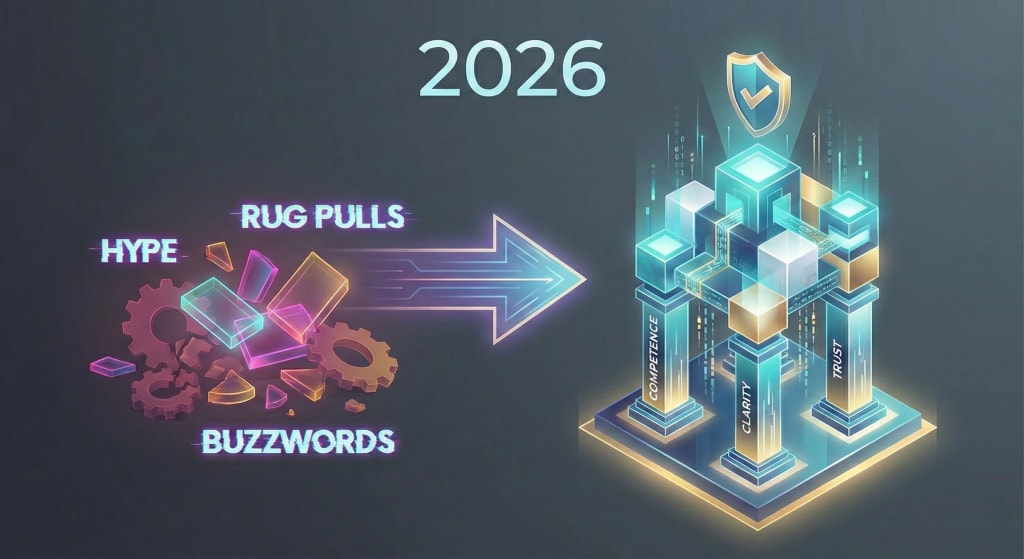
By 2026, Web3 users have matured. They’ve experienced rug pulls, failed mints, frozen interfaces, confusing wallets, and broken claims of decentralization. As a result, attention has shifted away from novelty and toward competence.
High-impact web3 websites are no longer evaluated by how “cool” they look or how many buzzwords they use. They are judged by how confidently users can interact with them under pressure.
The best Web3 websites in 2026 stand out because they remove uncertainty, reduce friction, and maintain credibility when things go wrong, not just when markets are calm.
This article explains what actually defines a high-impact Web3 website today, based on observable behavior across winning web3 website examples and production-ready web3 sites.
Clarity Under Uncertainty Is the Defining Trait of High-Impact Web3 Websites
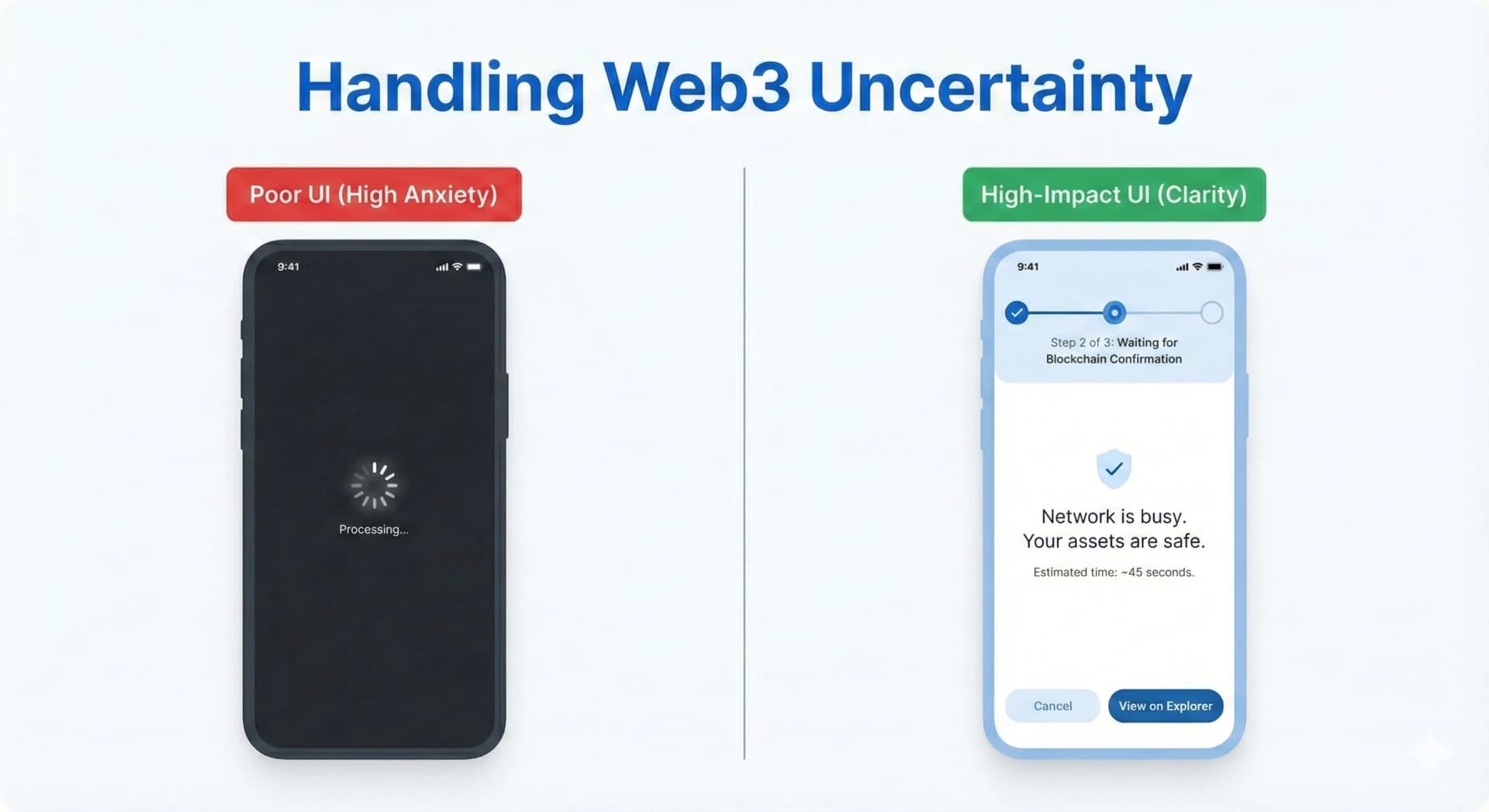
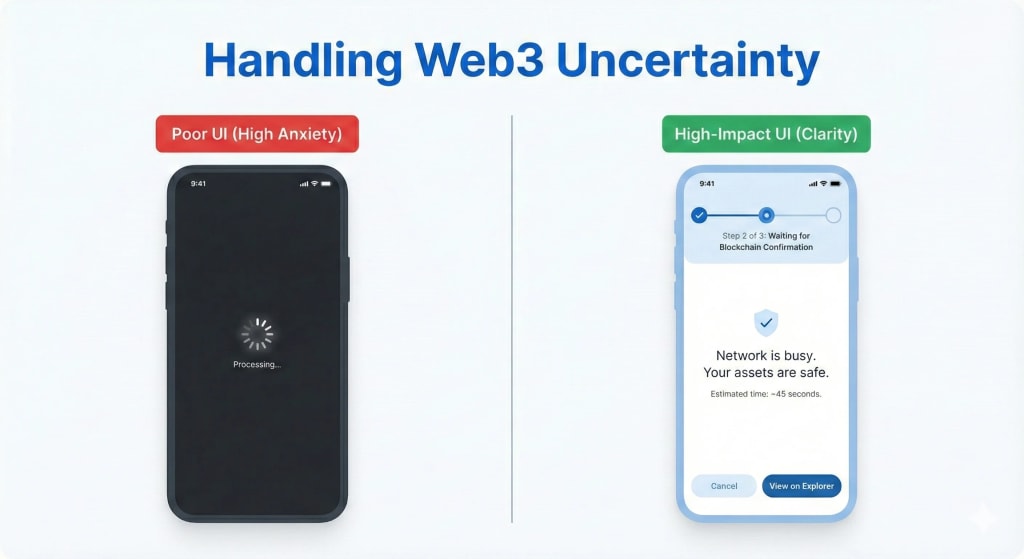
Web3 environments are inherently uncertain. Transactions take time, confirmations are asynchronous, and outcomes are not always immediate. What distinguishes high-impact web3 websites is how clearly they communicate during these moments.
Instead of leaving users guessing, strong Web3 websites explain what is happening, why it’s happening, and what the user should expect next. This reduces anxiety at the exact moments where most users abandon platforms.
You see this consistently across trusted web3 websites examples not because the systems never fail, but because failure is explained calmly and transparently.
Well-executed clarity usually shows up as:
- descriptive status messages instead of spinners
- explicit next steps after user actions
- honest explanations when delays occur
This clarity builds confidence far more effectively than speed alone.
For teams improving trust-centered product communication, our blockchain consulting services focuses heavily on this layer.
The Best Web3 Websites Abstract Complexity Without Hiding Risk
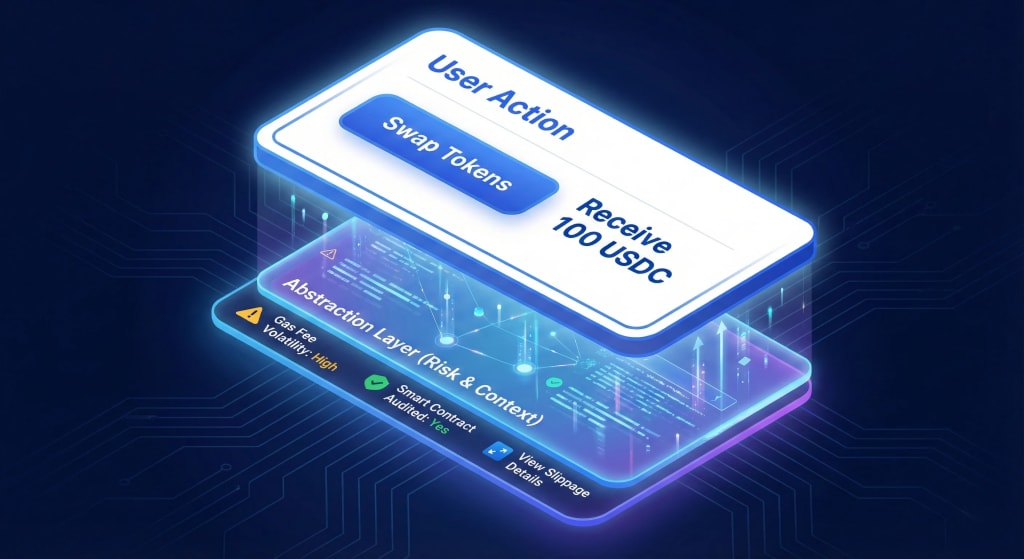
Early Web3 websites often overwhelmed users with technical terminology under the assumption that education equals empowerment. In 2026, the best-performing web3 sites take a different approach: they abstract complexity while remaining honest about risk.
A high-impact Web3 website doesn’t expose users to internal mechanics unless it’s relevant. Instead, it focuses on outcomes — what the action does, what the impact is, and what can go wrong.
This balance is critical. Over-simplification creates false confidence, while over-explanation creates friction. Mature web3 website examples consistently land in the middle.
Effective abstraction usually includes:
- outcome-focused action descriptions
- contextual risk warnings, not blanket alerts
- minimal jargon with optional deeper detail
For teams refining this balance, our Web3 UX design framework helps map complexity to user intent. Reach out to the experts.
High-Impact Web3 Sites Stay Composed During Traffic Spikes and Market Stress
One of the strongest signals of maturity in a Web3 website appears during moments of stress. Token launches, claim windows, governance votes, or volatile market conditions expose weak systems quickly.
High-impact web3 websites don’t fall silent during these moments. They adjust messaging, surface system status clearly, and guide users through what’s still possible versus what’s temporarily unavailable.
Across reliable web3 websites examples, you’ll notice:
- explicit acknowledgement of high activity
- visible system states instead of silent failures
- controlled user flow instead of open-ended actions
This composure under stress is one of the reasons users return to certain platforms repeatedly.
Legitimacy Is Communicated Through Behavior, Not Claims
By 2026, Web3 users have learned to distrust aggressive claims. Phrases like “trustless,” “secure,” or “revolutionary” carry little weight on their own. The best Web3 websites communicate legitimacy quietly, through behavior rather than language.
This includes consistent terminology, predictable interaction patterns, and calm handling of edge cases. High-impact Web3 sites don’t over-promise, they understate and over-deliver.
Legitimacy signals often appear as:
- stable UX patterns across sessions
- restrained, precise copy
- absence of urgency-driven messaging
- transparent explanations instead of marketing language
These subtleties are visible across long-lasting web3 sites, even when their feature sets evolve.
Respect for User Autonomy Is Central to High-Impact Web3 Websites
Another defining characteristic in 2026 is respect for user autonomy. High-impact web3 websites never rush users into irreversible actions or obscure consequences behind enthusiasm or urgency.
Instead, they allow users to pause, reconsider, and exit without penalty. This creates long-term trust, even if it slows short-term conversion metrics.
You’ll notice this respect in:
- confirmation steps for high-impact actions
- clear explanations of irreversible consequences
- non-intrusive default settings
- easy exits without punishment
This approach is consistent across the most trusted web3 websites, especially those dealing with assets and governance.

Consistency Over Time Matters More Than Feature Velocity
A common mistake in Web3 is prioritizing constant feature releases over experiential stability. High-impact Web3 websites resist this pressure. Instead of frequent visible change, they prioritize continuity.
Users value familiarity. They trust platforms that behave the same way today as they did last month, even as functionality expands in the background.
Strong web3 sites maintain:
- consistent language across updates
- stable navigation and interaction flows
- gradual evolution instead of abrupt redesigns
This consistency reduces cognitive load and reinforces trust.
High-Impact Web3 Websites Feel Mature, Not Experimental
Finally, the strongest Web3 websites in 2026 feel finished, even when they are still evolving. They don’t expose half-built experiences or require users to tolerate instability.
Maturity shows up in how expectations are set and managed. Features are introduced only when they’re ready to be relied upon. Limitations are communicated early and clearly.
Across respected web3 websites, this maturity is visible through:
- deliberate rollout communication
- clearly scoped functionality
- absence of “beta” language in core flows
FAQs
Q: Are high-impact Web3 websites defined by advanced technology choices?
A: No. They are defined by user experience during real interaction, especially under uncertainty.
Q: Why do some Web3 sites feel trustworthy almost immediately?
A: Because they reduce confusion and communicate clearly at decision points.
Q: Do the best Web3 websites avoid educating users?
A: They educate contextually, without forcing users to learn technical details upfront.
Q: Is speed less important than clarity?
A: Speed matters, but clarity and predictability matter more for trust.
Q: Can smaller teams build high-impact Web3 websites?
A: Yes. Maturity is a design discipline, not a function of team size.
Conclusion
In 2026, a high-impact Web3 website is defined by how it behaves, not how it advertises itself. The best Web3 websites succeed because they reduce uncertainty, respect users, and remain dependable when conditions are imperfect.
When users feel guided rather than pressured, informed rather than overwhelmed, and safe rather than rushed, Web3 stops feeling experimental and starts feeling usable.
That shift is what separates lasting Web3 sites from forgettable ones. If you want to build one that lasts, reach out to EthElite.
Share with your community!