Loading blog post...


Web3 Trends 2025: 7 Key Innovations You Can’t Ignore
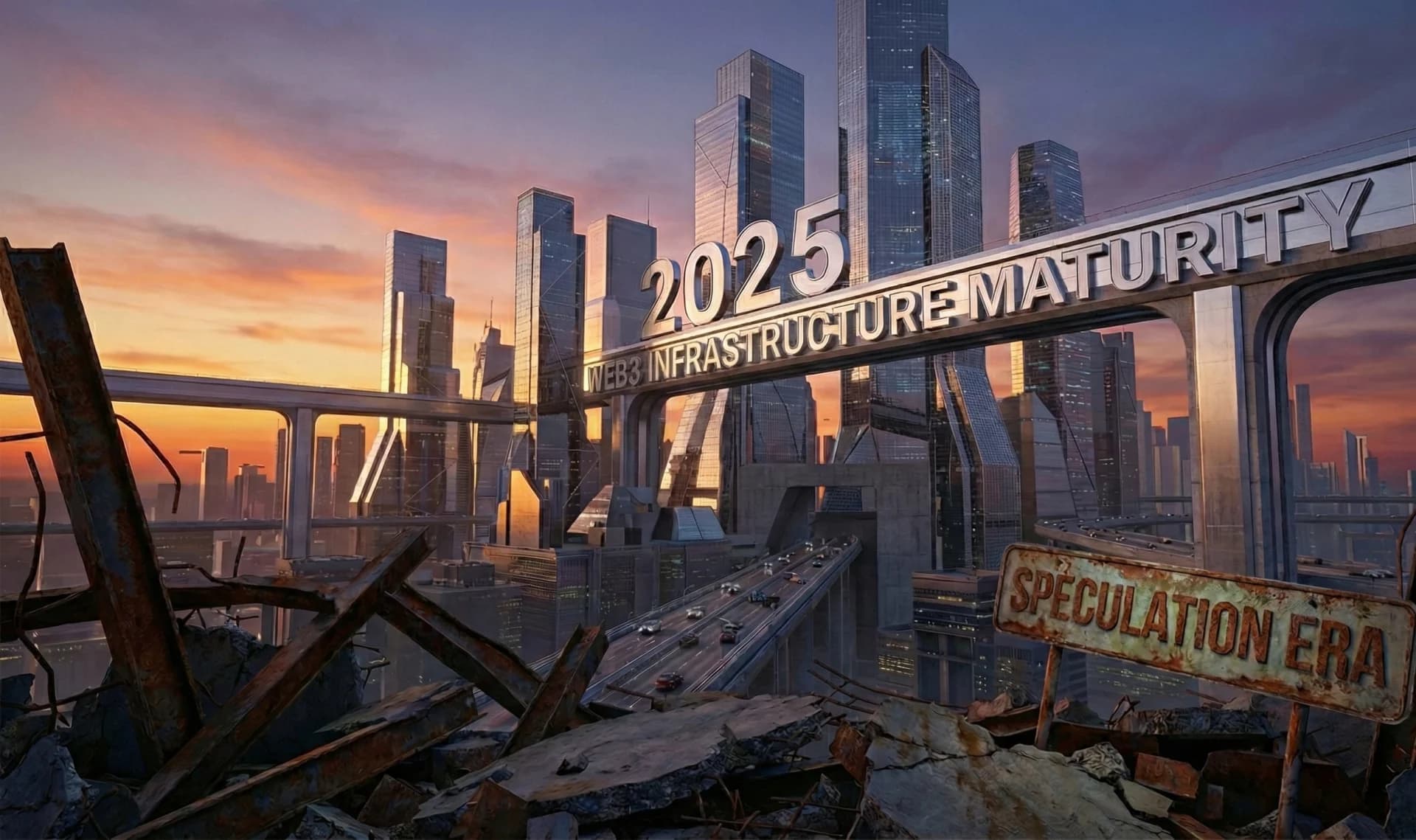
2025 marks the beginning of Web3’s “infrastructure maturity era”, a pivotal shift where the industry moves from speculative hype to real-world adoption. This guide looks beyond price charts to identify the structural innovations redefining decentralized technology. From the rise of autonomous on-chain AI agents and liquid Real-World Assets (RWAs) to the necessity of decentralized identity and modular architectures, discover the seven trends you cannot afford to ignore to stay ahead in the next decade of Web3.
2025 marks the beginning of Web3’s “infrastructure maturity era” - a phase where the technology finally shifts from speculation to real adoption. The noise is fading, the builders remain, and the industry now revolves around systems that deliver actual utility: verifiable identity, AI-driven automation, on-chain commerce, real-world asset liquidity, creator networks, and agent-based execution.
To understand where the industry is heading, you must look beyond price charts and into the web3 trends 2025 that will redefine how users interact with decentralized technology going forward. These are not marketing buzzwords. These are structural shifts shaping the next decade of Web3.
This guide breaks down the innovations you cannot afford to ignore.
1. The Rise of On-Chain AI Agents: The Most Important Current Web3 Market Trend
One of the strongest current web3 market trends is the fusion of AI with on-chain behavior. Autonomous agents now execute strategies, manage wallets, read blockchain data, and interact with smart contracts without human input.
AI isn’t replacing Web3 but accelerating it.
On-chain AI agents bring:
- continuous execution instead of manual decision-making
- predictive risk management
- autonomous trading and yield optimization
- automated Web3 governance participation
This trend marks the shift from user-driven on-chain activity to AI-native economies.
2. Decentralized Identity Becomes the Core of Web3 Trends Today
The most underrated shift in web3 trends today is the rise of decentralized identity (DID).
Web3 cannot scale without:
- verifiable users
- tamper-proof credentials
- on-chain reputation models
- secure access control across ecosystems
Decentralized identity solves all four.
It empowers:
- creator verification
- loyalty programs
- cross-platform access
- tokenized reputation
- anti-bot protection
This trend is moving Web3 away from “anonymous chaos” toward cryptographic trust, without sacrificing privacy.
3. Real-World Assets (RWA) Become Liquid and Programmable
Tokenization has moved from hype to infrastructure.
One of the biggest current trends in Web3 is the institutional push toward on-chain RWAs.
2025 will see:
- treasury bills
- private credit
- real estate
- carbon markets
- music rights
- gaming assets
- IP licensing
All moving on-chain, enabling automated yield, programmable royalties, shared ownership, and fractional liquidity.
Here’s where pointers help:
RWAs scale because blockchain enables:
- 24/7 settlement
- global investor access
- liquid secondary markets
- programmable revenue flows
This transforms assets into live financial primitives, not static holdings.

4. Modular and App-Specific Chains Dominate Web3 Trends 2025
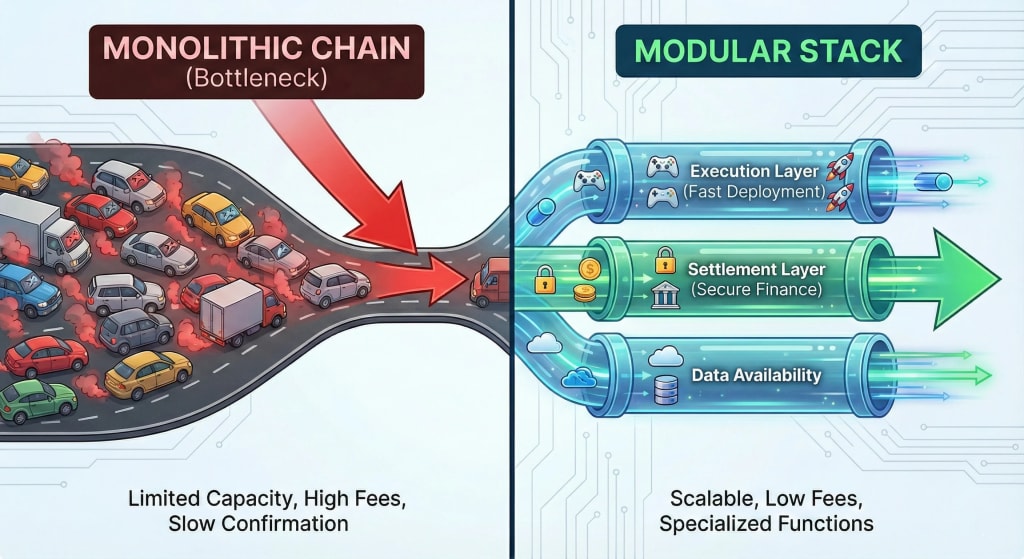
Monolithic chains cannot handle the diversity of Web3 applications anymore.
That’s why Web3 trends 2025 include an explosion of modular chains, L2 ecosystems, app-chains, rollups, and execution layers designed for specific use cases.
Why this trend is unstoppable:
- gaming needs ultra-fast execution
- finance needs deterministic security guarantees
- identity needs privacy-preserving ZK layers
- enterprise systems need compliance-friendly networks
Modular architectures allow projects to choose:
- data layers
- settlement layers
- execution environments
- privacy mechanisms
This flexibility eliminates the limitations of single-chain ecosystems.
For teams wanting to choose the right chain architecture, you can Consult us now.
5. Web3 Social & Community Layer Evolves Beyond Platforms
One of the most powerful web3 trends emerging now is the shift from centralized social platforms to protocol-native social layers.
Web3 social is no longer about posting, it’s about ownership, identity, creator monetization, and network mobility.
EthElite’s Web3 brand management team helps translate these protocol-level ideas into narratives, content and community strategies that actually land.
Modern users want:
- portable profiles
- on-chain social graphs
- creator-owned monetization
- community-governed algorithms
- composable engagement systems
This trend gives communities full control over their data, identity, and monetization pathways.
6. Agent-Based Commerce and Automated Web3 UX
The new frontier of current web3 market trends is the shift from users interacting with protocols → agents interacting with protocols on behalf of users.
This transforms UX entirely.
Instead of connecting wallets and signing repeatedly, users will rely on:
- smart intent execution
- delegated agents
- secure session keys
- automatic decision flows
The result is a seamless, near-invisible on-chain experience, critical for mainstream adoption.
This is exactly where UX breaks for most teams. EthElite designs and builds agent-aware, custom dApps with Web3 UX that makes these systems usable, secure, and production-ready.
7. Cross-Chain Liquidity Becomes Standard, Not an Upgrade
Fragmentation is Web3’s biggest bottleneck.
By 2025, cross-chain messaging, shared security layers, unified liquidity, and intent-based bridges will become standard.
This is driven by:
- omnichain tokens
- abstracted user flows
- unified execution networks
- chain-agnostic smart wallets
Fragmentation is being replaced by interoperable liquidity, benefiting traders, protocols, and marketplaces.
FAQ: Web3 Trends 2025
Q: What are the most important Web3 trends today?
A: AI agents, decentralized identity, RWAs, modular chains, and on-chain social ecosystems are leading the market.
Q: Which current Web3 market trends will matter long-term?
A: Tokenized assets, DID, agent-based UX, multi-chain execution, and AI-native protocols will define the next decade.
Q: Is Web3 social still relevant in 2025?
A: More than ever. Social is becoming on-chain, identity-backed, and creator-owned.
Q: Are RWAs overhyped?
A: No. Institutions are onboarding, regulation is aligning, and liquidity is shifting on-chain at scale.
Q: How should builders adapt to Web3 trends 2025?
A: Prioritize modularity, DID integration, interoperability, automation, and chain-agnostic systems.
Conclusion
Web3 in 2025 isn’t speculative, it’s architectural.
The industry is shifting from fragmented experiments to unified, interoperable, AI-enhanced ecosystems that redefine digital ownership, finance, identity, and social connection.
Builders who understand these trends early will shape the next decade of Web3.
Those who ignore them will spend it trying to catch up.
If you’re building for where Web3 is going, reach out to EthElite today for a free consultation.
Share with your community!