Loading blog post...


Smart Contracts Explained: Myths vs Facts
Smart contracts are often hailed as the future of automation, yet they remain one of the most misunderstood layers of the blockchain. Are they 'robot lawyers' or simply deterministic code? This guide cuts through the hype to explain what smart contracts actually do, why learning Solidity is only the first step toward security, and how to distinguish production-ready logic from simple online examples. Whether you are a developer or a business leader, understanding these boundaries is essential for building trust in a decentralized world.
Smart contracts are often described as the backbone of blockchain automation, yet they’re also one of the most misunderstood concepts in Web3. Some people imagine them as fully autonomous robots replacing lawyers. Others assume they’re just snippets of code with little real-world impact.
The truth sits somewhere in between.
To understand smart contract meaning clearly, it helps to separate the myths from the facts—especially if you’re exploring learning Solidity, reviewing smart contract examples, or planning to build a Solidity smart contract for a real product.
This guide breaks down common misconceptions and explains how smart contracts actually work in practice.
What Smart Contracts Really Mean (and What They Don’t)
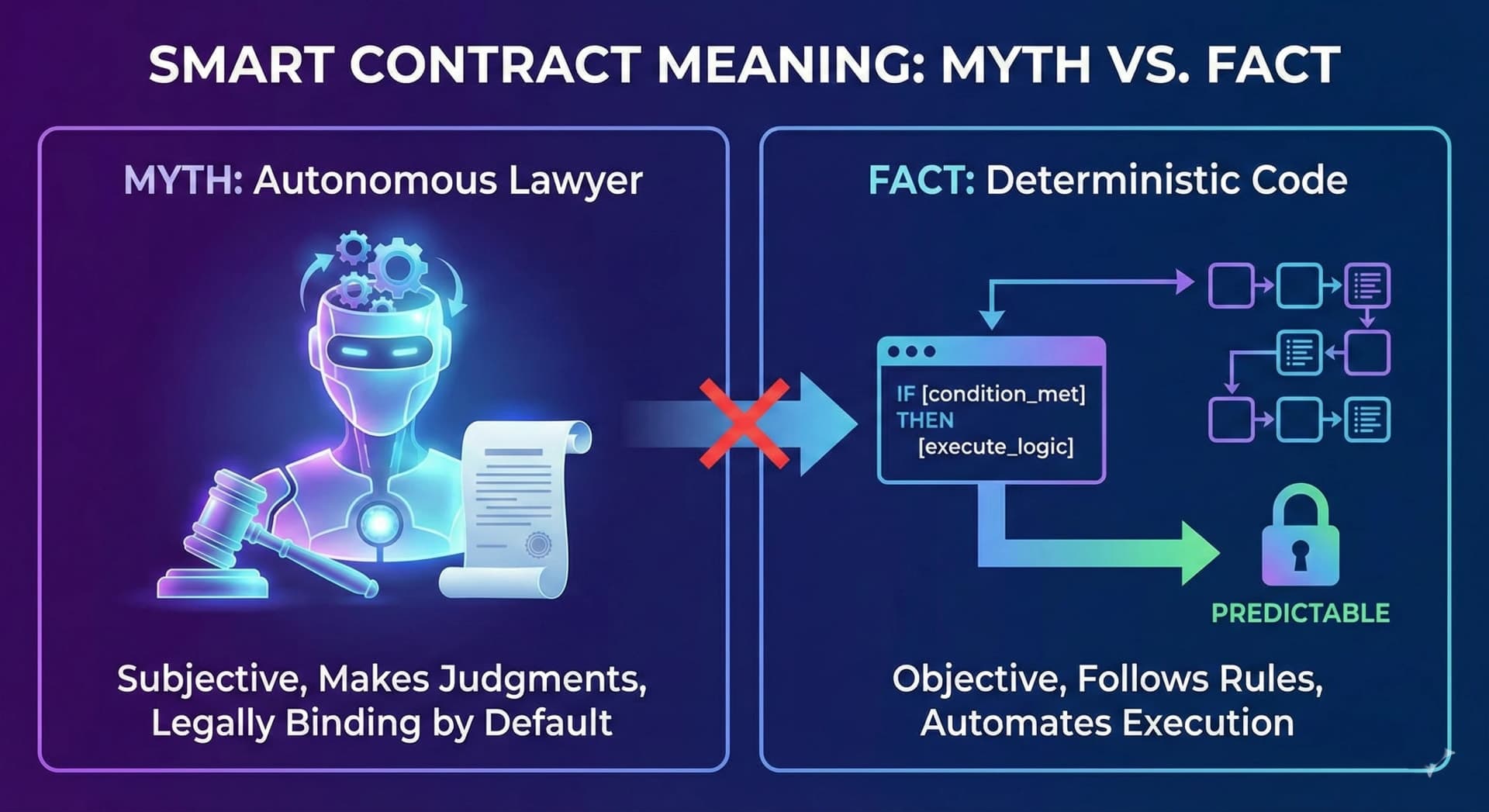
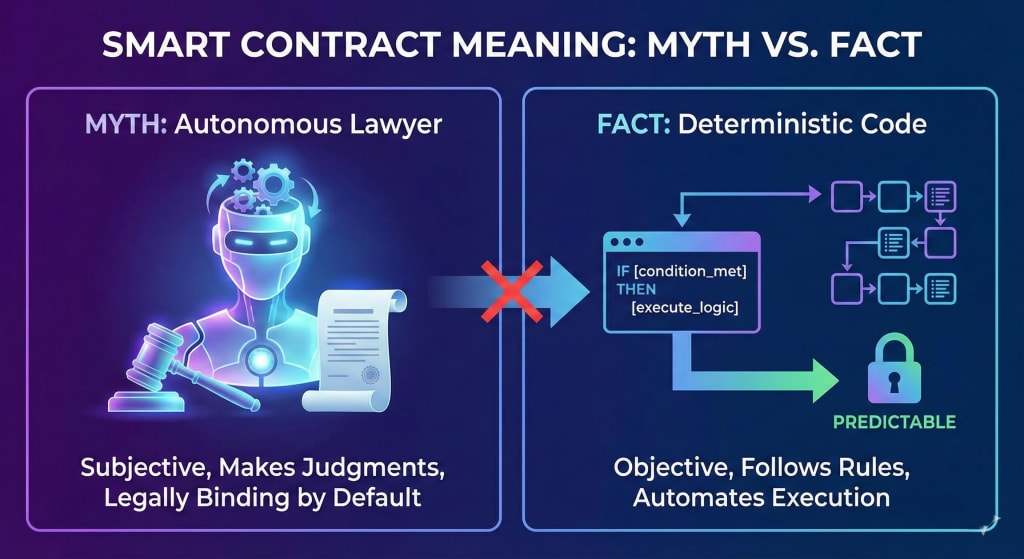
At their core, smart contracts are programs that run on a blockchain and execute predefined logic when certain conditions are met. They are not “smart” in the human sense, and they are not contracts in the legal sense by default.
The real smart contract meaning is closer to deterministic automation. Once deployed, the code behaves exactly as written, without discretion or interpretation.
That predictability is powerful but it also means smart contracts don’t adapt, negotiate, or make judgment calls. They execute rules, nothing more.
Understanding this boundary is the first step toward using them correctly.
Myth: Smart Contracts Automatically Replace Legal Contracts
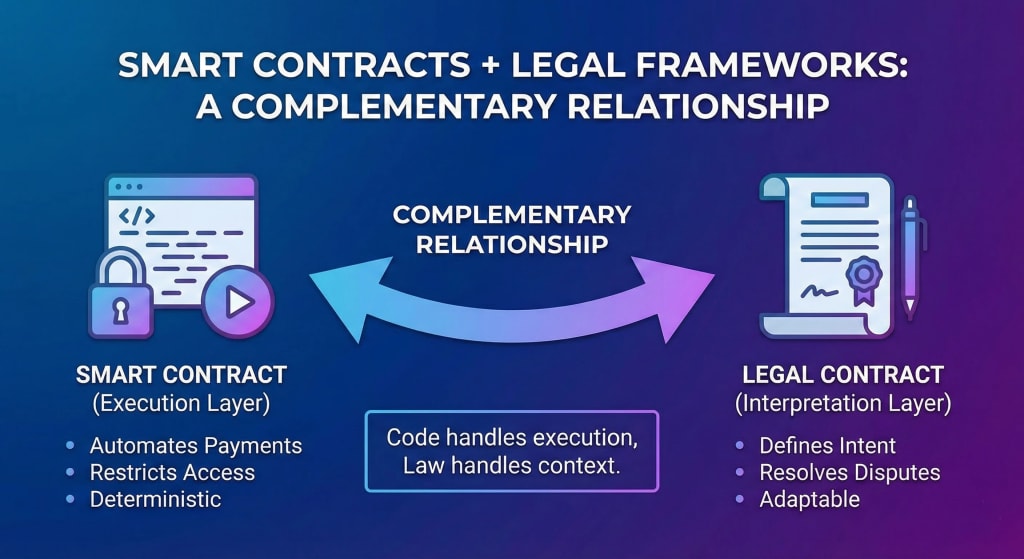
One of the most persistent myths is that smart contracts make traditional contracts obsolete. In reality, smart contracts complement legal agreements rather than replace them.
A smart contract can:
- enforce payment logic
- restrict access to assets
- automate execution
But it cannot:
- interpret intent
- resolve disputes
- adapt to unforeseen circumstances
In most real-world applications, smart contracts are paired with legal frameworks. The code handles execution; the law handles interpretation.
This distinction becomes clear when reviewing real smart contract examples used in finance, gaming, or supply chains.
Fact: Solidity Programming Is the Foundation of Most Smart Contracts
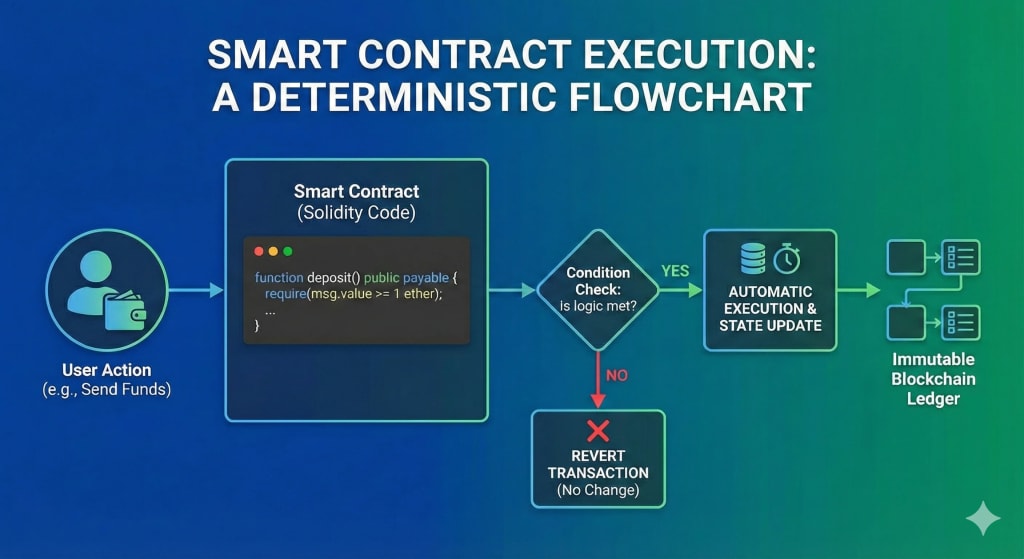
For anyone learning Solidity, it’s important to know why the language matters. Solidity programming is the most widely used approach for writing smart contracts on Ethereum-compatible blockchains.
A Solidity smart contract defines:
- state variables
- functions and permissions
- conditions for execution
Because smart contracts are immutable once deployed, Solidity code must be precise. Small mistakes can have permanent consequences.
This is why experienced teams invest heavily in design, testing and review before deployment. For teams building production contracts, our smart contract development services focus on secure, well-structured Solidity code.
Myth: Learning Solidity Means You Can Build Any Smart Contract Safely
Learning syntax is not the same as understanding systems. Many developers assume that once they finish learning Solidity, they’re ready to deploy complex contracts.
In practice, Solidity is only one layer of the problem.
Safe smart contract development also requires:
- understanding blockchain execution models
- anticipating edge cases
- designing for adversarial behavior
This is why many exploits come from developers who “knew Solidity” but underestimated economic or logical complexity.
Solidity is a tool. How you use it matters more than knowing it exists.
Fact: There Are Different Types of Smart Contracts for Different Use Cases
Not all smart contracts serve the same purpose. Understanding the types of smart contracts helps clarify where they fit and where they don’t.
Common categories include:
- financial contracts (lending, swaps, staking)
- utility contracts (access control, registries)
- governance contracts (voting, proposals)
- NFT-related contracts (minting, ownership)
Each type has different risk profiles and design constraints. Treating all smart contracts the same is a common and costly mistake.
For teams evaluating architecture choices, our blockchain consulting services help map use cases to the right contract patterns.
Myth: Smart Contract Examples Are Simple and Reusable
Browsing smart contract examples online can be misleading. Many examples are intentionally simplified for learning, not production use.
What’s often missing:
- access control nuances
- upgrade considerations
- economic attack vectors
- integration assumptions
Copying examples without understanding context is one of the fastest ways to introduce vulnerabilities. Examples are starting points, not templates.
Production-grade Solidity smart contracts are rarely short or obvious.
Fact: Smart Contracts Are Powerful Because They Remove Ambiguity
What smart contracts lack in flexibility, they make up for in certainty. Once deployed, the rules are fixed and publicly verifiable.
This creates powerful guarantees:
- no hidden rule changes
- no selective enforcement
- no discretionary execution
This property is why smart contracts are trusted for high-value systems. When designed correctly, they reduce reliance on intermediaries and human judgment.
This is also why auditing and testing are critical. For teams preparing deployments, our smart contract audit services focus on logic correctness and risk exposure.
Myth: Smart Contracts Are Fully Autonomous Forever
While smart contracts execute autonomously, they don’t exist in isolation. Many rely on external inputs like prices, user actions or governance decisions.
Additionally, some contracts are upgradeable, meaning humans still control how systems evolve.
Autonomy in smart contracts is conditional, not absolute. Understanding who controls upgrades, parameters, and permissions is just as important as understanding the code itself.
Fact: Smart Contracts Are Best Used as Infrastructure, Not Magic
The most successful applications treat smart contracts as infrastructure layers, not miracle solutions.
They work best when:
- the rules are clear
- the scope is well-defined
- the risk is understood
When used thoughtfully, smart contracts reduce friction and increase trust. When used blindly, they amplify mistakes.
FAQ: Smart Contracts and Solidity Explained
Q: What is the simplest smart contract meaning?
A: A program that executes predefined rules on a blockchain.
Q: Is Solidity the only language for smart contracts?
A: No, but it’s the most widely used on Ethereum-compatible chains.
Q: Are smart contracts legally binding?
A: Not by default. Legal enforceability depends on jurisdiction and structure.
Q: Can beginners safely deploy smart contracts?
A: Only for learning. Production contracts require deep review and testing.
Q: Do all blockchain apps need smart contracts?
A: No. They’re powerful but not always necessary.
Conclusion
Smart contracts are neither magical nor trivial. They are precise tools designed to automate trust in environments where certainty matters more than flexibility.
By understanding the real smart contract meaning, the limits of Solidity programming, and the role of different types of smart contracts, teams can move beyond myths and use this technology responsibly. This is the layer EthElite focuses on: engineering smart contracts as long-term infrastructure with security, clarity, and operational intent, not quick experiments.
When treated as infrastructure and not shortcuts, smart contracts become one of the most reliable building blocks in the blockchain ecosystem.
Share with your community!