Loading blog post...


NFT Marketplace Design Patterns That Drive Real Trading Activity
Most NFT platforms don’t fail due to missing features; they fail because their design doesn't translate into actual trading behavior. In today’s mature crypto landscape, a visually polished interface alone is not enough to sustain liquidity. This article explores the specific, proven design patterns from providing clear pricing context to reducing transaction anxiety that actively engineer marketplaces for buying, selling, and repeat engagement.
Most NFT platforms don’t fail because of missing features. They fail because their design decisions don’t translate into actual trading behavior. In today’s landscape, a visually polished NFT interface alone is not enough. What matters is whether an nft marketplace is engineered to encourage buying, selling, and repeat engagement.
The NFT economy now behaves like a mature crypto marketplace, where traders expect clarity, liquidity signals, and reliability. Successful nft marketplaces apply proven design patterns that guide user behavior without forcing it.
This article explores the NFT marketplace design patterns that actively drive trading activity, drawing from real-world nft platform performance rather than theory.
Designing Beyond NFT Website Templates to Support Active Markets
Many platforms begin with nft website templates, which is a practical starting point. However, templates are inherently neutral and they don’t optimize for trading behavior by default.
To evolve from static presentation to active nft marketplace design, platforms must customize core interactions. Real trading activity emerges when users feel confident about pricing, timing, and execution.
High-performing marketplaces move beyond templates by:
- surfacing relevant market signals
- reducing hesitation before purchases
- clarifying sell-side outcomes
Templates provide structure, but behavior-driven design generates volume.
It is important to transition from templates to custom solutions and our NFT marketplace development services focus on behavior-led design.
Clear Pricing Context as a Core NFT Marketplace Design Pattern
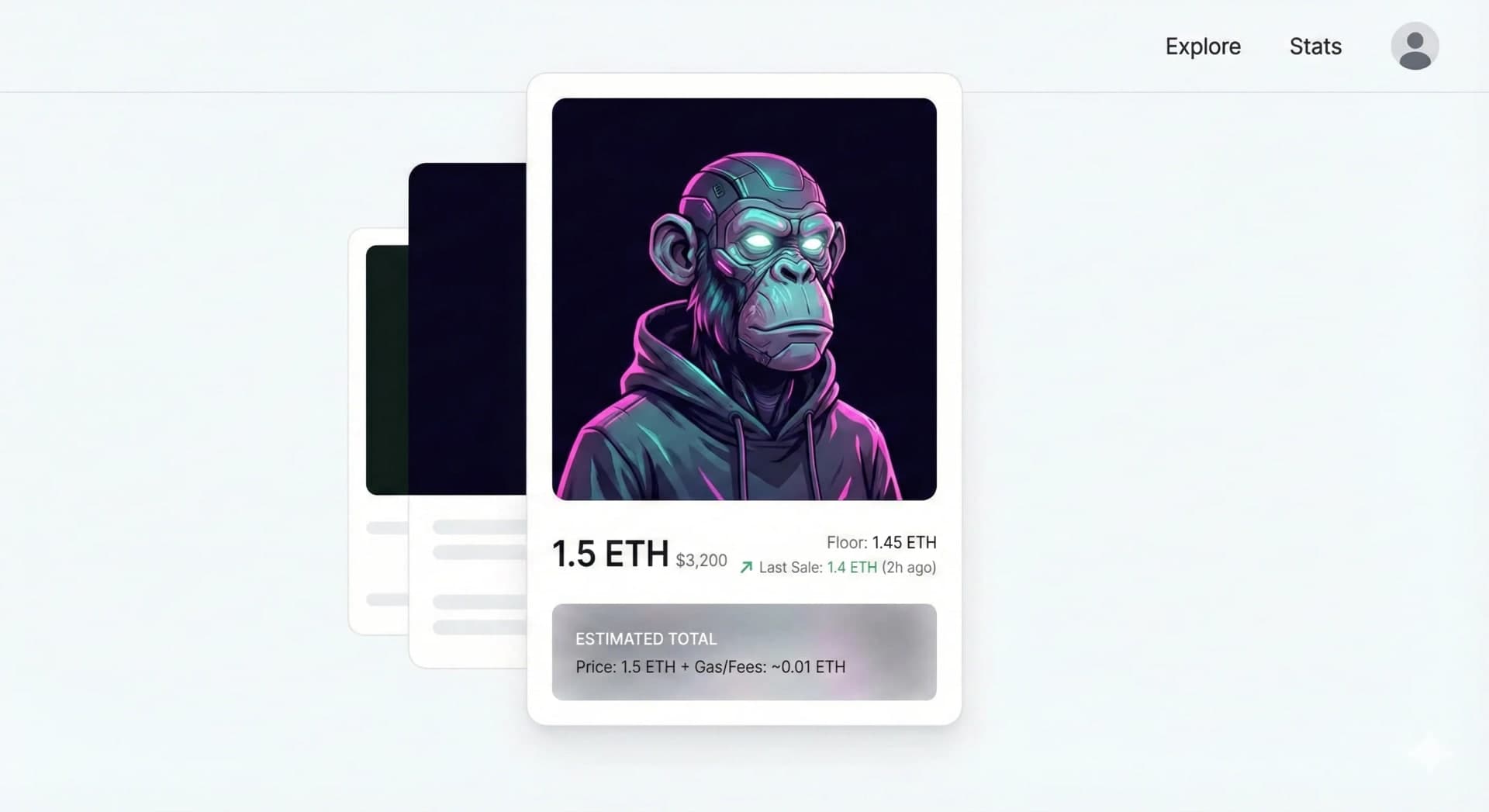
In successful nft marketplaces, price context is never ambiguous. Users shouldn’t have to infer whether a listing is fair, inflated, or outdated.
Effective nft marketplace design consistently provides:
- recent sale history
- realistic floor comparisons
- transparent fees before checkout
Here, pointers help explain why this works:
Strong pricing context:
- reduces decision paralysis
- builds trust in listings
- encourages faster buying
Platforms that hide or fragment pricing information experience slower transaction velocity.
Guiding First-Time Traders Without Diluting Power-User UX
Every NFT market must support both newcomers and experienced traders. The design challenge is doing this without alienating either group.
The best nft platforms layer their UX instead of splitting it. New users are guided through safe, obvious actions, while advanced users can access deeper controls when needed.
Common patterns include:
- default filters that surface liquid collections
- optional advanced views for analytics
- clear primary actions with secondary depth
This approach mirrors mature crypto marketplace design, where accessibility and sophistication coexist.
Reducing Transaction Anxiety to Increase Conversion in NFT Marketplaces
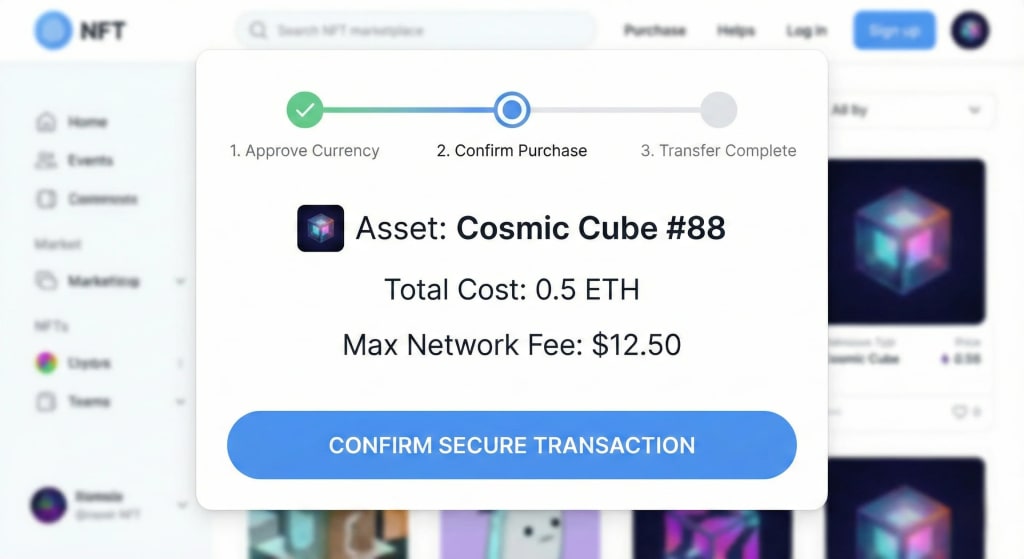
Trading NFTs involves irreversible actions, gas costs, and wallet approvals, all of which introduce anxiety. Successful nft marketplace design actively reduces this stress.
Rather than overwhelming users with raw blockchain prompts, modern designs focus on anticipation and reassurance.
This often includes:
- step-by-step transaction previews
- clear confirmation stages
- informative status updates during execution
When users understand what’s happening, they’re far more likely to complete trades.
Secondary Market Signals That Sustain Activity in NFT Platforms
One-off sales do not create healthy markets. Continuous trading depends on how well secondary activity is supported and surfaced.
High-performing nft marketplaces design specifically for secondary markets by:
- highlighting active collections
- surfacing recent trades meaningfully
- minimizing friction for relisting
This is less about promotion and more about feedback loops. When users see activity, they participate.
Consistency in NFT Marketplace Design Builds Repeat Trading Behavior
Consistency is a powerful behavioral driver. When a nft marketplace behaves predictably, users feel comfortable trading repeatedly.
Trusted nft platforms:
- maintain consistent terminology
- avoid sudden interface changes
- preserve familiar interaction flows
This stability reduces cognitive load and builds habitual usage, a critical factor for liquidity.
Designing for Liquidity, Not Just Discoverability
Discovery matters, but liquidity matters more. An NFT that can’t be sold loses perceived value quickly.
Modern nft marketplace design prioritizes liquidity-aware discovery by:
- spotlighting collections with real activity
- downplaying inactive assets
- balancing curation with openness
This approach aligns user attention with market reality, benefiting both buyers and sellers.
Why NFT Platforms That Trade Well Feel Calm, Not Flashy
Finally, one of the most overlooked design patterns is emotional tone. High-performing nft marketplaces feel calm, deliberate, and trustworthy.
They avoid excessive animation, countdown pressure, or hype-driven cues. Instead, they present trading as a normal, repeatable activity, not a high-stakes event.
This emotional steadiness encourages long-term participation and repeat trades.
FAQ: NFT Marketplace Design and Trading Activity
Q: Do NFT website templates limit trading performance?
A: They don’t limit it, but they don’t optimize for it either.
Q: Is NFT marketplace design more important than features?
A: Yes. Poor design prevents users from using even the best features.
Q: Why do many NFT platforms have low trading volume?
A: Because design fails to reduce friction and uncertainty.
Q: Can design influence liquidity?
A: Absolutely. Clear signals and frictionless flows directly impact volume.
Q: Are NFT marketplaces now closer to crypto marketplaces?
A: Yes. User expectations increasingly overlap.
Conclusion
Real trading activity in NFT marketplaces is driven less by hype and more by thoughtful design. Platforms that move beyond nft website templates and focus on behavior-driven nft marketplace design consistently outperform those chasing trends.
When users feel confident, informed, and in control, they trade more. That principle defines every successful NFT marketplace within the broader crypto marketplace ecosystem, and it’s exactly how EthElite designs and builds marketplaces that last.
Share with your community!