Loading blog post...


Key Blockchain Use Cases Across Major Global Industries in 2026
Blockchain is no longer a side-project. In 2026, it has become the invisible execution layer for global industry. From collapsing settlement cycles in finance to enforcing auditable data access in healthcare, smart contracts are moving beyond the "pilot" phase to replace fragile manual workflows with code-enforced certainty. Explore the structural shifts happening across energy, IP, and the public sector as we move toward a world of automated, real-time coordination.
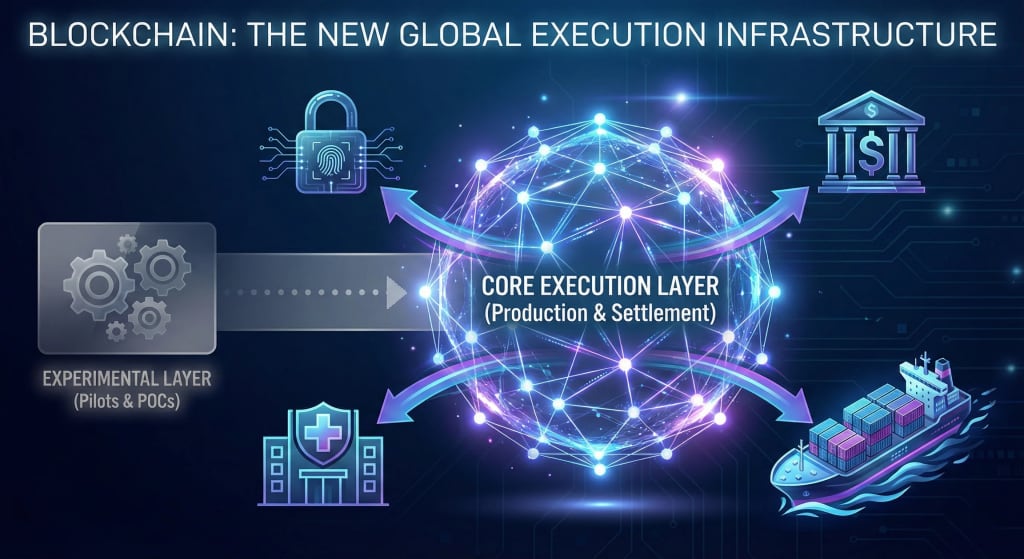
Blockchain is no longer an experimental layer running alongside real business systems. It is increasingly replacing core workflows where trust, reconciliation, coordination, and enforcement have historically been slow, expensive or fragile.
The most valuable blockchain use cases today are not pilots or proofs of concept. They are production systems already removing intermediaries, compressing settlement timelines, and enforcing rules directly through code. These systems work because they change how execution happens, not because they introduce new databases.
What makes blockchain transformative is the convergence of blockchain and smart contract design. Smart contracts don’t assist processes, they execute them. Below are the most impactful, real-world smart contract use cases, crypto use cases, and cryptocurrency use cases across major global industries, explained at the workflow level.
Financial Services: Blockchain Use Cases That Collapse Settlement Cycles
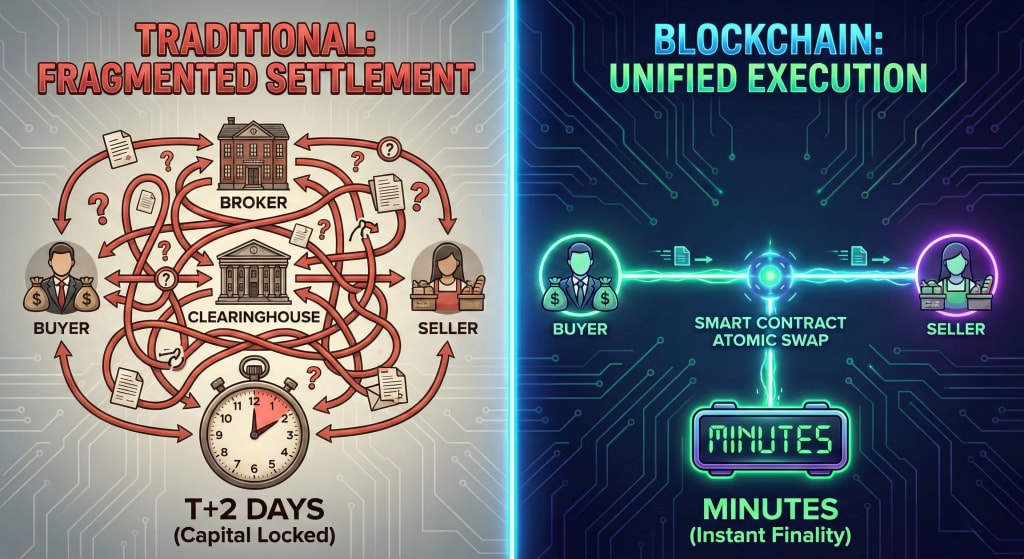
Traditional financial markets rely on layered intermediaries like brokers, clearinghouses, custodians, and reconciliation teams, each maintaining separate records of the same transaction. Settlement occurs days later, locking capital, increasing operational cost, and introducing counterparty risk.
A blockchain-based financial workflow removes this fragmentation entirely by unifying execution and settlement into a single system.
Operationally:
- tokenized assets represent ownership on-chain
- smart contracts execute trades automatically
- compliance rules run before execution
- payment and asset transfer occur atomically
- settlement finality is achieved within minutes
There is no post-trade reconciliation because the ledger is the final record. Every participant sees the same state, enforced by code rather than trust in intermediaries.
This is not an incremental efficiency gain. It is a structural crypto use case where blockchain replaces core market infrastructure rather than optimizing around it.
For teams modernizing financial infrastructure, EthElite helps design compliant, audit-ready blockchain systems where settlement, execution, and reporting happen in one flow.
Supply Chain: Smart Contract Use Cases That Remove Payment Disputes
Supply chains break down at trust boundaries. Invoices, confirmations, manual approvals, and delayed settlements create friction between manufacturers, logistics providers, distributors, and buyers. Disputes arise not because parties disagree, but because systems don’t share a single source of truth.
Blockchain removes ambiguity by tying financial outcomes directly to verifiable events.
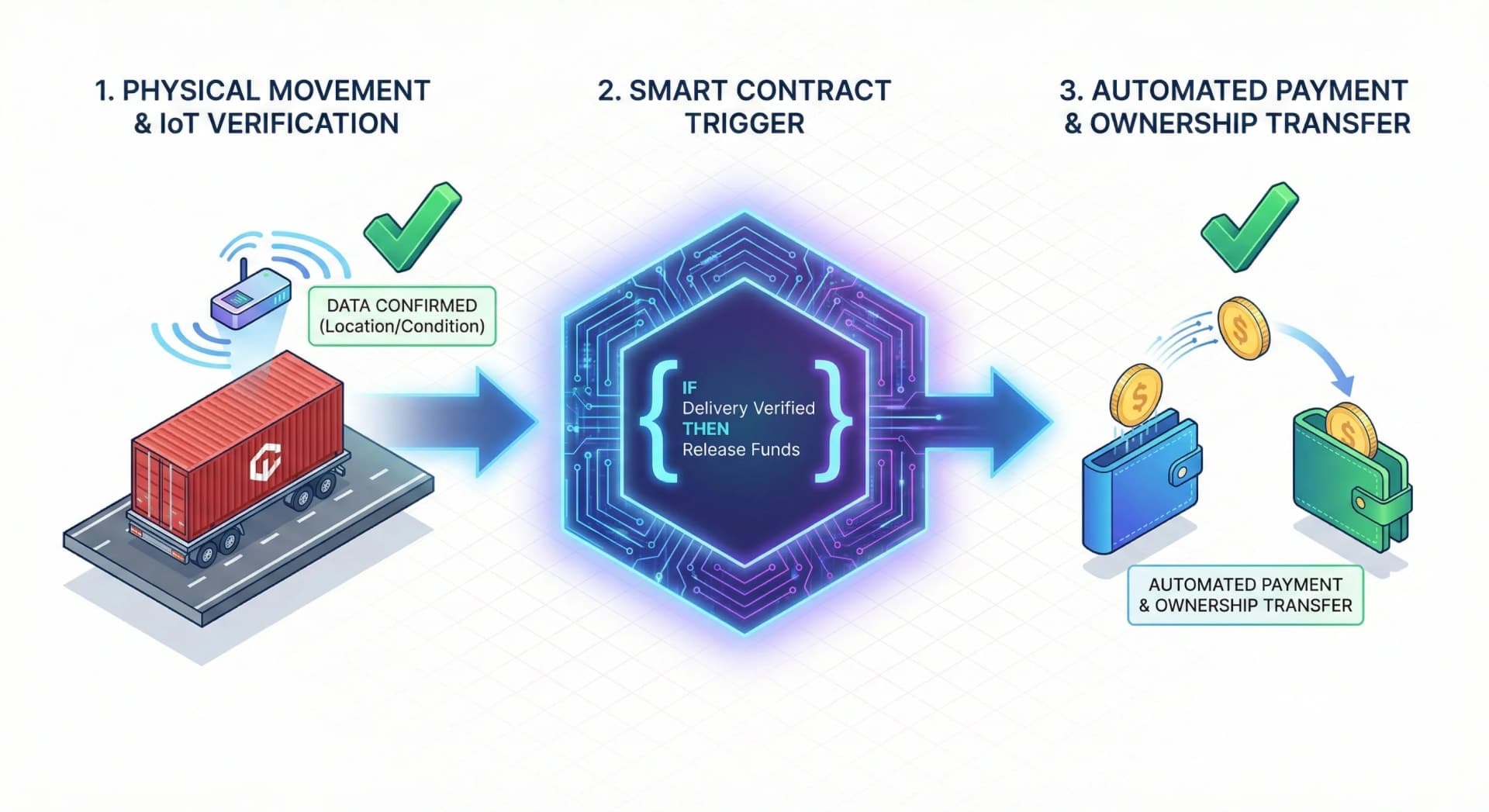
A functional supply-chain smart contract use case works like this:
- goods leave the manufacturer
- IoT or logistics data verifies delivery conditions
- smart contracts validate time, location, and quality
- payment releases automatically
- ownership updates on-chain
Instead of reconciling paperwork after delivery, execution happens at the moment conditions are met. This eliminates disputes, reduces working capital lockups, and shortens payment cycles across both global enterprises and on-chain commerce platforms.
Healthcare: Blockchain and Smart Contract Systems That Enforce Data Access
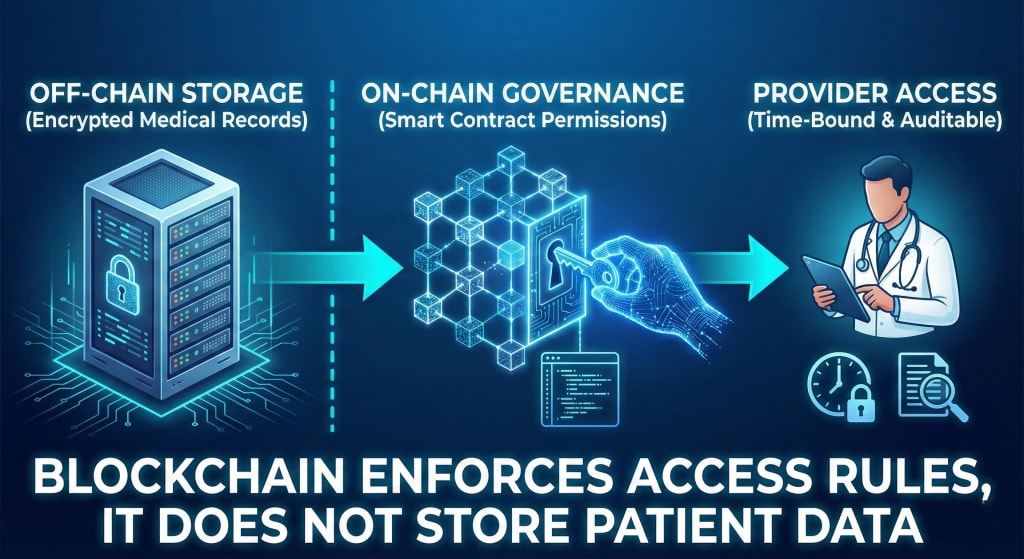
Healthcare does not need blockchain to store medical records. It needs blockchain to control access in a way that is auditable, time-bound, and enforceable without relying on institutional trust.
A correct healthcare blockchain model looks like this:
- medical data remains off-chain
- access permissions are enforced by smart contracts
- every access request is cryptographically verified
- permissions expire automatically
- all access events are auditable
Hospitals, insurers, and providers do not “own” patient data. They receive conditional, revocable access governed by code. This approach improves privacy, simplifies regulatory compliance, and prevents unauthorized access without slowing down care delivery.
This smart contract use case solves a governance problem, not a storage problem which is why it works.
Digital Identity: Cryptocurrency Use Cases That Eliminate Repeated KYC
Identity is one of the most practical cryptocurrency use cases already delivering measurable cost and UX improvements. Today, users repeat KYC processes across banks, exchanges, platforms, and services, creating friction and increasing data exposure.
Blockchain-based identity systems invert this model.
Instead:
- a user completes verification once
- cryptographic proofs are issued
- services verify the proof, not the data
- no sensitive information is shared
- onboarding becomes near-instant
The blockchain stores verifiability, not identity details. This reduces compliance costs, minimizes data breaches, and dramatically improves onboarding across financial services, Web3 platforms, marketplaces, and public systems.
EthElite works with teams building decentralized identity and compliance layers that reduce onboarding friction without increasing regulatory risk. Connect today for a free consultation.
Energy Markets: Crypto Use Cases Enabling Real-Time Settlement
Energy markets suffer from delayed settlement, centralized brokers, and limited transparency. Producers and consumers operate through intermediaries that manage metering, pricing, and payment reconciliation.
Blockchain enables direct coordination.
A real-world crypto energy workflow:
- energy producers register output
- smart contracts meter production
- consumers purchase energy automatically
- settlement occurs in real time
- regulators audit transparently
There is no broker managing trust, the protocol enforces it. This model supports decentralized energy grids, peer-to-peer trading, and transparent compliance, making it one of the fastest-growing blockchain use cases in infrastructure-heavy industries.
Public Sector: Smart Contract Use Cases That Make Corruption Structurally Difficult
Public systems often fail not because of intent, but because enforcement relies on discretion rather than systems. Manual approvals, opaque processes, and fragmented records create opportunities for abuse.
Blockchain changes this by encoding rules directly.
Operational public-sector use cases include:
- procurement contracts that execute only when conditions are met
- subsidy payments triggered by verifiable eligibility
- immutable public records
- transparent audit trails for every action
Smart contracts do not eliminate governance, they enforce it consistently. By removing discretionary execution, blockchain makes corruption structurally difficult rather than procedurally discouraged.
Intellectual Property: Blockchain Use Cases That Automate Royalties
IP enforcement traditionally depends on reporting, audits, intermediaries, and delayed payouts. Creators often lack transparency into how their work is used or when they will be paid.
Blockchain makes royalty distribution deterministic.
A concrete smart contract use case:
- ownership is registered on-chain
- usage events trigger payments
- royalties distribute automatically
- creators are paid instantly
- terms are enforced without intermediaries
This reduces leakage, improves trust, and aligns incentives across creators, platforms, and consumers without adding administrative overhead.
Enterprise & Web3 Automation: Blockchain as an Execution Layer
Beyond industry-specific use cases, blockchain increasingly functions as a shared execution layer across enterprises, protocols, and decentralized platforms.
Examples include:
- automated inter-company settlements
- protocol-level access control
- real-time audit logs
- cross-platform state synchronization
In these systems, blockchain and smart contract logic replaces reconciliation-heavy workflow engines. The value comes not from decentralization alone, but from enforcing shared rules across organizational and protocol boundaries.
Conclusion
Share with your community!