Loading blog post...


How to Use Blockchain Analytics to Gain Actionable Insights
Blockchain data is everywhere, but true insights are not. While every transaction is public, most teams struggle to turn raw onchain activity into real-world strategy. This guide breaks down how to move beyond vanity metrics using intent-based analytics and scalable cloud infrastructure to transform the blockchain from a simple ledger into a powerful decision engine.
Blockchain data is everywhere, but insights are not.
Every transaction, contract interaction, wallet movement and protocol event creates data. That data lives onchain, immutable and public, forming one of the largest real-time datasets ever created. Yet most teams still struggle to turn blockchain big data into decisions they can actually act on.
This is where blockchain analytics becomes essential. Not dashboards for vanity metrics, but analytics systems that help teams understand behavior, risk, performance and opportunity across Web3 products.
This guide explains how to use blockchain analytics effectively, how it fits into modern blockchain cloud infrastructure, and how web3 analytics can drive real operational outcomes.

Why Blockchain Analytics Matters Beyond Raw Onchain Data
Blockchain data is transparent, but it is not intuitive. A transaction hash alone doesn’t explain why something happened or what it means for a business.
Effective blockchain analytics adds context. It connects on-chain events to user behavior, protocol logic, and economic outcomes. Without this layer, teams are left reacting to issues instead of anticipating them.
Analytics becomes valuable when it helps answer questions like:
- Why did liquidity suddenly drop?
- Which user actions correlate with churn?
- Where is risk accumulating before an exploit?
- Which features actually drive engagement?
This is where blockchain stops being a ledger and starts becoming a decision engine.
Understanding Blockchain Big Data and Its Unique Challenges
Unlike traditional datasets, blockchain big data is:
- append-only
- highly granular
- globally distributed
- economically meaningful
Every data point has financial implications, and every query must respect on-chain realities like finality, reorgs, and gas behavior.
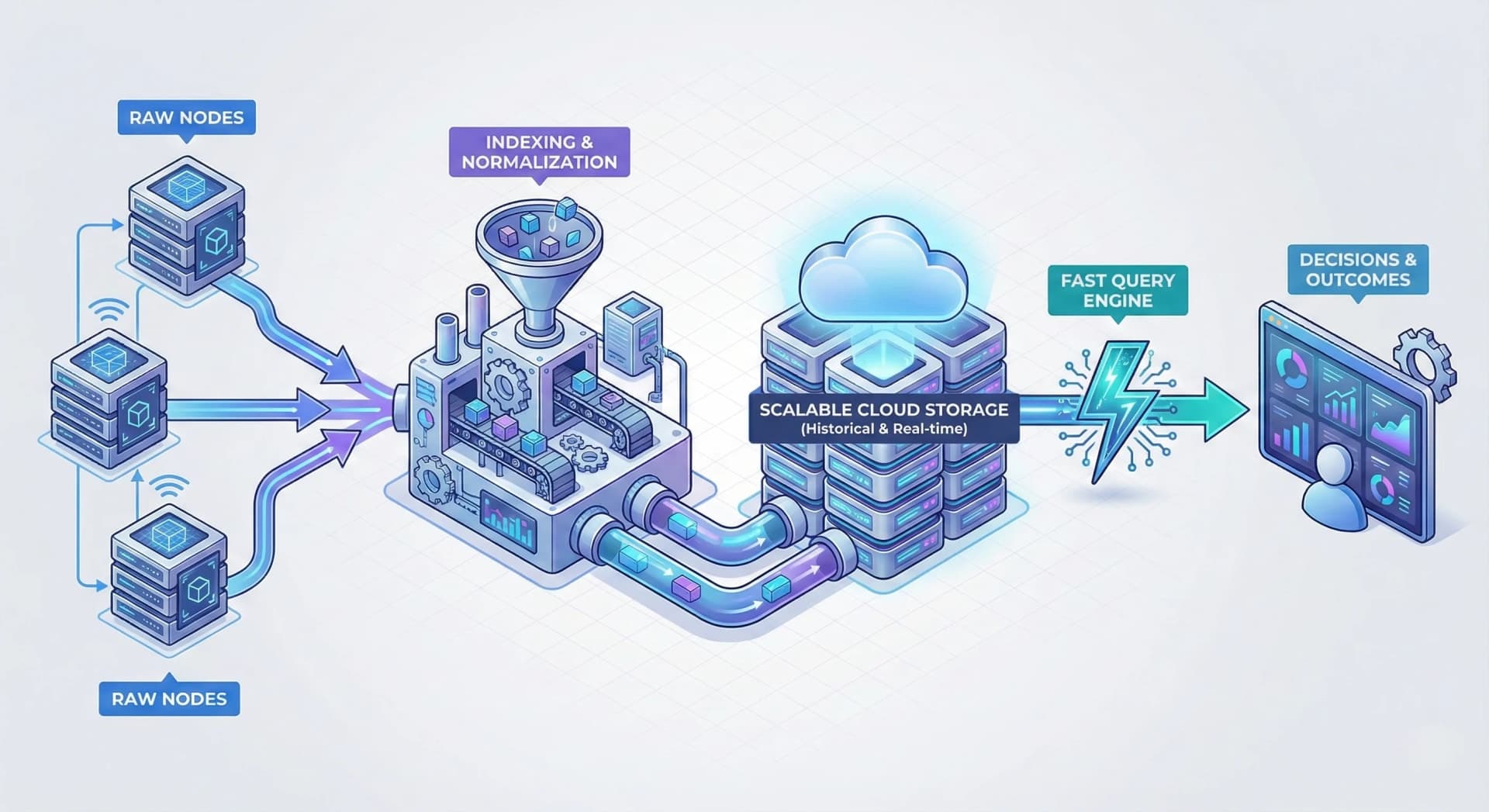
The challenge isn’t access, it’s scale and structure. Raw blockchain data is massive and fragmented across blocks, contracts, and chains. Turning it into something usable requires indexing, normalization, and interpretation.
This is why most serious analytics stacks don’t run directly on nodes. They rely on structured pipelines built for scale.
How Blockchain Cloud Infrastructure Enables Scalable Analytics
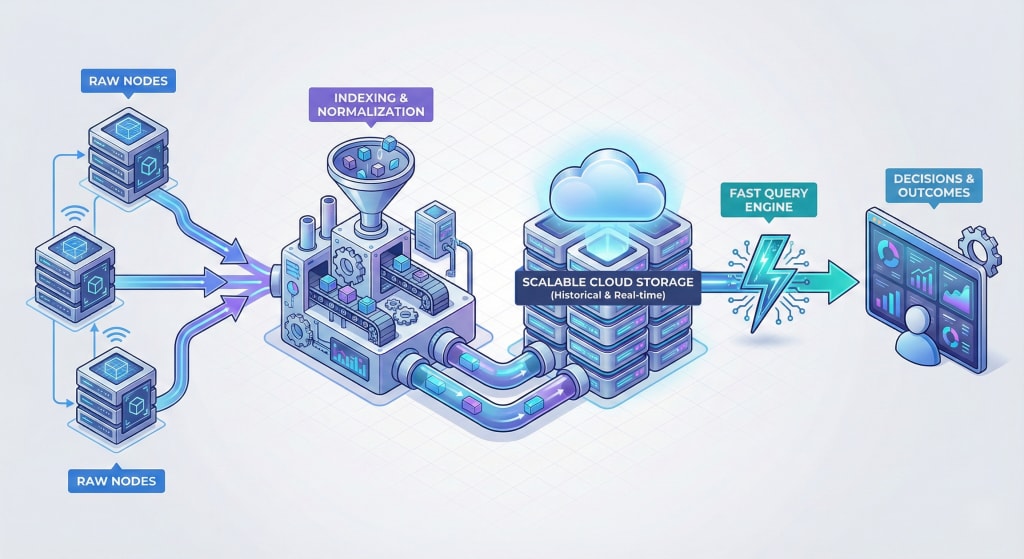
Modern blockchain analytics relies heavily on blockchain cloud infrastructure. Cloud-based systems make it possible to ingest, process, and query massive on-chain datasets without managing raw nodes manually.
A well-designed blockchain cloud analytics setup typically includes:
- indexed blockchain data for fast queries
- event-level processing pipelines
- historical and real-time data access
- scalable storage for long-term analysis
This infrastructure allows teams to move from “what happened?” to “what’s happening now?” and eventually to “what’s likely to happen next?”
For teams building analytics-ready systems, reach out to us for a free consultation to get started.
Turning Web3 Analytics Into Product and Business Decisions
Web3 analytics becomes powerful when it connects technical events to human behavior. This is especially important for decentralized products, where traditional user tracking doesn’t exist.
Instead of emails or sessions, Web3 teams analyze:
- wallet interaction patterns
- contract usage frequency
- protocol entry and exit points
- behavioral shifts during volatility
When structured correctly, these insights inform:
- UX improvements
- feature prioritization
- incentive design
- protocol parameter tuning
Analytics stops being observational and starts influencing roadmap decisions.
Using Blockchain Analytics for Risk Detection and Monitoring
One of the most impactful uses of blockchain analytics is early risk detection. On-chain systems often show warning signs before failures become visible.
Analytics can surface:
- abnormal transaction clustering
- unusual contract interaction sequences
- rapid liquidity movements
- suspicious wallet coordination
These signals don’t guarantee an issue, but they provide time and time is critical in Web3.
Check out our smart contract development services integrate real-time risk indicators.

Operational Insights From Blockchain Analytics in Live Systems
Beyond security, analytics improves day-to-day operations. Teams can track how systems behave under real-world conditions instead of relying on assumptions.
Operational blockchain analytics often reveals:
- where users abandon flows
- which contract calls are most expensive
- how gas behavior affects usage
- where automation fails silently
Here, pointers help clarify the impact:
Operational insights help teams:
- reduce costs
- improve reliability
- prioritize optimizations
- support users more effectively
Here, analytics quietly improves performance without changing the product’s core logic.
Designing Analytics With Intent, Not Just Visibility
The biggest mistake teams make with web3 analytics is collecting everything without purpose. Visibility alone does not create insight.
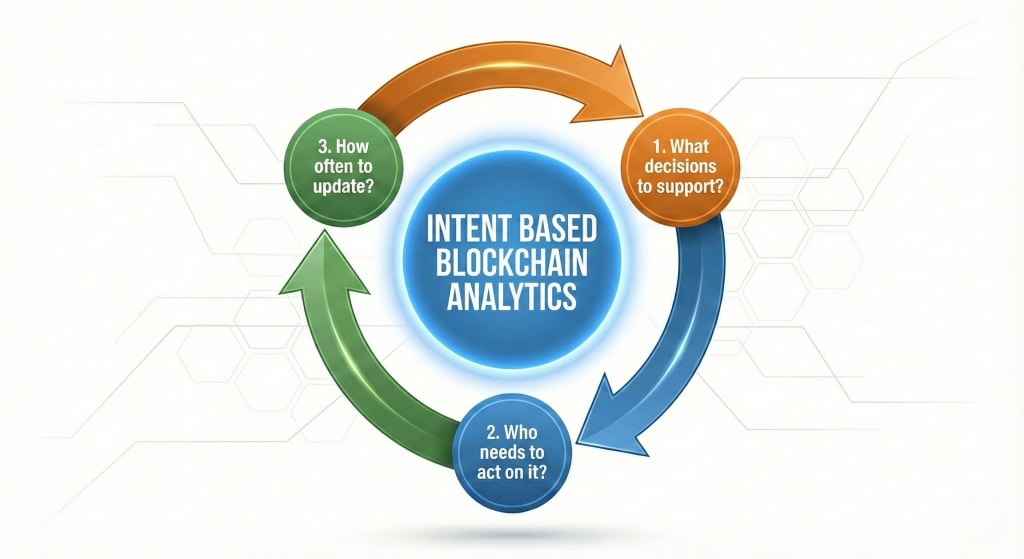
Effective analytics systems start with intent:
- What decisions will this data support?
- Who needs to act on it?
- How often does it need to update?
By designing analytics around decisions, teams avoid dashboards that look impressive but never influence action.
This mindset separates mature blockchain teams from those drowning in data.
Integrating Blockchain Analytics Into Long-Term Strategy
Analytics is not a one-time setup. As products evolve, so must the analytics layer.
Long-term blockchain analytics strategy involves:
- adapting metrics as protocols change
- incorporating new chains and data sources
- aligning analytics with governance decisions
- using historical data for forecasting
Teams that treat analytics as living infrastructure gain compounding advantages over time.
FAQ: Blockchain Analytics and Web3 Data
Q: Is blockchain analytics only useful for large protocols?
A: No. Even small teams benefit from understanding user behavior and system health.
Q: Do blockchain analytics replace traditional analytics tools?
A: They complement them. On-chain data answers different questions.
Q: Is blockchain big data hard to manage?
A: Yes, without proper indexing and cloud infrastructure.
Q: Can web3 analytics help prevent exploits?
A: It can provide early warning signals, though it’s not a guarantee.
Q: How quickly can insights be generated from blockchain data?
A: With the right blockchain cloud setup, insights can be near real time.
Conclusion
Share with your community!