Loading blog post...


How to Build Secure and Scalable Smart Contracts From Scratch
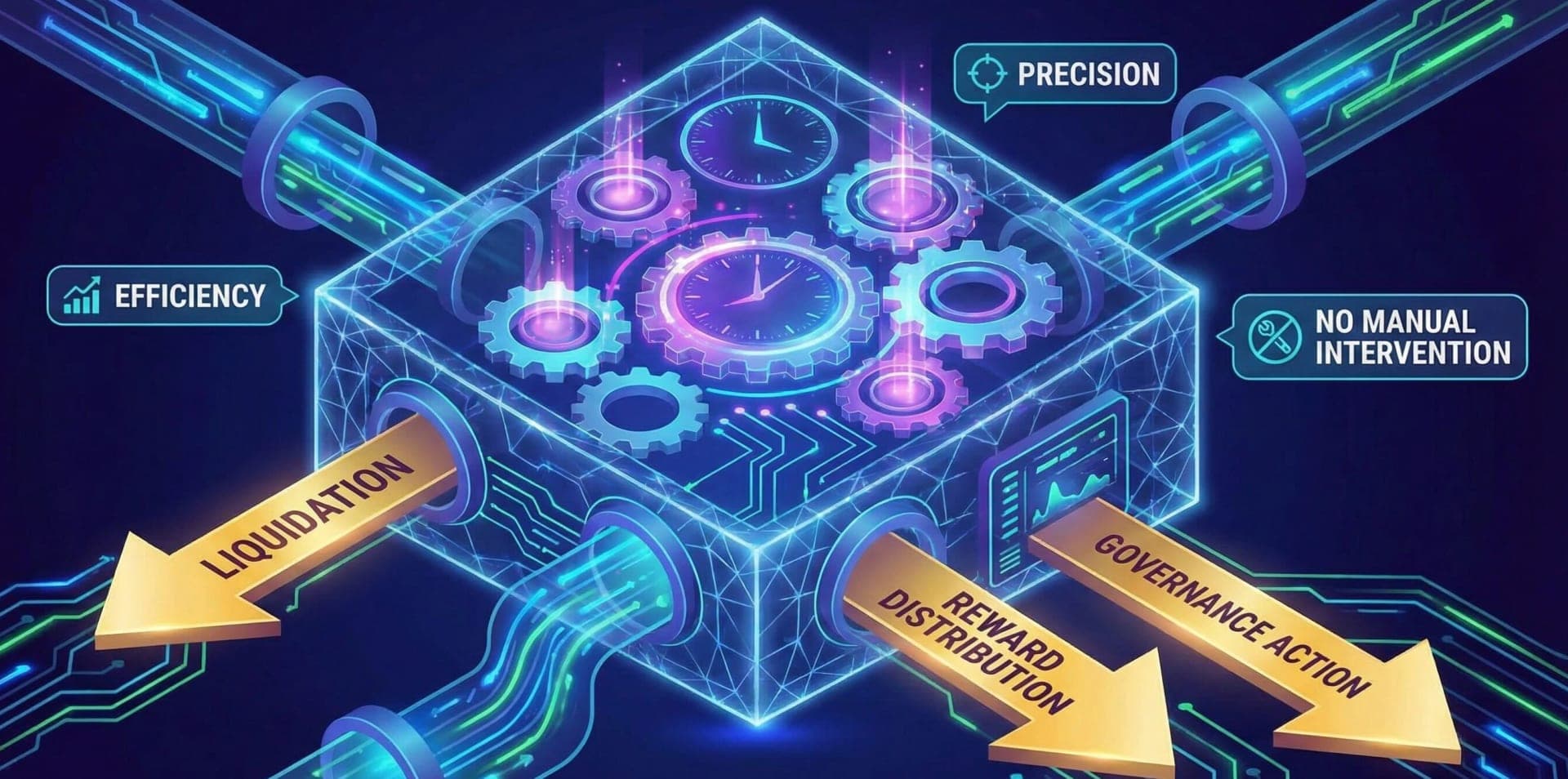
Building secure and scalable smart contracts requires far more than writing Solidity code and relying on audits. Successful contracts are engineered as immutable financial systems, with strong architecture, expert development, automation, and continuous security review baked in from day one. When designed with adversarial thinking and scalability in mind, smart contracts can safely handle real-world value, volatility, and long-term protocol growth.
Smart contracts have become the execution engine of Web3. They power DeFi, automate token economies, run marketplaces, trigger settlements, and enforce rules without intermediaries. But the same power that makes them revolutionary also makes them dangerous if built poorly. A single overlooked flaw can drain liquidity pools, freeze funds, collapse governance, or expose the entire protocol to exploitation.
Building secure and scalable smart contracts isn’t about writing Solidity and hoping an audit saves the rest. It demands architectural clarity, engineering discipline, adversarial thinking, and automation built into the core. Before diving into the process, it’s important to understand what a smart contract truly is not code on a blockchain, but an autonomous system executing enforceable logic on an immutable ledger.
If you want your contract to survive real-world usage, it must be engineered like financial software, not like a weekend hack.
Understanding What a Smart Contract Really Is
Before writing code, you must understand what a smart contract represents at the protocol level. Too many teams approach smart contracts as fancy scripts, not realizing that they become immutable infrastructure once deployed.
A smart contract is:
- deterministic code executed on the blockchain
- governed by strict state transitions
- transparent and publicly accessible
- irreversible once deployed unless built with upgrade patterns
Because of this, errors aren’t just bugs,they are permanent conditions.
Teams that treat smart contracts as financial systems, not just code, are the ones who succeed in building long-lasting, secure products.
Teams beginning their smart contract journey can explore deeper fundamentals in our smart contract consulting guide designed for Web3 builders.
Start With Architecture: The First Step Toward Smart Contract Security
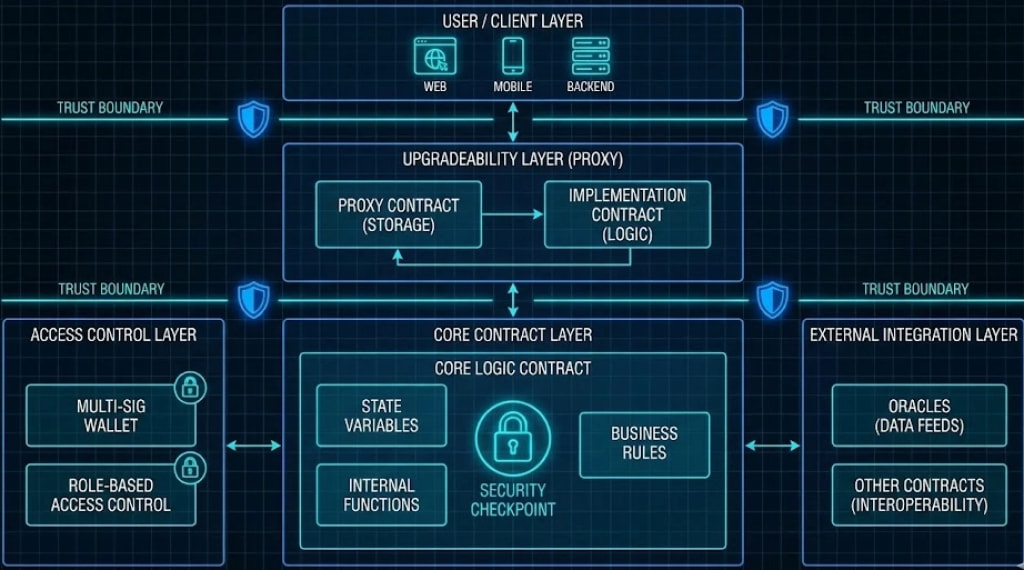
Security begins at the structural level. Most vulnerabilities originate not from coding errors but from unclear assumptions, weak trust boundaries, and unmodeled attack surfaces.
A strong architecture defines:
- how state transitions work
- what actors can trigger contract functions
- how value flows through the system
- which areas must be immutable
- which variables are safe to upgrade
Architectural decisions directly influence smart contract security because once deployed, flaws cannot be reversed.
For teams who need help structuring secure architecture from day one, our smart contract security service can provide the defensive foundation your protocol needs.
Work With a Smart Contract Development Company Built for Scale
Smart contracts don’t operate in a vacuum, they interact with routers, liquidity pools, bridges, price feeds, and off-chain components. A professional smart contract development company understands these execution environments and designs contracts to handle real-world pressure.
Such a company delivers:
- gas-efficient design
- adversarial threat modeling
- resilient upgrade frameworks
- integration-safe architecture
- multi-chain deployment strategy
When scalability is engineered into the foundation, the contract behaves predictably under high load and volatile market conditions.
Involve a Skilled Smart Contract Developer Early in the Lifecycle
An experienced smart contract developer doesn’t just write code, they anticipate risks, model edge cases, and prevent logic errors long before the audit stage.
A strong developer ensures:
- safe arithmetic and state management
- predictable upgrade mechanisms
- reentrancy-safe logic
- oracle manipulation resistance
- minimized attack surfaces
Teams that hire smart contract developers early avoid the costly refactoring that often delays launches and increases failure risk.
Integrate Smart Contract Automation for Reliability and Real-Time Execution
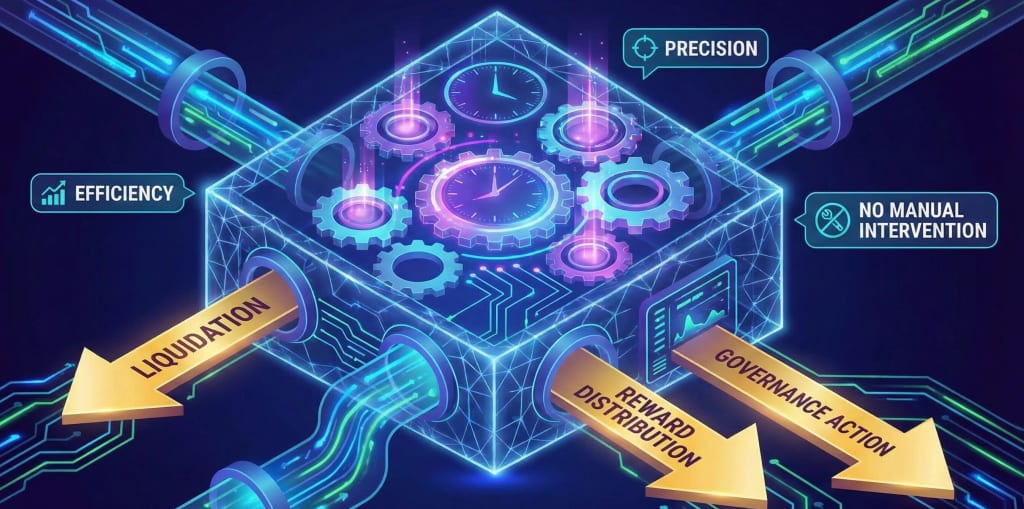
Smart contracts are most powerful when they operate autonomously. Smart contract automation enables actions to trigger without human input, removing operational friction and protecting the protocol from time-sensitive vulnerabilities.
Pointers make sense in this section:
Automation helps by enabling:
- scheduled executions (interest distribution, rewards, burns)
- condition-based triggers (liquidations, rebalancing, governance thresholds)
- automated risk controls
- fail-safe emergency functions
Automation reduces human error and ensures the contract performs perfectly even under volatile conditions.
Adopt Continuous Auditing, Not Just One-Time Reviews
A single audit is not a security strategy. Smart contracts evolve, integrate with new systems, and gain more value over time making them more attractive to attackers.
Continuous review ensures:
- new dependencies don’t create new risks
- integration changes don’t introduce vulnerabilities
- upgrades don’t add hidden attack surfaces
- protocol logic stays aligned with market conditions
Most security failures in Web3 happen after launch, not before.

Plan for Audit Cost and Audit Price the Right Way
Teams often misunderstand the smart contract audit cost and smart contract audit price. A cheap audit may miss critical vulnerabilities. An expensive one isn’t useful if your architecture is flawed.
Audit pricing depends on:
- protocol complexity
- number of contracts
- upgradeability
- attack surface area
- composability across chains
Instead of treating audit cost as a checkbox, treat it as an investment in the protocol’s future. The price of a good audit is always cheaper than the cost of a hack.
FAQ: Building Secure and Scalable Smart Contracts
Q: What is a smart contract?
A: A smart contract is autonomous code deployed on the blockchain that executes predefined logic without intermediaries. Once deployed, its behavior becomes immutable.
Q: How important is smart contract security?
A: It’s critical. Since smart contracts hold value and manage permissionless interactions, even a small vulnerability can lead to catastrophic financial loss.
Q: Should I hire a smart contract developer early?
A: Yes. Involving experts early prevents architectural flaws and reduces audit workload and cost later.
Q: What affects smart contract audit cost?
A: Complexity, size, dependencies and upgradeability influence both smart contract audit cost and smart contract audit price.
Q: How does smart contract automation help scalability?
A: Automation removes manual intervention, ensures reliability and reduces risk during high-volume or time-sensitive operations.
Conclusion
Secure and scalable smart contracts aren’t created by accident, they’re engineered through discipline, architecture, expert development, and continuous auditing. When you combine a strong foundation with automation, professional developers, and a long-term security strategy, you create contracts that can withstand real-world conditions and evolve safely over time.
A secure smart contract doesn’t just function, it endures.
Share with your community!