Loading blog post...


How to Build a Tamper-Proof Blockchain Digital Identity System
Traditional digital identity systems rely on centralized databases that can be altered, breached, or manipulated without user consent. Blockchain based identity replaces institutional trust with cryptographic proof, immutable records and user-controlled credentials. By combining wallets, decentralized identifiers, verifiable credentials, and zero-knowledge proofs, a tamper-proof blockchain identity system ensures ownership, privacy, and real-time verification at the protocol level.
Digital identity has become the backbone of how individuals access financial services, verify ownership, authenticate actions, and move through digital ecosystems. Yet traditional identity systems still rely on centralized database systems that can be edited, breached, or manipulated without users ever knowing. In a world where trust, transparency, and security are now non-negotiable, the future of identity requires architecture that cannot be silently changed or corrupted.
Blockchain provides exactly that. Not as a buzzword, but as an immutable foundation designed to protect identity the same way it protects value. The benefits of blockchain technology are many - cost efficient, tamper-resistance, decentralization, cryptographic security and verifiable transparency make it the ideal infrastructure for building next-generation digital identity systems.
Companies developing blockchain identity solutions are accelerating toward decentralized ID frameworks (DIDs), verifiable credentials, zero-knowledge authentication, and user-controlled identity models. But building a tamper-proof system requires a precise blend of cryptography, architecture, engineering discipline, and privacy design.
Here’s what the process really looks like.

Understanding Why Blockchain Is the Ultimate Identity Layer
Traditional identity frameworks fail because they assume a central authority will always remain honest. Blockchain rejects that assumption entirely. It replaces trust in institutions with trust in cryptography and distributed consensus.
A tamper-proof identity system gains its strength from blockchain’s core design:
- the ledger cannot be rewritten in secret
- identity events are timestamped and verifiable
- users control private keys rather than relying on institutions
- identity credentials can be proven without revealing raw data
This shift ensures identity stops being a database entry and becomes a cryptographic asset owned by the individual.
To explore identity-focused blockchain fundamentals, reach out to our experts - Contact us.
Anchoring Identity Ownership Through a Blockchain Wallet
A tamper-proof identity system begins with the user’s ability to control their own identity keys. That’s why the blockchain wallet isn’t just a bridge to applications, it’s the core of digital self-sovereignty.
The wallet becomes the identity’s root-of-trust, enabling:
- cryptographic authentication
- decentralized identifiers (DIDs)
- secure signing flows
- privacy-preserving proofs
A secure wallet ensures identity is no longer stored by institutions, it is held by individuals and accessed only through verifiable cryptographic signatures.

Designing Identity Architecture Using Lessons From Blockchain in Intellectual Property
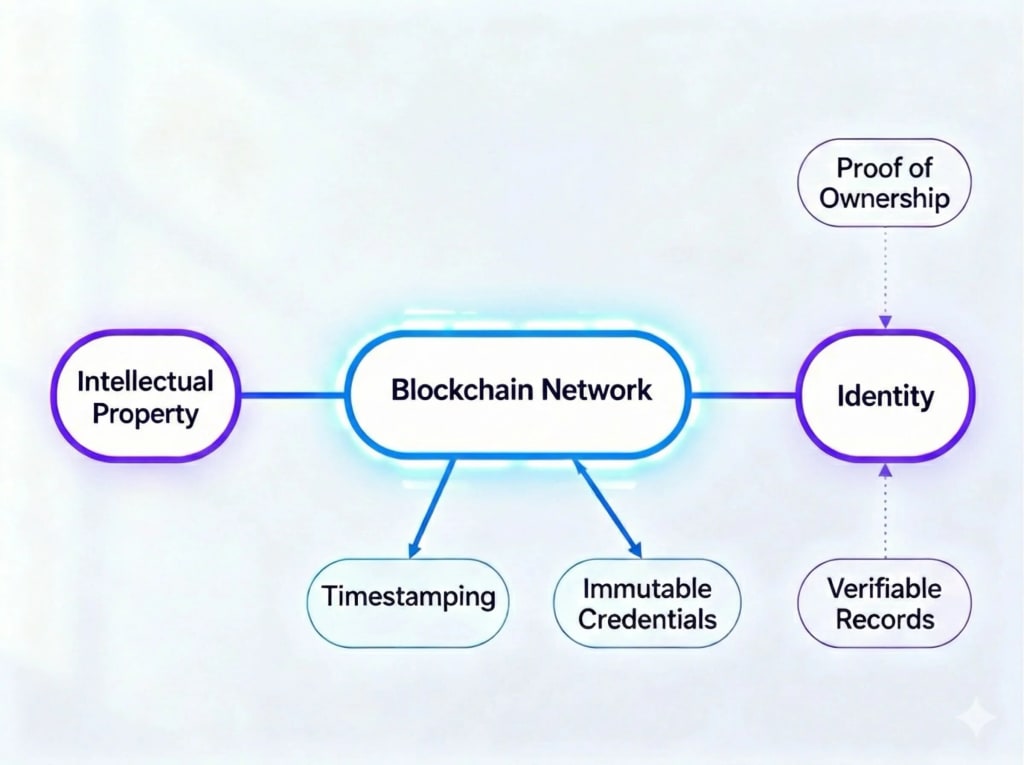
The principles behind blockchain in intellectual property map perfectly to identity engineering. IP protection relies on immutable proof-of-ownership, timestamped registries and transparent validation, exactly what secure identity systems need.
This alignment ensures:
- each identity credential has an immutable anchor
- hashing techniques protect sensitive attributes
- timestamps guarantee integrity
- disputes can be resolved cryptographically
By borrowing from decentralized IP design, identity architects create systems where every credential and verification event is defensible and verifiable.
Integrating a Blockchain Engineer Early to Avoid Foundational Weaknesses
Building a tamper-proof digital identity system is not a beginner’s task. A seasoned blockchain engineer ensures the system is secure at the architectural level long before smart contracts are deployed or users onboard.
A skilled engineer provides:
- secure DID registry design
- correct key management flows
- zero-knowledge proof (ZKP) integration
- safe smart contract architecture
- off-chain credential encryption strategy
Identity is only as strong as the engineering behind it, which is why companies serious about trust and security bring blockchain engineers into the project from day one.
Explore our Custom dApp development services to build with experts in this field.
Building Real-Time, Trustless Verification With On-Chain Proof Mechanisms
A tamper-proof identity system must verify user data without relying on human approval or centralized authorities. This is where on-chain verification delivers its strongest advantage.
Pointers help here:
- Instant validation: identity proofs are confirmed by the network
- Immutable logs: every identity event is timestamped
- Signature-based authentication: users prove identity without passwords
- Selective disclosure: ZKPs reveal only what is necessary
Real-time verification ensures that identity isn’t only secure, it is efficient, frictionless, and resistant to insider manipulation.
Selecting the Right Blockchain Network Backed by Reliable Companies Developing Blockchain
Identity systems must outlive the apps built on top of them. That means selecting a blockchain network backed by mature companies developing blockchain infrastructure, standards, and long-term support.
The right blockchain company provides:
- scalable throughput for identity events
- robust validator networks
- high uptime
- support for DID and verifiable credential frameworks
- strong on-chain privacy tooling
Choosing the right blockchain is a strategic decision, not a technical afterthought. If you're evaluating platforms or need a tailored recommendation for your identity architecture, explore our blockchain consulting services here.
Strengthening Privacy and Tamper-Proof Guarantees With Zero-Knowledge Layers
A blockchain identity system shouldn’t expose sensitive data to anyone—not even validators. Zero-knowledge proofs solve this by enabling users to prove identity attributes without revealing them.
A ZK-powered identity layer enables:
- privacy-preserving authentication
- selective disclosure for compliance
- on-chain verification without raw data leakage
- multi-network interoperability
This final layer transforms blockchain identity from tamper-resistant to practically unbreakable.
FAQ: Blockchain Digital Identity Systems
Q: Can blockchain really make identity tamper-proof?
A: Yes. Blockchain prevents unauthorized edits by making every identity event immutable and verifiable by the entire network.
Q: Is a blockchain wallet required in a digital identity system?
A: It’s essential. The blockchain wallet anchors private keys, enabling users—not institutions—to control and sign their identity credentials.
Q: How does blockchain in intellectual property relate to identity?
A: Both require timestamped, verifiable, tamper-proof records. The same mechanics used to protect IP rights are ideal for securing identity rights.
Q: Do companies developing blockchain influence which identity solution you choose?
A: Absolutely. Mature blockchain ecosystems backed by strong companies ensure long-term support, updates, security, and scalability.
Q: How important is a blockchain engineer in building identity systems?
A: Critical. A blockchain engineer ensures the system is secure, compliant, and architected to withstand real-world adversarial conditions.
Conclusion
A tamper-proof blockchain digital identity system is built on immutability, decentralization, cryptographic trust, and user-controlled credentials. When combined with zero-knowledge proofs, secure wallet integration, and expert engineering, identity becomes unalterable even by the system creators. This is not just an improvement over traditional frameworks, it is a complete reinvention of how identity should function in a digital world.
Blockchain doesn’t upgrade digital identity. It redefines it.
Share with your community!