Loading blog post...


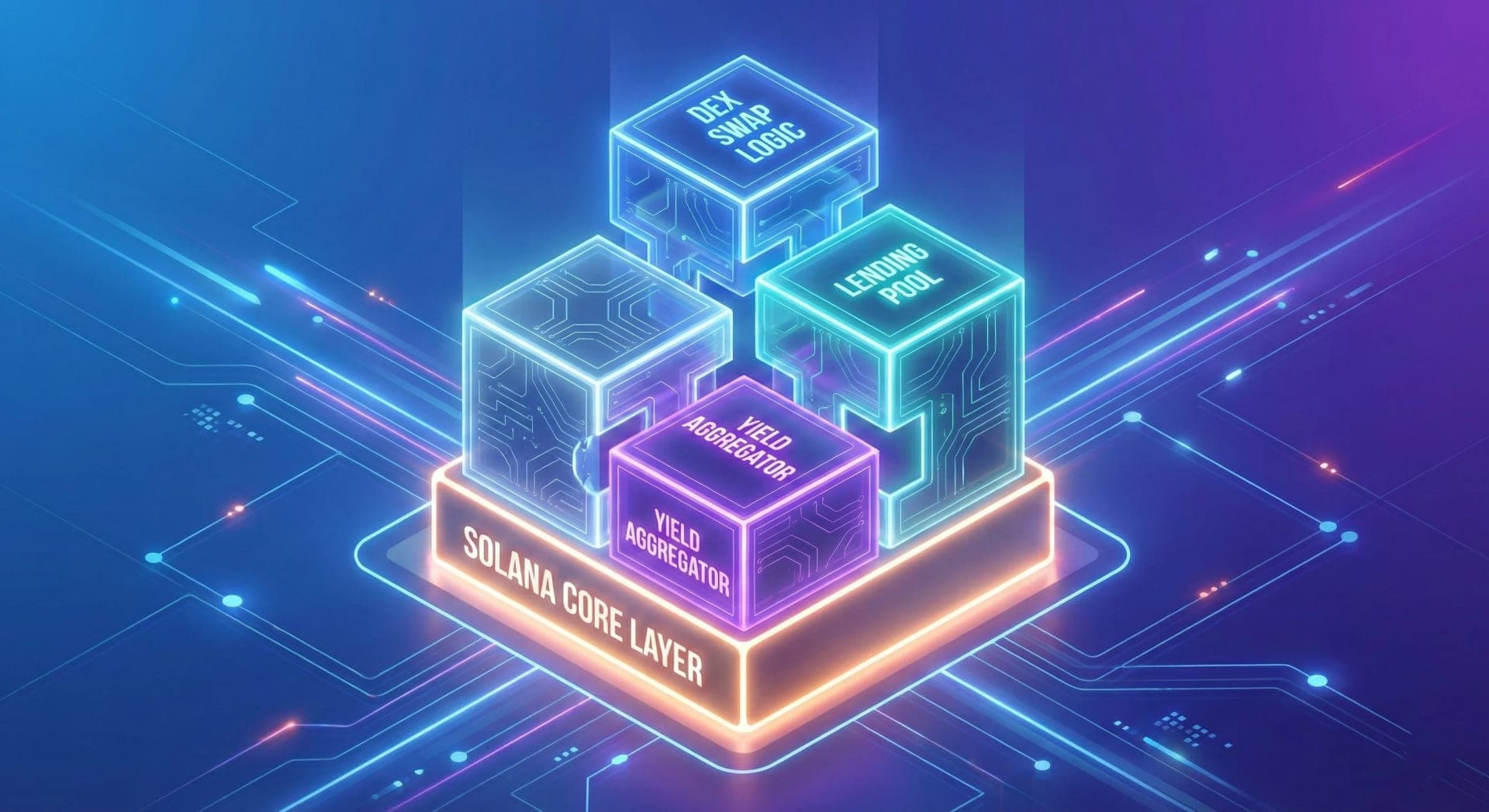
How Solana Smart Contracts Power High-Speed DeFi Protocols
Unlike traditional blockchains, Solana smart contracts are stateless by design, decoupling program logic from data storage. This architectural choice enables parallel transaction processing, allowing thousands of DeFi actions to occur simultaneously without bottlenecks. In this deep dive, we examine how Solana’s "Sealevel" runtime and modular infrastructure provide the backbone for real-time order books, lending protocols, and scalable liquidations in 2026.
Speed has always been the biggest promise of decentralized finance. But for years, DeFi applications struggled with congestion, slow confirmation times, and high execution costs. That changed when Solana entered the picture with a fundamentally different approach to smart contracts on the blockchain.
Today, many high-performance DeFi protocols rely on Solana Smart Contracts to deliver near-instant execution, low latency, and scalable on-chain logic. To understand why, you need to look beyond marketing claims and examine how smart contracts actually function within Solana’s architecture.
This guide explains how Solana smart contracts work, what makes them different, and why they are uniquely suited for high-speed DeFi systems.
Understanding the Smart Contract Meaning in a Solana Context
At a basic level, the smart contract meaning remains the same across blockchains: a program that executes predefined rules on-chain without intermediaries. What changes on Solana is how those rules are executed.
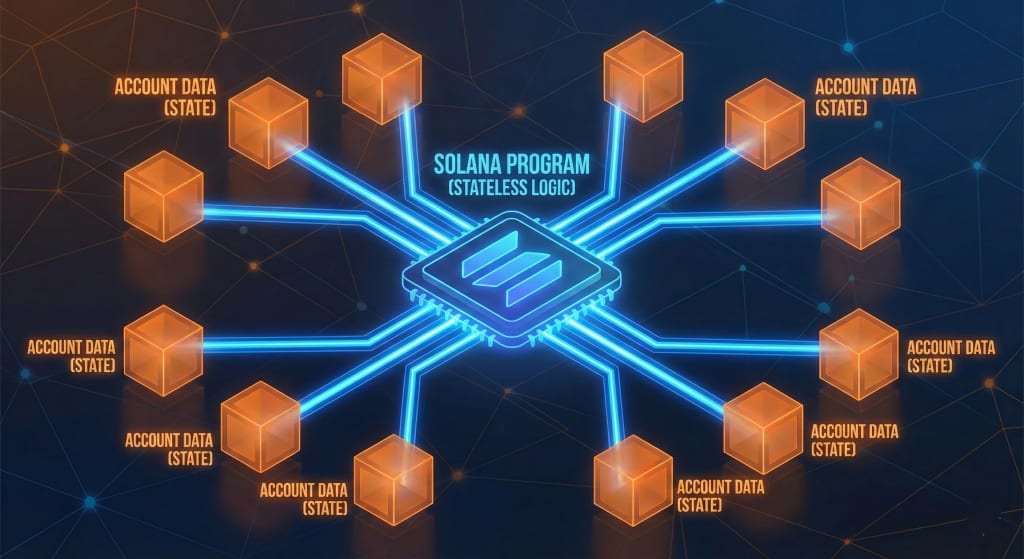
Unlike account-based smart contracts on other chains, Solana smart contracts (often called programs) are stateless by design. They interact with external accounts that store data, rather than owning state internally.
This separation allows:
- parallel execution of transactions
- reduced execution bottlenecks
- predictable performance under load
For DeFi protocols, this architectural choice directly translates into higher throughput and faster settlement.
Why Solana Smart Contracts Are Built for High-Speed DeFi
High-frequency DeFi use cases: trading, lending, liquidations demand consistent performance. Solana Smart Contracts are optimized for these conditions by design.
Several factors enable this speed:
- parallel transaction processing
- low-level runtime optimization
- minimal execution overhead per instruction
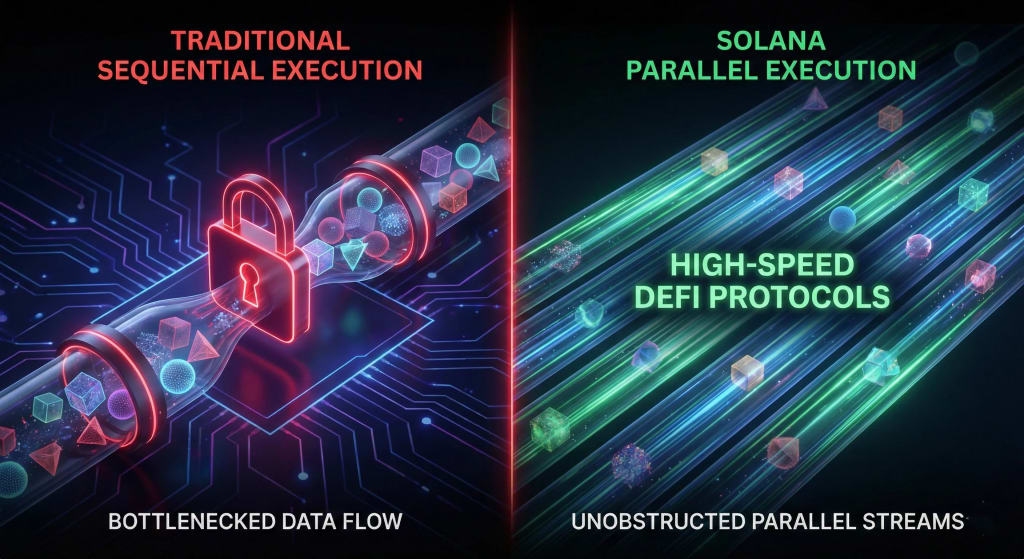
Instead of processing transactions sequentially, Solana evaluates which smart contracts can run simultaneously. This is a major advantage for DeFi applications that handle large volumes of independent actions.
The result is a blockchain environment where speed is default.
How Smart Contracts on the Blockchain Enable Real-Time DeFi Execution
In most DeFi protocols, timing is critical. Price changes, arbitrage opportunities, and liquidation thresholds all depend on fast execution.
Solana’s approach to smart contracts on the blockchain allows protocols to:
- process orders in near real time
- update on-chain state without long confirmation delays
- maintain accurate pricing across rapid market movements
This is especially important for order-book-based DeFi, where slow execution can distort markets. On Solana, smart contracts act more like high-performance backends than slow settlement layers.
For teams building latency-sensitive DeFi products, our smart contract development services focus on performance-first architecture.
Smart Contract Examples That Show Solana’s DeFi Capabilities
Looking at smart contract examples on Solana reveals how its design supports complex DeFi logic without sacrificing speed.
Typical examples include:
- decentralized exchanges with real-time matching
- lending protocols with instant collateral checks
- automated market makers with rapid rebalancing
These systems rely on multiple smart contracts working together, often within the same block. Solana’s execution model allows this coordination without congestion, something many chains struggle with.
What matters here is not the complexity of the code, but how efficiently it runs under pressure.
How Solana Smart Contracts Reduce Bottlenecks in DeFi Protocols
One of the biggest challenges in DeFi protocols is contention—multiple users trying to access the same contract state simultaneously.
Solana mitigates this by:
- explicitly declaring which accounts a transaction will touch
- locking only those accounts during execution
- allowing unrelated transactions to proceed in parallel
Here’s where pointers help clarify impact:
This design:
- reduces failed transactions
- minimizes congestion during spikes
- improves user experience during volatility
For DeFi systems that operate at scale, this model is a structural advantage rather than a minor optimization.
Smart Contracts as Infrastructure, Not Just Logic, in Solana DeFi
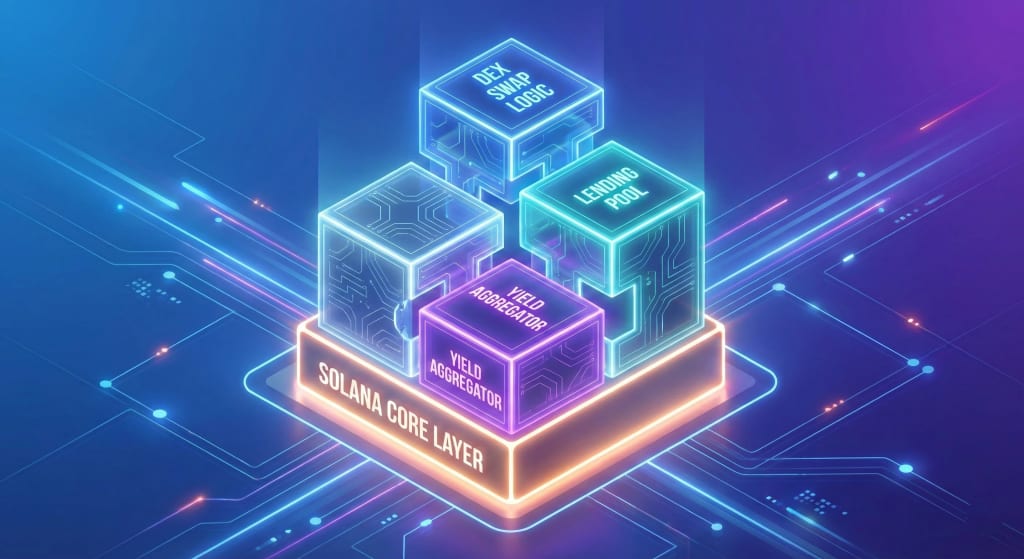
On Solana, Smart Contracts are treated more like infrastructure components than isolated pieces of logic. They are designed to be composable, reusable, and efficient.
This encourages DeFi developers to:
- build modular systems
- reuse core programs across protocols
- coordinate complex interactions safely
As a result, the Solana DeFi ecosystem evolves faster, with new protocols building on proven foundations instead of reinventing core logic.
For teams evaluating composability, our blockchain architecture advisory helps design scalable smart contract systems. Connect today to get a free consultation.
Security Considerations for High-Speed Solana DeFi Smart Contracts
Speed does not remove risk, it changes it. While Solana Smart Contracts execute quickly, mistakes propagate just as fast.
Key security considerations include:
- account permission management
- safe handling of parallel execution
- preventing unintended state access
High-speed DeFi systems require careful testing and auditing to ensure logic behaves correctly under concurrent execution.
For teams preparing production deployments, our smart contract audit services cover Solana-specific execution risks.
Why Solana Smart Contracts Attract Next-Generation DeFi Builders
Developers building the next wave of DeFi protocols are increasingly drawn to Solana not just for speed, but for predictability.
Predictable execution costs, consistent performance, and scalable smart contract behavior allow teams to design user experiences that feel closer to traditional finance—without sacrificing decentralization.
This combination is why Solana has become a serious contender for high-performance DeFi.
FAQ: Solana Smart Contracts and DeFi
Q: Are Solana Smart Contracts different from Ethereum smart contracts?
A: Yes. They use a different execution and state model optimized for parallelism.
Q: Do Solana smart contracts support complex DeFi logic?
A: Yes. Complexity is handled through modular programs and external state accounts.
Q: Is Solana suitable for all DeFi use cases?
A: It’s especially strong for high-frequency and latency-sensitive applications.
Q: Are smart contract examples on Solana reusable?
A: Often yes, if designed with composability in mind.
Q: Does higher speed increase risk?
A: Only if security practices don’t account for parallel execution.
Conclusion
Share with your community!