Loading blog post...


How Decentralized Applications (dApps) Work: From Smart Contracts to User Interaction
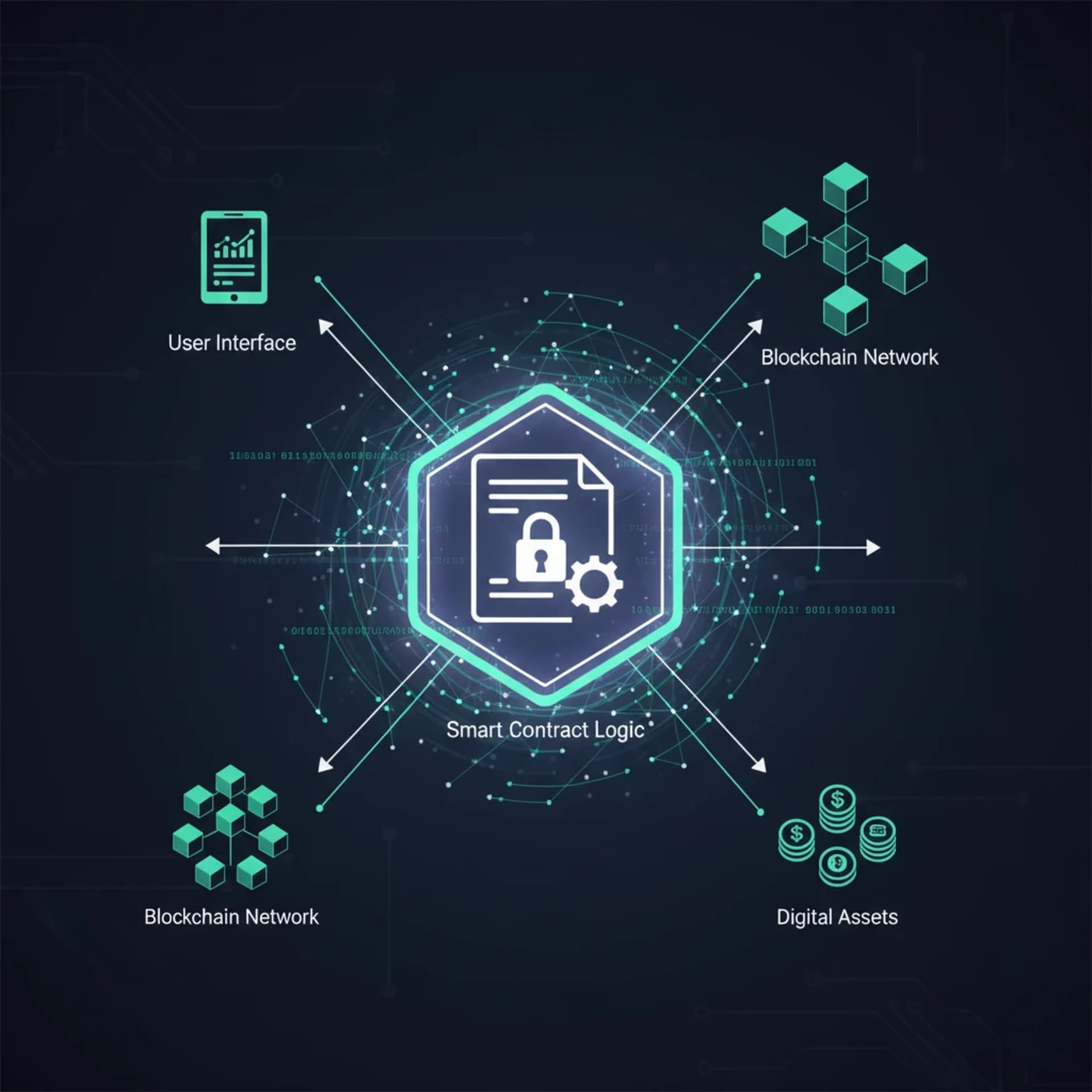
Decentralized applications are redefining the digital economy. While they may look like traditional apps, dApps replace centralized servers with the immutable logic of smart contracts and blockchain networks. From the backend of DeFi to the user interaction layer of Web3 wallets, this guide breaks down the architecture that makes decentralized systems trustless, transparent, and global.
Decentralized applications are no longer experimental ideas. They are becoming the backbone of modern Web3 ecosystems, powering everything from finance and gaming to identity and data sharing. Yet, despite their growing popularity, many people still struggle to understand how decentralized applications actually work.
At first glance, dApps look similar to traditional apps. But under the surface, their architecture is fundamentally different. Instead of relying on centralized servers, dApps operate on blockchain networks, using Smart Contracts to execute logic and manage trust.
To truly understand dApps meaning, we need to explore how smart contracts, blockchain infrastructure, and user interaction come together to create decentralized systems.
Understanding dApps Meaning in Blockchain Systems
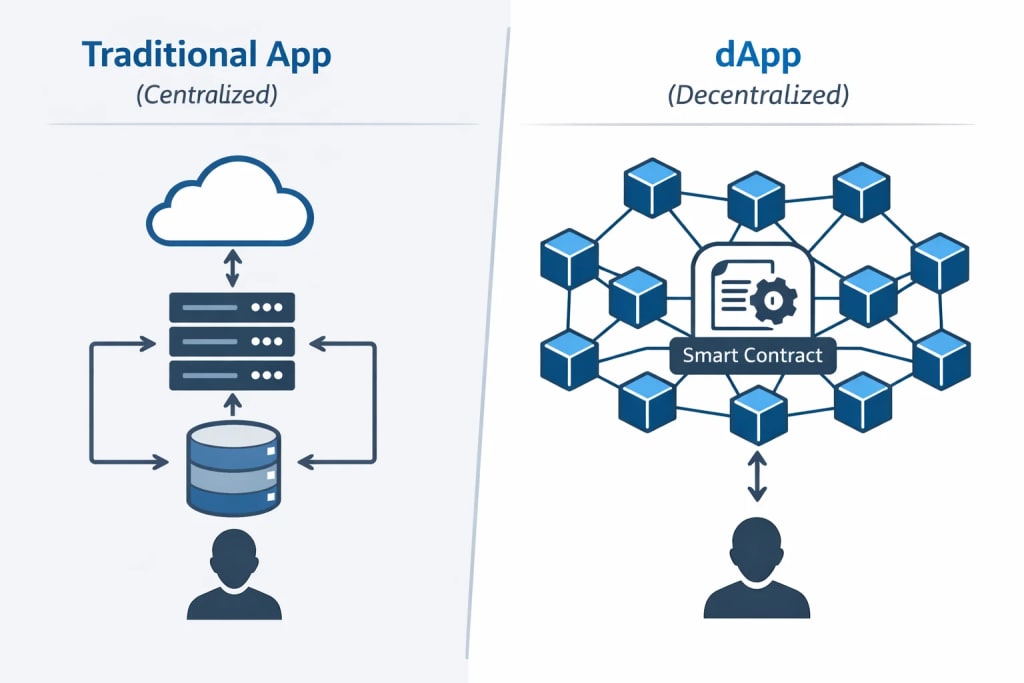
The simplest way to explain dApps meaning is this: a decentralized application is a software system that runs on a blockchain rather than a central server.
Unlike traditional applications, a dApp in blockchain does not rely on a single authority to control data or logic. Instead, its core rules are encoded into smart contracts that execute autonomously.
This shift changes how applications are built and trusted. In decentralized apps, trust moves from institutions to code.
Key characteristics of dApps include:
- open and verifiable logic
- decentralized data storage
- token-based incentives
These characteristics differentiate dApps from conventional web applications.
Eth Elite’s blockchain consulting services help define suitable dApp models. Contact us for a free consultation.
Smart Contracts as the Core Engine of Decentralized Applications
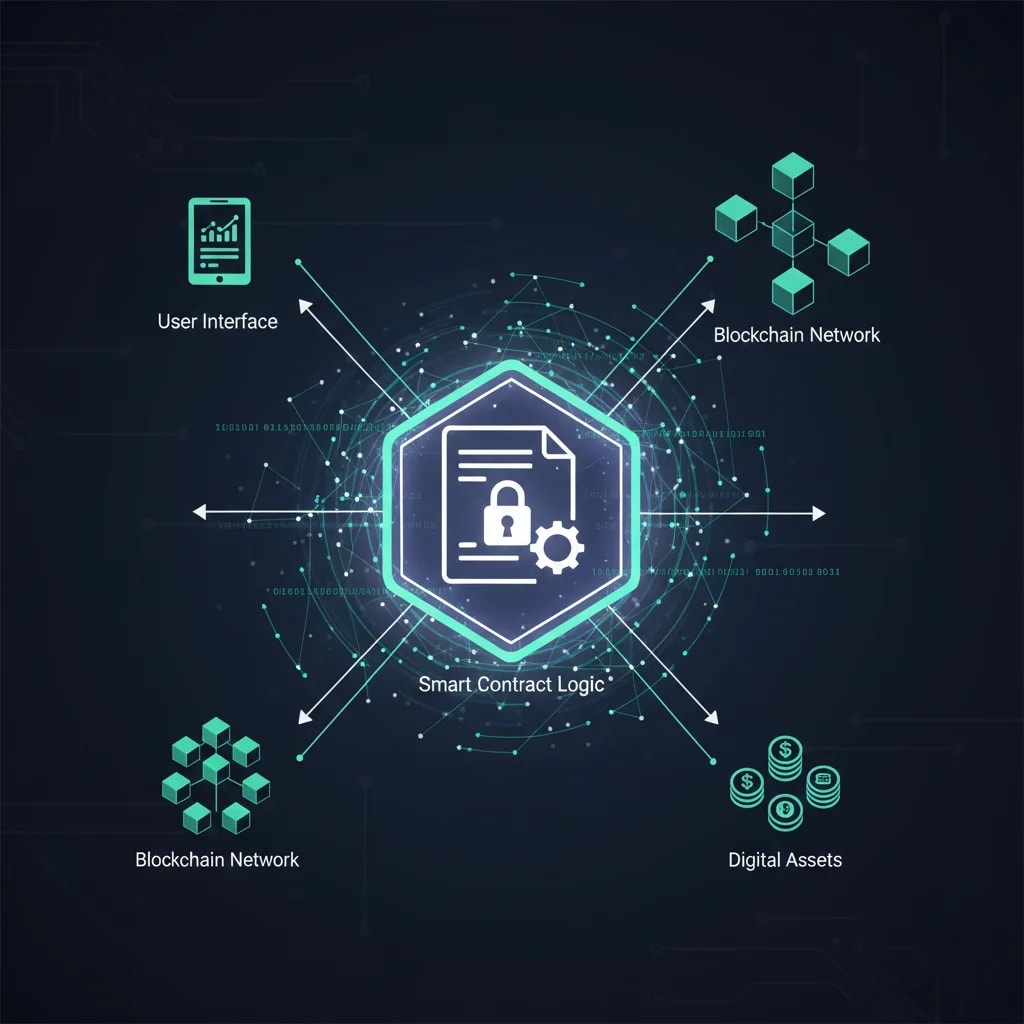
Every functional dApp relies on Smart Contracts to execute business logic. These contracts act as the backend of decentralized systems, replacing centralized servers and APIs.
In decentralized applications, smart contracts:
- validate transactions
- enforce rules automatically
- manage digital assets and permissions
Unlike traditional backend systems, smart contracts are immutable once deployed. This immutability creates transparency but also demands careful design.
In practice, the reliability of decentralized apps depends heavily on how well smart contracts are architected and audited.
For teams building secure contract logic, our smart contract development services focus on scalable and resilient design
 .
.
How Blockchain Infrastructure Supports dApps
While smart contracts define logic, blockchain networks provide execution and consensus. The blockchain acts as the operating environment for dApps.
Different blockchains influence how building dApps works:
- Ethereum emphasizes security and composability
- Solana prioritizes speed and parallel execution
- Layer 2 networks focus on scalability and cost efficiency
These differences shape the performance and usability of decentralized applications. Choosing the right blockchain is not a technical detail but a strategic decision that affects user experience and adoption.
How DeFi Applications Use dApps to Automate Financial Systems
One of the most advanced uses of dApps is in decentralized finance. DeFi applications use smart contracts to replicate financial services without intermediaries.
Examples include:
- decentralized exchanges
- lending and borrowing protocols
- yield farming platforms
Here, pointers help clarify the impact:
DeFi dApps enable:
- permissionless access to financial services
- real-time settlement
- transparent economic rules
In these systems, smart contracts replace traditional financial institutions, making dApps a foundational layer of modern digital finance.
User Interaction Layer: How People Actually Use dApps
From a user’s perspective, a dApp often looks like a regular website or mobile app. But the interaction model is different.
Users interact with decentralized apps through wallets rather than usernames and passwords. Transactions are signed cryptographically and executed on-chain.
This interaction layer includes:
- Web3 interfaces
- wallet integrations
- blockchain explorers and analytics tools
Platforms like DappRadar help users discover and evaluate dApps by tracking usage, volume, and activity across ecosystems. In this way, dapp radar acts as a visibility layer for decentralized ecosystems.
The usability of a dApp often determines its success more than its technical sophistication.
Building dApps: From Concept to Deployment
Building dApps requires coordination between multiple layers of technology and design. Unlike traditional apps, decentralized applications must integrate blockchain logic, smart contracts, and user interfaces seamlessly.
A typical dApp development flow involves:
- defining use cases and economic models
- designing smart contract architecture
- selecting blockchain infrastructure
- building user interfaces and integrations
Each stage influences the reliability and scalability of the final application. Poor decisions at early stages can limit growth later.
Why Decentralized Applications Are Reshaping Web3 Ecosystems
dApps are not just technical experiments. They represent a shift in how software is designed, governed, and trusted.
By combining blockchain infrastructure with smart contracts, decentralized applications enable:
- trustless coordination
- global participation
- programmable digital economies
This is why dApps are becoming central to Web3 innovation. They are not replacing traditional applications overnight, but they are redefining what software can be in a decentralized world.
FAQ: Decentralized Applications Explained
Q: What are decentralized applications (dApps)?
A: They are applications that run on blockchain networks using smart contracts instead of centralized servers.
Q: How are dApps different from traditional apps?
A: Traditional apps rely on centralized infrastructure, while dApps rely on blockchain and smart contracts.
Q: Are DeFi applications examples of dApps?
A: Yes. DeFi applications are among the most widely used decentralized applications.
Q: What is DappRadar used for?
A: It tracks and analyzes dApp activity across blockchain ecosystems.
Q: Is building dApps more complex than traditional apps?
A: Yes. It requires expertise in blockchain, smart contracts, and Web3 architecture.
Conclusion
Decentralized applications are built on a layered architecture where smart contracts, blockchain infrastructure, and user interfaces work together to create trustless systems. Understanding how dApps function from smart contract logic to user interaction reveals why they are transforming Web3 ecosystems.
As decentralized apps continue to evolve, their impact will extend far beyond finance into identity, governance, gaming, and data ownership. EthElite operates in this layer by designing dApp architectures that balance security, scalability and real-world usability, not just technical novelty.
Because in Web3, dApps are the infrastructure of decentralized digital economies.
Share with your community!