Loading blog post...


How Blockchain in Supply Chain Management Improves Transparency and Efficiency
The modern global supply chain is often a "black box" of fragmented data and manual paperwork. This guide explores how blockchain is moving beyond the hype to become a structural upgrade for SCM. By creating a shared, immutable ledger, blockchain enables real-time traceability and automated efficiency, allowing businesses to replace mistrust with a single, verifiable source of truth.
The modern global supply chain is complex, fragmented, and often opaque. Products move across continents, pass through multiple intermediaries, and rely on disconnected data systems. For businesses, this creates blind spots that lead to delays, fraud, disputes, and inefficiencies.
This is where blockchain in supply chain management is creating measurable change. Instead of relying on siloed databases and manual reconciliation, blockchain introduces a shared, tamper-resistant ledger that connects every participant in the supply chain.
But blockchain is not a magic fix. Its real value lies in how it reshapes coordination, accountability, and data flow across the supply chain.
This guide explores how blockchain and supply chain management work together to improve transparency and efficiency in practical, real-world ways.
Why Traditional Supply Chain Management Struggles With Transparency
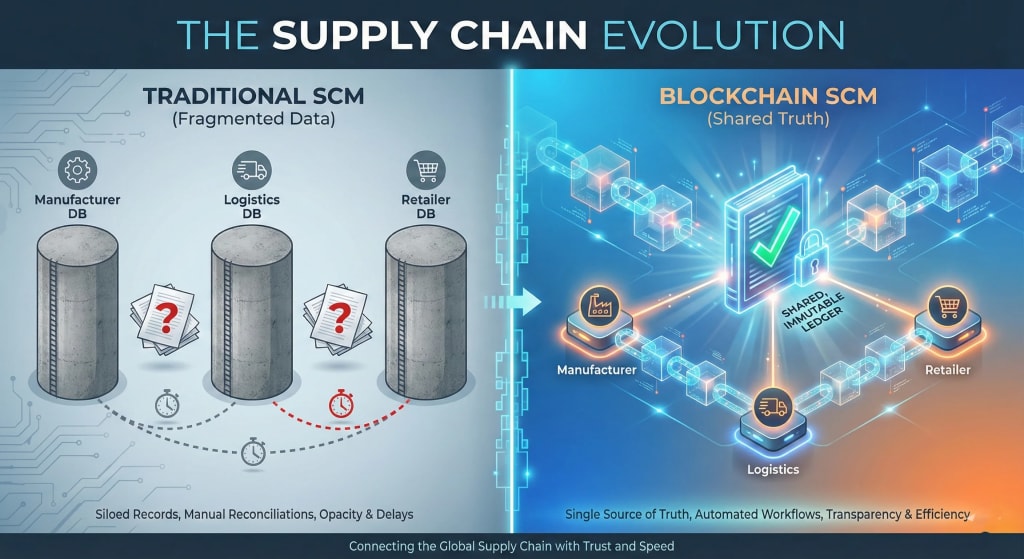
In traditional supply chain management, data is scattered across multiple systems. Each stakeholder - manufacturers, logistics providers, distributors, retailers maintains its own records.
This fragmentation creates:
- inconsistent data
- delayed verification
- limited traceability
- manual dispute resolution
When something goes wrong, identifying the root cause becomes slow and expensive. This is why companies are exploring blockchain and the supply chain as a structural upgrade, not just a technological add-on.
How Blockchain and Supply Chain Management Create a Shared Source of Truth
At its core, blockchain provides a single, immutable record of events. In blockchain and supply chain management, every transaction, movement, and certification can be recorded on-chain.
This shared ledger ensures that:
- all participants view the same data
- records cannot be altered retroactively
- updates are visible in near real time
Unlike centralized systems, blockchain does not rely on one controlling authority. This makes it especially valuable in multi-party environments like the global supply chain.
For organizations designing shared data architectures, connect with our team for blockchain consulting services that help align technical design with operational workflows.
Blockchain Application in Supply Chain for End-to-End Traceability
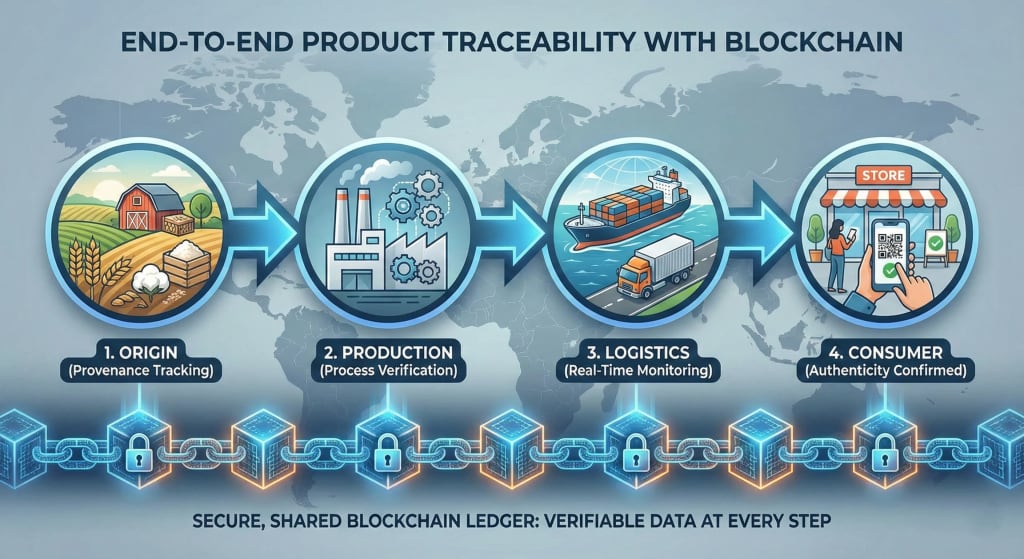
One of the most impactful blockchain applications in supply chain is traceability. Companies can track products from origin to destination with unprecedented accuracy.
Blockchain enables:
- provenance tracking of raw materials
- verification of manufacturing processes
- real-time monitoring of logistics
Here, pointers clarify the benefit:
Traceability helps businesses:
- detect counterfeits
- ensure compliance
- respond faster to recalls
This is why industries like food, pharmaceuticals, and luxury goods are adopting supply chain management blockchain solutions.
Improving Operational Efficiency With Supply Chain Management Blockchain
Beyond transparency, blockchain improves efficiency by reducing manual processes. Traditional supply chains rely heavily on paperwork, reconciliations, and intermediaries.
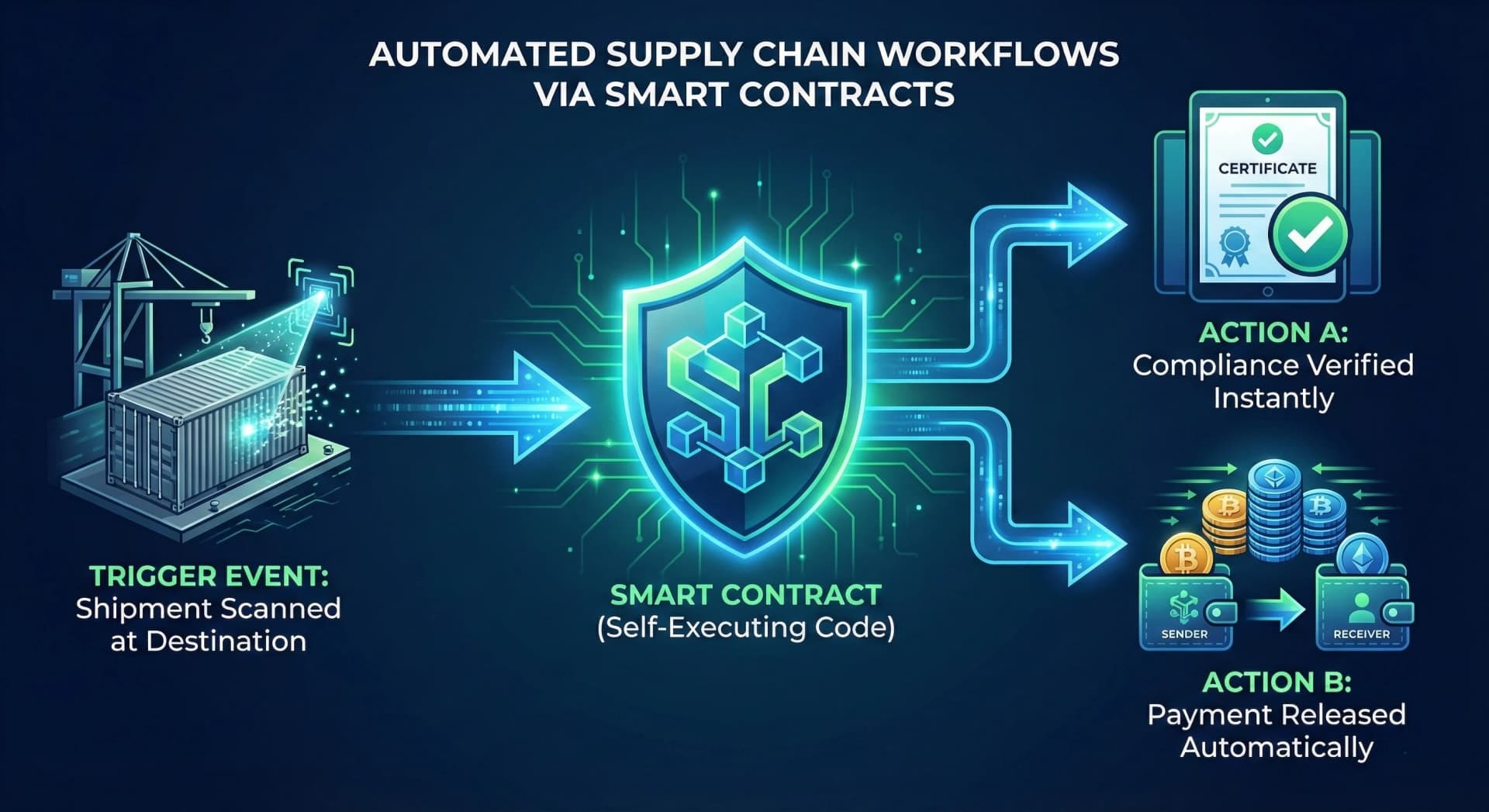
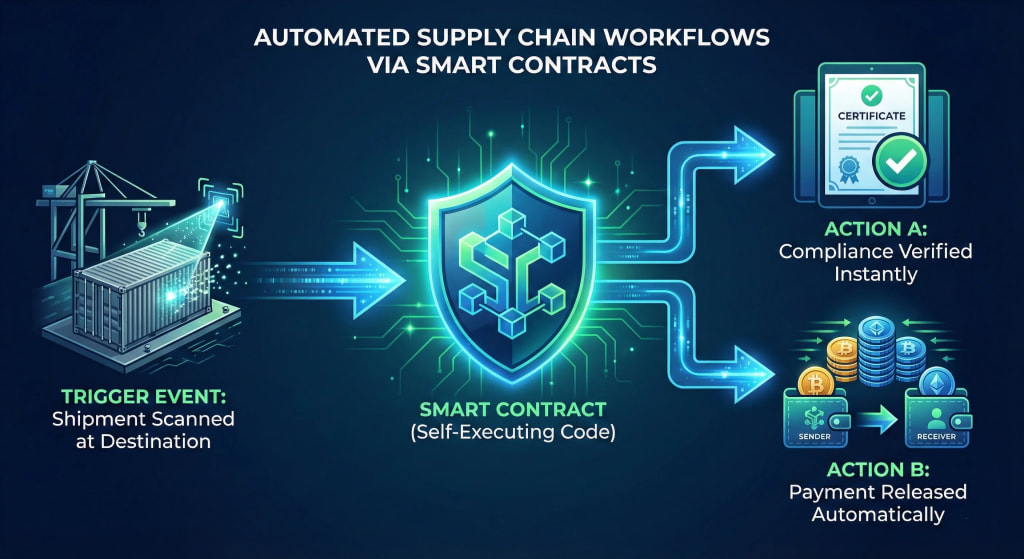
With blockchain in supply chain management, many processes become automated:
- document verification
- payment triggers
- compliance checks
Automation reduces delays and administrative overhead. Instead of waiting days for confirmations, stakeholders can rely on real-time blockchain records.
For teams implementing automation logic, our smart contract development services support supply chain workflows.
Reducing Disputes and Fraud in Blockchain and Supply Chain Systems
Disputes are inevitable in complex supply chains. They often arise from inconsistent data or unclear responsibilities.
Blockchain and supply chain systems reduce disputes by providing verifiable records of every action. When data is shared and immutable, accountability becomes clearer.
Fraud prevention improves because:
- records cannot be silently altered
- anomalies are easier to detect
- trust shifts from intermediaries to data
This shift is particularly valuable in high-value and cross-border transactions within the global supply chain.
Enhancing Collaboration Across the Global Supply Chain
Supply chains are ecosystems, not linear pipelines. Collaboration between stakeholders is often hindered by mistrust and incompatible systems.
Supply chain management and blockchain enable collaboration by:
- standardizing data formats
- aligning incentives
- reducing dependency on central authorities
This collaborative infrastructure allows partners to share data confidently without exposing sensitive information unnecessarily.
For enterprises building multi-stakeholder platforms, EthElite’s blockchain solutions focus on interoperability and governance design.
Scalability and Adoption Challenges in Blockchain Supply Chain Solutions
While the benefits are clear, adoption is not frictionless. Implementing blockchain application in supply chain requires organizational change, technical integration, and regulatory awareness.
Common challenges include:
- legacy system integration
- stakeholder onboarding
- governance design
Successful implementations treat blockchain as a long-term transformation, not a quick fix.
FAQ: Blockchain in Supply Chain Management
Q: Is blockchain suitable for all supply chains?
A: No. It’s most effective in multi-party, high-trust environments.
Q: Does blockchain replace existing supply chain systems?
A: Usually not. It integrates with them.
Q: Can blockchain reduce supply chain costs?
A: Yes, by lowering reconciliation and dispute resolution expenses.
Q: Is blockchain scalable for global supply chains?
A: With proper architecture, yes.
Q: Do all stakeholders need technical expertise?
A: No. Most systems abstract blockchain complexity from users.
Conclusion
Blockchain is not reinventing supply chains, it is making them visible, accountable and efficient. By creating a shared source of truth, automating workflows, and strengthening collaboration, blockchain in supply chain management addresses long-standing structural problems.
As blockchain and supply chain management continue to converge, businesses that adopt blockchain strategically will gain more than efficiency. They will gain trust, resilience, and adaptability in an increasingly complex global supply chain. EthElite focuses on engineering supply-chain blockchain systems that align operational reality with onchain automation, not just digital dashboards.
The future of supply chain management is not just faster and verifiable. It is intelligently designed for scale, accountability, and real-world execution.
Share with your community!