Loading blog post...


How Blockchain Gaming Works: A Step-by-Step Breakdown
Blockchain gaming isn’t just about "play-to-earn"—it’s a fundamental shift in digital ownership. Explore the step-by-step mechanics of how wallets, NFTs, and smart contracts power the next generation of gaming economies.
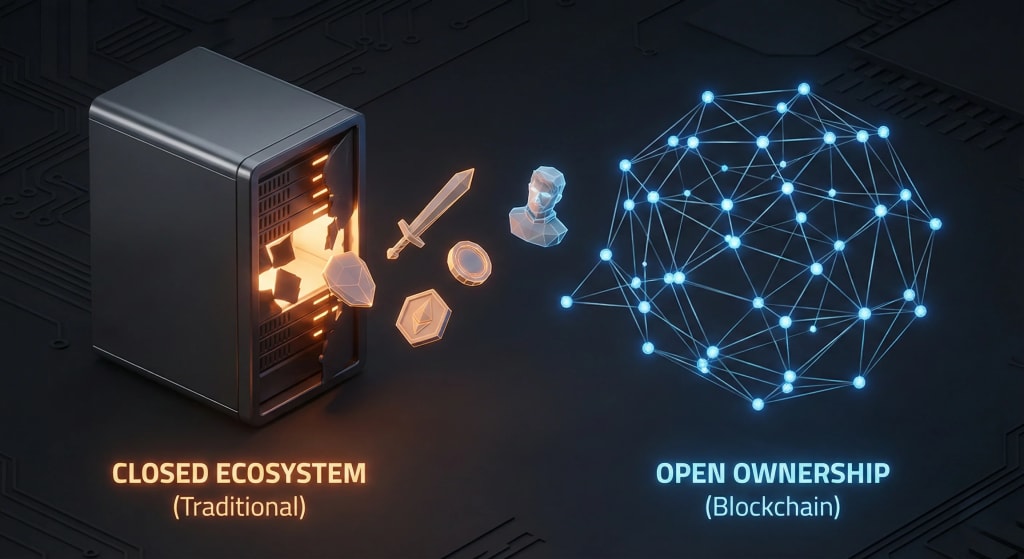
Blockchain gaming didn’t emerge to replace traditional games overnight. It emerged to change how ownership, value, and participation work inside games. Instead of players investing time and money into closed ecosystems, blockchain gaming allows in-game value to exist independently of the developer.
From crypto games to full-scale NFT gaming economies and play to earn crypto games, the mechanics follow a clear structure. Once you understand that structure, the model becomes far less mysterious.
This guide walks through how blockchain gaming actually works, step by step, focusing on systems, not hype.
Understanding the Core Idea Behind Blockchain Gaming
At its foundation, blockchain gaming separates game logic from game ownership. Traditional games store items, currencies, and progress on centralized servers. Blockchain games record key assets and actions on-chain.
This shift introduces three fundamental changes:
- players own certain in-game assets
- value can move outside the game
- rules are enforced by code, not just servers
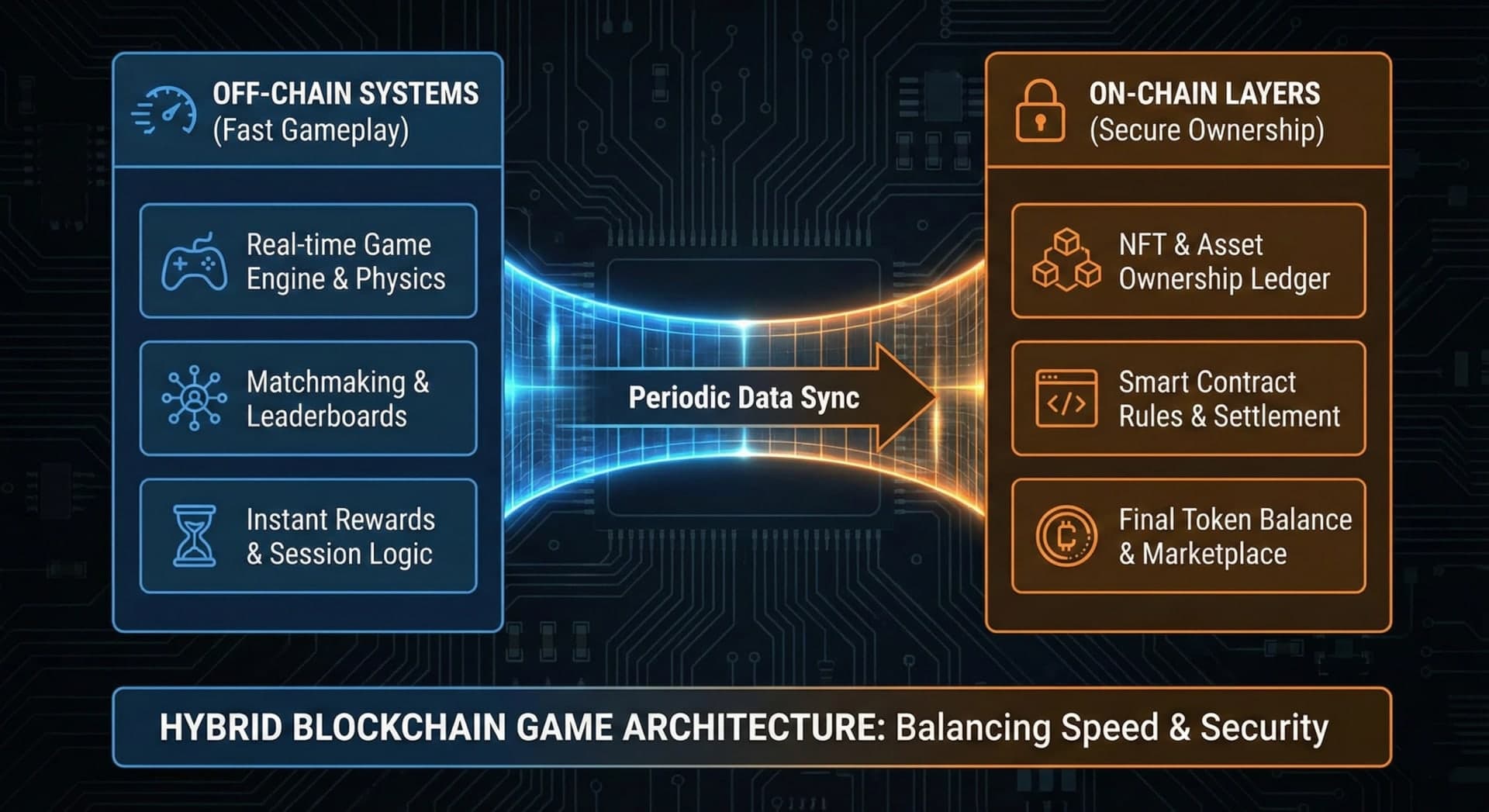
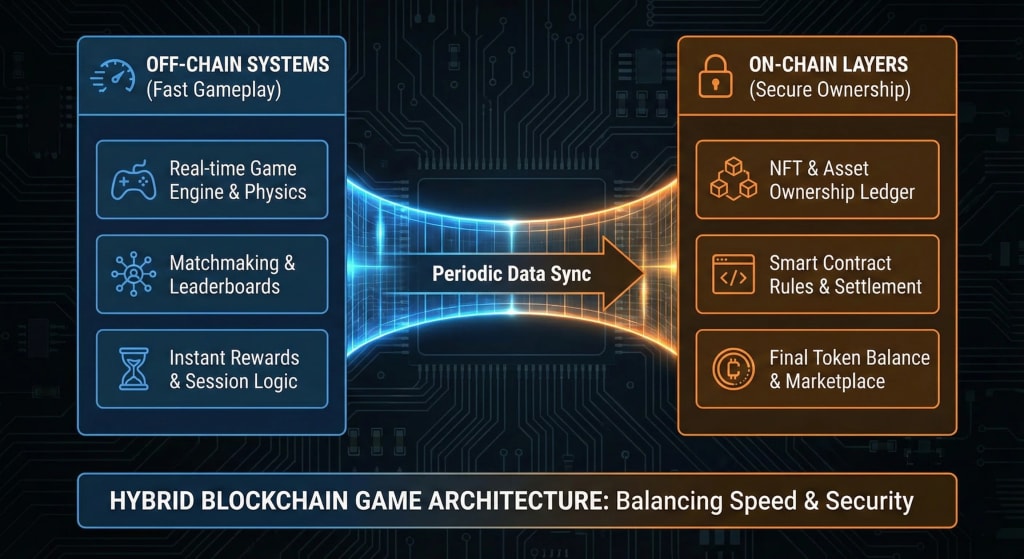
This doesn’t mean everything lives on-chain. Most modern crypto games combine blockchain components with traditional game engines to balance performance and decentralization.
Wallets as the Entry Point to Crypto Games
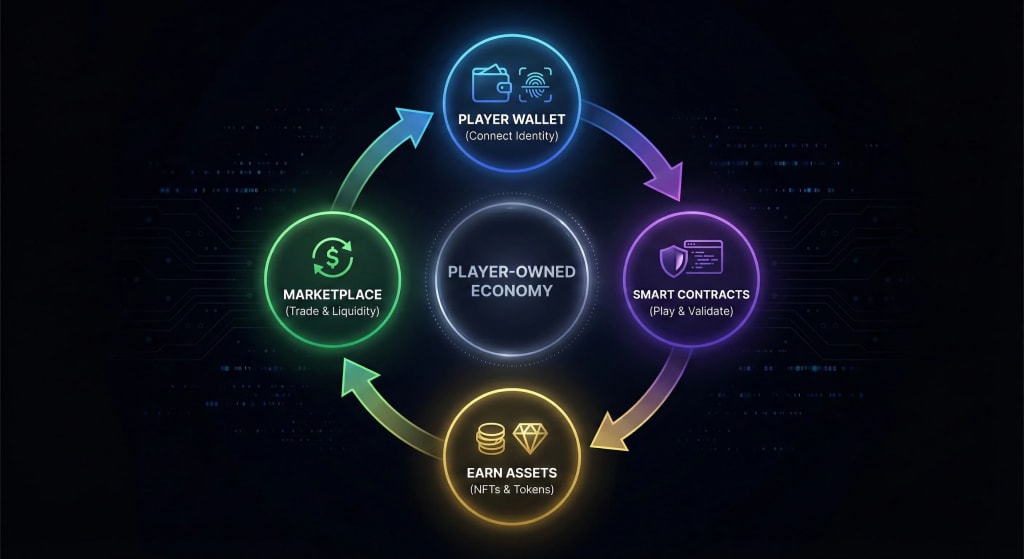
Every blockchain game starts with identity. In crypto games, identity is represented by a wallet, not a username-password pair.
The wallet:
- identifies the player
- holds game assets
- signs in-game actions that affect ownership
This step matters because it establishes direct player ownership. Once assets sit in a wallet, they are no longer fully controlled by the game developer.
For studios designing wallet-based game flows, our Web3 UX and wallet integration services focus on reducing onboarding friction. Contact today to get a free consultation.
How NFTs Power Ownership in NFT Gaming
In NFT gaming, items like characters, weapons, land, or skins are often represented as NFTs. These tokens define ownership, scarcity, and transferability.
NFTs enable:
- provable ownership of in-game items
- trading outside the game
- persistence even if the game changes
Importantly, not every asset needs to be an NFT. Successful blockchain gaming projects carefully choose which assets benefit from on-chain ownership and which remain off-chain for performance reasons.
This selective approach keeps gameplay smooth while preserving economic integrity.
Game Logic and Smart Contracts in Play to Earn Crypto Games
Smart contracts are the rule engines behind play to earn crypto games. They define how rewards are distributed, how assets are minted or burned, and how value moves between players.
Instead of trusting a centralized server, players rely on transparent code that:
- enforces reward logic
- manages in-game economies
- prevents arbitrary changes
This is why trust plays such a central role in blockchain gaming. When rules are encoded in smart contracts, players can verify fairness rather than assume it.
For teams building secure game logic, our smart contract development services support gaming-specific mechanics.
Token Economies and Rewards in Crypto Games
Most crypto games introduce a native token to power their economy. These tokens may be used for rewards, upgrades, governance, or marketplace transactions.
A healthy token economy balances:
- reward incentives
- long-term sustainability
- inflation control
Here, pointers help clarify common uses:
Game tokens often enable:
- earning through gameplay
- spending on progression
- participation in governance
Poorly designed economies collapse quickly. Successful play to earn crypto games treat token design as economic engineering, not marketing.
In-Game Marketplaces and Trading in NFT Gaming
Trading is where value becomes real. NFT gaming ecosystems often include marketplaces where players can buy, sell, or lease assets.
These marketplaces:
- create price discovery
- reward skilled or early players
- connect the game to broader crypto markets
Some games integrate internal marketplaces, while others rely on external platforms. Either way, liquidity and fair pricing are critical to long-term engagement.
For studios planning marketplace mechanics, our NFT marketplace development services focus on gaming-specific use cases.
Off-Chain Systems That Support Blockchain Gaming Performance
Not everything happens on-chain. Most blockchain gaming platforms use off-chain systems for real-time gameplay, physics, matchmaking, and rendering.
Typically:
- gameplay runs off-chain
- ownership and rewards settle on-chain
- data syncs periodically
This hybrid architecture allows crypto games to remain fast and enjoyable while still benefiting from blockchain guarantees.
Understanding this balance helps explain why blockchain games don’t feel radically different at first glance, the difference lies under the hood.
How Players Earn Value in Play to Earn Crypto Games
Earning in play to earn crypto games is not just about grinding. Value usually comes from a mix of skill, time, strategy, and market participation.
Players may earn by:
- completing challenges
- winning competitive matches
- trading valuable assets
- contributing to the game economy
Sustainable games reward meaningful participation, not repetitive farming. This distinction separates lasting blockchain gaming projects from short-lived experiments.
Governance and Community Control in Blockchain Gaming
Many advanced blockchain gaming ecosystems introduce governance, allowing players to influence updates, rules, or economic parameters.
Governance systems often involve:
- voting using game tokens
- proposing changes
- funding new features
This transforms players into stakeholders. In strong communities, governance deepens engagement and aligns incentives between developers and players.
FAQ: Blockchain Gaming Explained
Q: Do blockchain games replace traditional games?
A: No. They introduce new ownership and economic models, not a full replacement.
Q: Is NFT gaming only about speculation?
A: No. Speculation exists, but long-term games focus on utility and gameplay.
Q: Are play to earn crypto games still viable?
A: Yes, when economies are designed sustainably.
Q: Do players need crypto knowledge to start?
A: Good blockchain games hide complexity behind simple UX.
Q: Is everything stored on the blockchain?
A: No. Most games use hybrid on-chain and off-chain systems.
Conclusion
Blockchain gaming works by redefining ownership, value, and participation inside digital worlds. Through wallets, NFTs, smart contracts, and token economies, crypto games give players real stakes in the systems they spend time in.
When designed thoughtfully, play-to-earn crypto games and NFT gaming ecosystems move beyond hype and become living economies supported by transparent rules and player-driven value. This is where Eth Elite comes in, structuring game economies, smart contracts, and onchain assets so gameplay and incentives actually hold up over time.
Understanding how blockchain gaming works step by step makes one thing clear: the technology doesn’t replace games, it reshapes what it means to play, own and participate.
Share with your community!