Loading blog post...


A Practical Guide to Implementing Blockchain in Business Operations
Blockchain has moved beyond experimentation; it is now about delivering measurable operational value. This practical guide explains how businesses can adopt blockchain strategically to streamline processes and increase transparency. It covers essential steps like identifying the right use cases (where multiple parties lack trust), defining clear business objectives, choosing the correct architecture, and integrating the technology as a coordination layer on top of existing systems. Learn how to navigate governance, manage realistic ROI, and scale solutions for long-term success.
Blockchain has moved well beyond experimentation. Today, blockchain in business is less about proving the technology works and more about proving it delivers measurable operational value. Companies that approach blockchain strategically are streamlining processes, reducing reconciliation costs, improving transparency, and unlocking new business models.
However, successful implementation requires more than choosing a platform or hiring developers. It requires understanding where blockchain fits into business operations and how it should be integrated to support real workflows.
This blog breaks down how businesses can adopt blockchain pragmatically, drawing from patterns used by leading blockchain technology companies and top blockchain development companies.
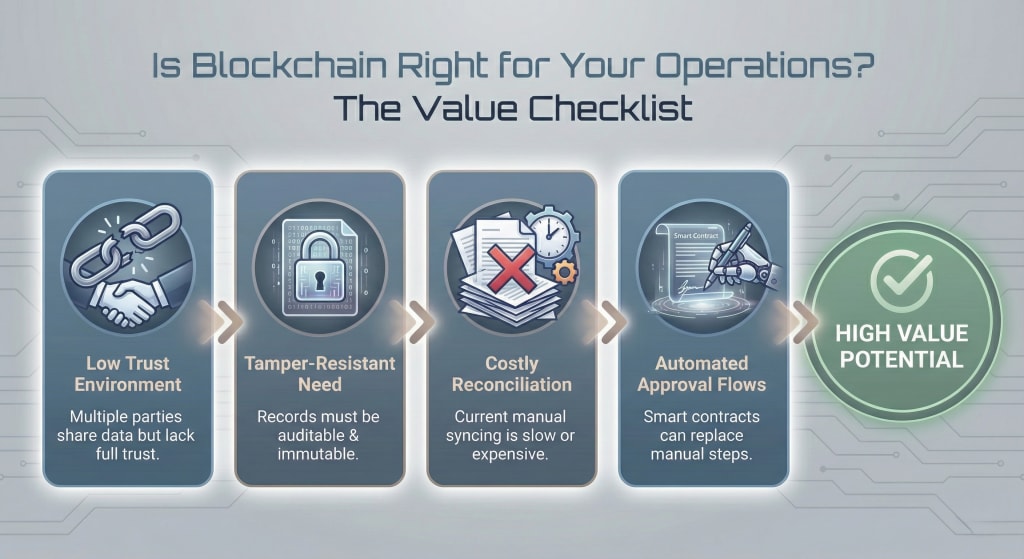
Understanding Where Blockchain Actually Fits in Business Operations
One of the most common mistakes in blockchain business adoption is applying blockchain everywhere. In reality, blockchain creates value only when specific conditions are met.
Blockchain works best when:
- multiple parties share data but don’t fully trust each other
- records must be tamper-resistant and auditable
- reconciliation between systems is costly or slow
- automation through smart contracts can replace manual approval flows
If your operations already rely on a single trusted database with minimal coordination overhead, blockchain may add complexity rather than value.
The most successful blockchain in business implementations start by identifying friction points, not by selecting technology.
Defining Business Objectives Before Engaging a Blockchain Development Company
Before working with a blockchain development company, businesses need to define what success looks like operationally. Technology should support outcomes, not drive them.
Clear objectives often include:
- reducing settlement or processing time
- lowering operational or compliance costs
- increasing transparency across partners
- automating contractual enforcement
When objectives are unclear, even the best blockchain development companies end up building systems that don’t align with business realities.
For organizations at this stage, our blockchain consulting services help translate business goals into technical architecture.
Choosing the Right Blockchain Architecture for Your Blockchain Business
Not all blockchains serve the same purpose. Selecting the wrong architecture can limit scalability or introduce unnecessary constraints.
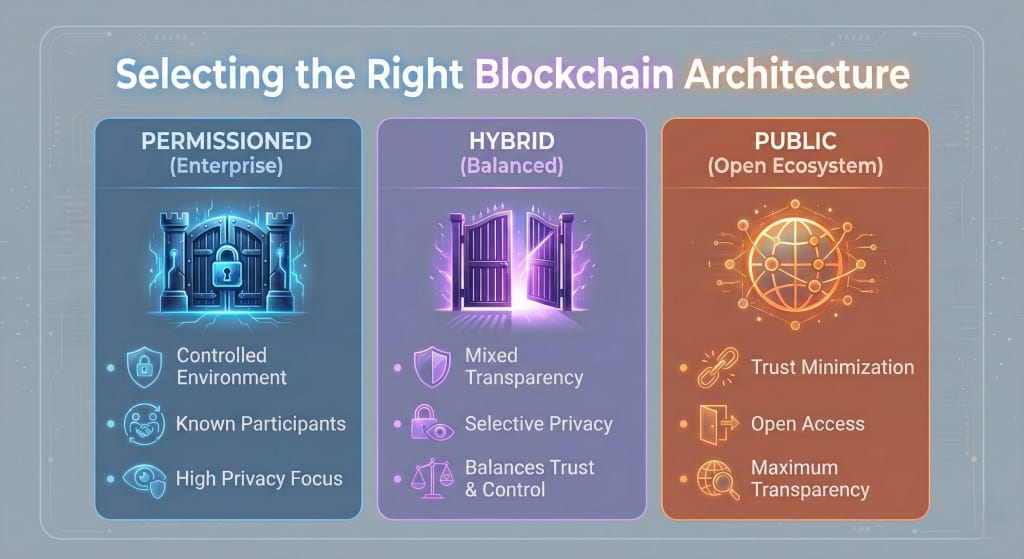
Businesses typically choose between:
- permissioned blockchains for controlled enterprise environments
- public blockchains for open ecosystems and trust minimization
- hybrid models that balance transparency and privacy
Each option affects governance, compliance, performance and cost. Leading blockchain technology companies evaluate architecture based on business constraints, not trends.
A capable blockchain development company will guide this decision with trade-off analysis rather than default recommendations.
Integrating Blockchain Into Existing Business Systems
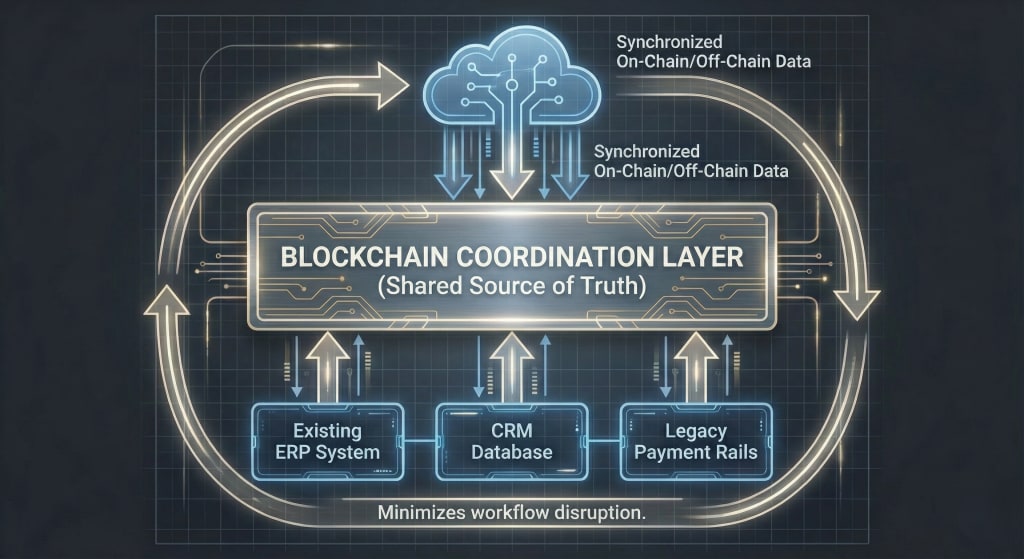
Blockchain rarely replaces core systems outright. Instead, it acts as a coordination layer that integrates with ERP, CRM, payment systems and data warehouses.
Effective integration focuses on:
- minimizing disruption to existing workflows
- syncing on-chain and off-chain data reliably
- ensuring staff don’t need blockchain expertise to operate systems
This is where many blockchain initiatives stall. Without careful integration planning, blockchain becomes an isolated tool rather than an operational asset.
For teams navigating integration challenges, contact us to get a free consulatation.
Operational Governance as a Core Blockchain Business Requirement
Blockchain introduces new governance responsibilities. Once processes are automated, businesses must control how changes are made and who can make them.
Strong governance frameworks address:
- access control and permission management
- upgrade and change approval processes
- auditability and compliance requirements
Top-performing blockchain business implementations treat governance as an operational function, not a technical detail. This ensures systems remain adaptable without sacrificing control.
Managing Cost, Risk, and ROI in Blockchain Implementation
Blockchain adoption must make financial sense. Businesses evaluating blockchain often underestimate operational costs while overestimating short-term returns.
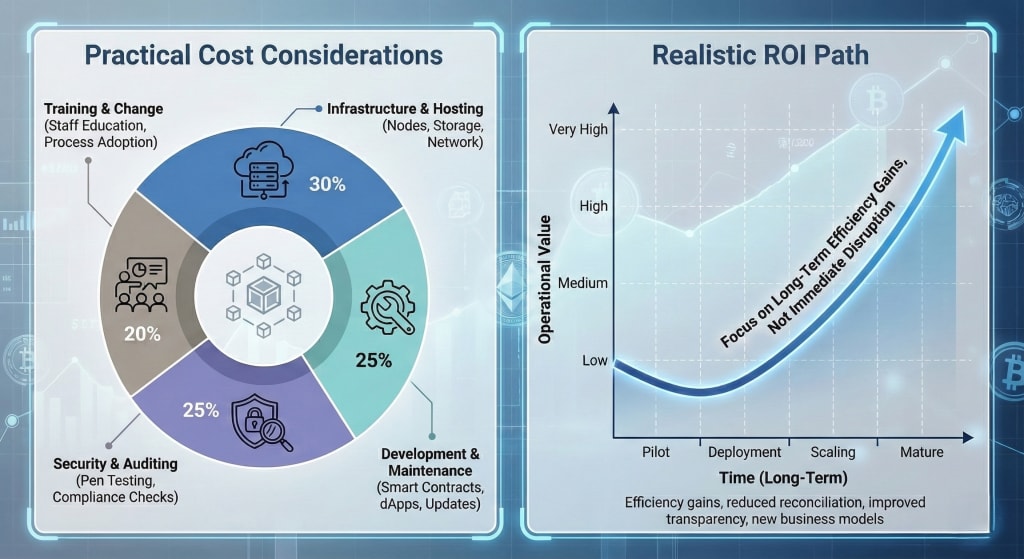
Practical cost considerations include:
- infrastructure and hosting
- development and maintenance
- security and auditing
- training and change management
The best blockchain development companies help clients model ROI realistically, focusing on long-term efficiency gains rather than immediate disruption.
Clear cost modeling prevents stalled pilots and builds internal stakeholder confidence.
Scaling Blockchain Solutions Beyond Pilot Projects
Many blockchain initiatives fail after the pilot phase. The technology works, but scaling introduces new challenges around performance, governance and organizational readiness.
To scale successfully, businesses must:
- formalize operational ownership
- standardize processes across departments
- establish clear success metrics
- invest in long-term support
Leading blockchain technology companies design systems with scale in mind from day one, avoiding fragile pilot architectures.
For businesses looking to build and scale custom dApps, get started with Eth Elite.
How the Best Blockchain Development Companies Support Long-Term Adoption
Blockchain is not a one-time deployment. It evolves with regulations, markets, and business strategy.
The best blockchain development companies act as long-term partners by:
- supporting upgrades and governance changes
- monitoring system performance
- adapting solutions as business needs evolve
This partnership model ensures blockchain remains an operational advantage rather than a technical burden.
Choosing the right blockchain development company is often the most critical decision in a blockchain initiative.
FAQ: Blockchain in Business Operations
Q: Is blockchain suitable for all businesses?
A: No. It’s most effective where multi-party coordination and trust issues exist.
Q: Do blockchain projects require replacing existing systems?
A: Usually not. Blockchain typically integrates with existing infrastructure.
Q: How long does blockchain implementation take?
A: Timelines vary, but production systems usually take several months, not weeks.
Q: Are permissioned blockchains better for enterprises?
A: Often yes, depending on compliance and privacy needs.
Q: How do businesses measure blockchain ROI?
A: Through efficiency gains, reduced reconciliation costs, and improved transparency.
Conclusion
Implementing blockchain in business operations is about solving real coordination and trust problems. Companies that succeed approach blockchain with clear objectives, realistic expectations, and strong operational planning.
By working with experienced blockchain technology companies and choosing a capable blockchain development company, businesses can move beyond pilots and build systems that deliver lasting value. Teams like Eth Elite focus on aligning blockchain architecture with actual business workflows, not just deploying contracts for the sake of decentralization.
When implemented thoughtfully, blockchain becomes not just a technology upgrade, but a foundation for more efficient, transparent and resilient business operations.
Share with your community!