Loading blog post...


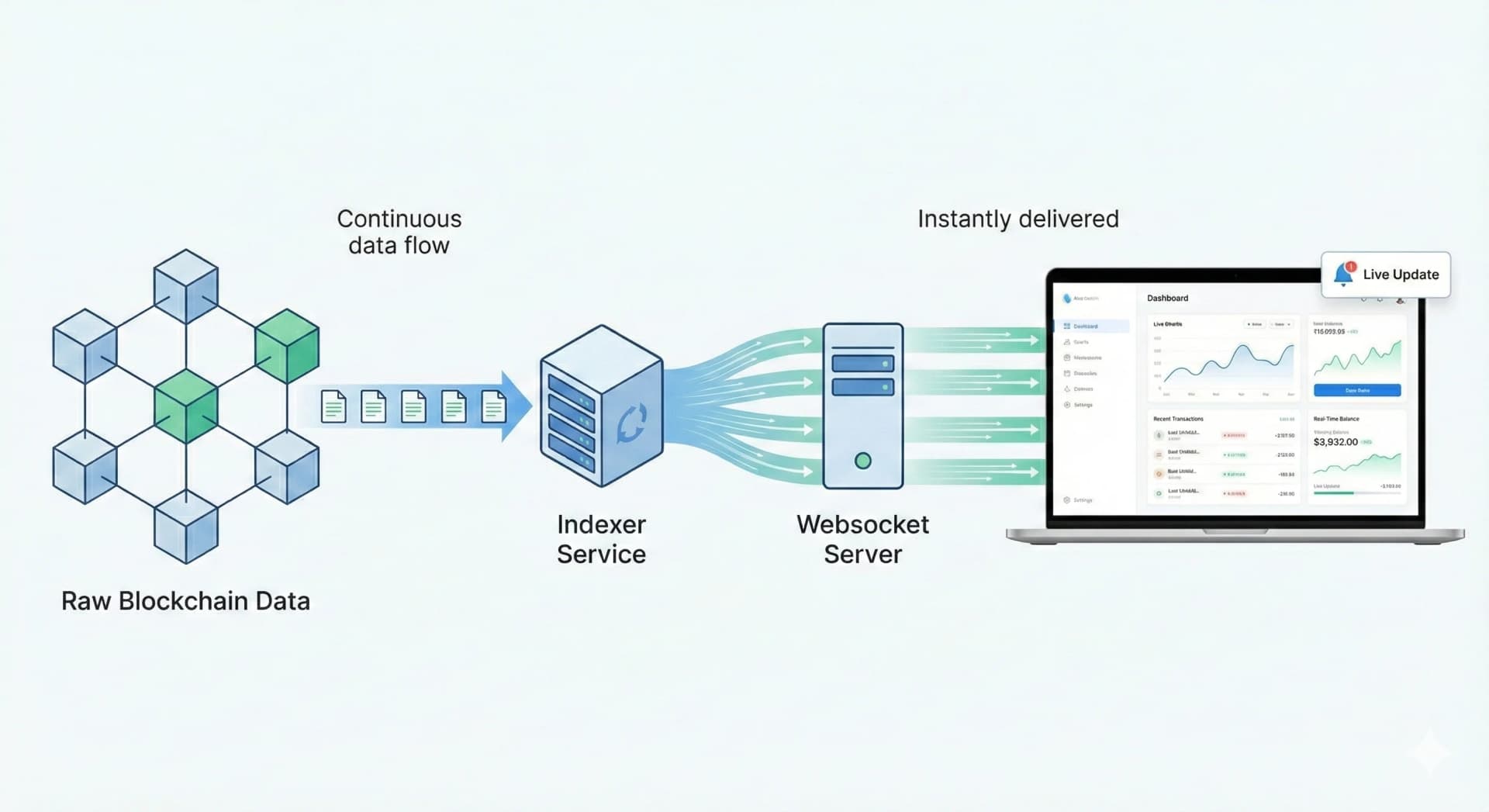
7 Core Building Blocks of a Scalable Web3 Website
Most Web3 projects fail during traffic spikes because they treat decentralization as a UI feature rather than infrastructure. Discover the 7 essential building blocks from wallet identity to real-time data handling needed to engineer a scalable, production-grade Web3 website from day one.
A Web3 website is not just a landing page with a wallet button. It is a live interface between users and decentralized infrastructure - wallets, smart contracts, on-chain data, and off-chain services must all work together without friction.
Many projects collapse under traffic spikes, confusing UX, or fragile integrations because they treat Web3 websites like traditional web products. The best Web3 websites are engineered to scale from day one, both technically and operationally.
This guide breaks down the 7 core building blocks every scalable Web3 website must have, using patterns drawn from real-world web3 website examples and production-grade web3 sites.
1. Frontend Architecture Designed Specifically for Web3 Websites
Traditional frontend setups fail quickly in Web3 environments. User actions are slower, confirmations are asynchronous, and data sources are decentralized. A scalable frontend must be engineered around these realities.
Strong web3 websites use a hybrid architecture that balances decentralization with performance:
- immutable frontend builds for integrity
- decentralized hosting for censorship resistance
- CDN-backed delivery for speed
- deterministic deployments for trust
This ensures the site stays fast without sacrificing the principles Web3 users expect.
For every custom dApp we build at EthElite, we design the website as its first touchpoint. The landing page clearly reflects how the product works, what it enables, and what users should expect from the dApp, because in Web3, the landing page is where trust and understanding begin. Consult today to start building your product.
2. Wallet Connectivity as the Identity Layer Across Web3 Sites
In Web3, wallets replace usernames, passwords, and sessions. That makes wallet integration one of the most critical layers in any Web3 website.
Scalable web3 sites design wallet flows that:
- support multiple wallet providers
- handle network mismatches gracefully
- avoid blind signing experiences
- clearly explain what users are approving
Bad wallet UX doesn’t just hurt conversions, it actively creates security risk.
The best Web3 websites treat wallet interactions as a product experience, not a technical afterthought.
For secure wallet UX design, consult us now.

3. Smart Contract Interaction Layer in High-Quality Web3 Website Examples
Directly calling smart contracts from a UI is a recipe for failure. Users don’t understand reverts, gas errors, or silent failures and they shouldn’t have to.
In mature web3 website examples, there’s always a dedicated interaction layer that:
- simulates transactions before execution
- estimates gas accurately
- displays readable error messages
- retries safely during network issues
Here, pointers help clarify impact:
This layer prevents:
- failed transactions
- wasted gas
- user confusion
- accidental approvals
4. Real-Time Blockchain Data Handling That Scales With Users
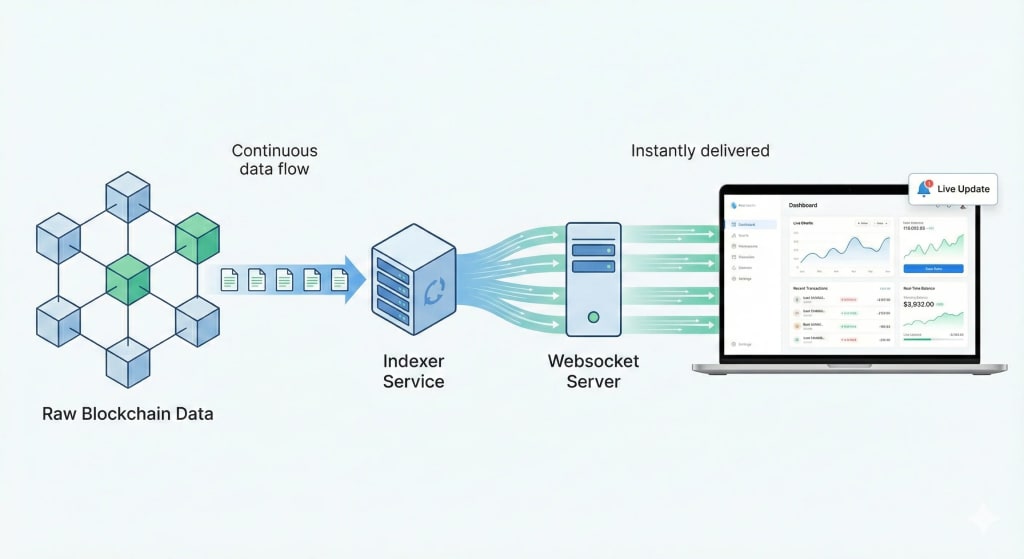
Static data breaks Web3 UX. Balances, positions, staking rewards, NFTs, and governance states change constantly. A scalable Web3 website must handle live, on-chain data without overwhelming the frontend.
High-performing web3 websites examples rely on:
- indexed blockchain data
- event-driven updates
- websocket-based streams
- intelligent caching strategies
Accuracy matters more than speed. Showing incorrect data damages trust instantly.
5. Security-First UX Built Into Web3 Sites From Day One
Security isn’t only enforced by smart contracts — it’s enforced by interfaces. Many attacks succeed because users don’t understand what they’re signing or interacting with.
The best Web3 websites bake security into UX by:
- labeling contract actions clearly
- displaying permissions and risks
- warning users before irreversible actions
- preventing dangerous default behaviors
A well-designed interface reduces exploit risk without increasing friction.
6. Backend Services That Support, Not Replace, Decentralization
Even decentralized apps need backend systems. The difference is how much trust those systems require.
Scalable web3 sites use backend services for:
- blockchain indexing
- notifications and alerts
- analytics
- automation and monitoring
But they avoid:
- custody of private keys
- execution of critical logic
- dependency on a single service
Backends should enhance reliability without becoming single points of failure.
7. Scalability and Upgrade Planning Seen in the Best Web3 Websites
Many Web3 projects break because they only think about scaling after launching. Scalable Web3 websites plan for growth before the first user arrives.
Long-term web3 website examples account for:
- traffic spikes during launches
- new chains and networks
- contract upgrades
- feature modularity
- evolving UX requirements
This future-proofing prevents expensive rewrites and broken user journeys.
FAQ: Building Scalable Web3 Websites
Q: Are Web3 websites fundamentally different from Web2 sites?
A: Yes. They interact directly with wallets, blockchains, and smart contracts.
Q: Do the best Web3 websites fully decentralize everything?
A: No. They decentralize where it matters and optimize everywhere else.
Q: Why do many web3 sites feel slow or confusing?
A: Because wallet flows, data handling, and contract interactions are poorly abstracted.
Q: Can Web3 websites scale to millions of users?
A: Yes, with indexed data, modular backends, and optimized frontends.
Q: Is backend development still necessary for Web3 websites?
A: Absolutely. Decentralization doesn’t eliminate infrastructure needs.
Conclusion
A scalable Web3 website is not a UI, it’s an execution layer for decentralized systems. The best Web3 websites succeed because they treat frontend architecture, wallet UX, contract interaction, data pipelines, security, backend services, and scalability as equally critical components.
When any one of these blocks is weak, the entire system suffers.
Build all seven correctly, and your Web3 website becomes infrastructure, not just a page.
Share with your community!