Loading blog post...


5 Key Layers in Token Smart Contracts Architecture Explained
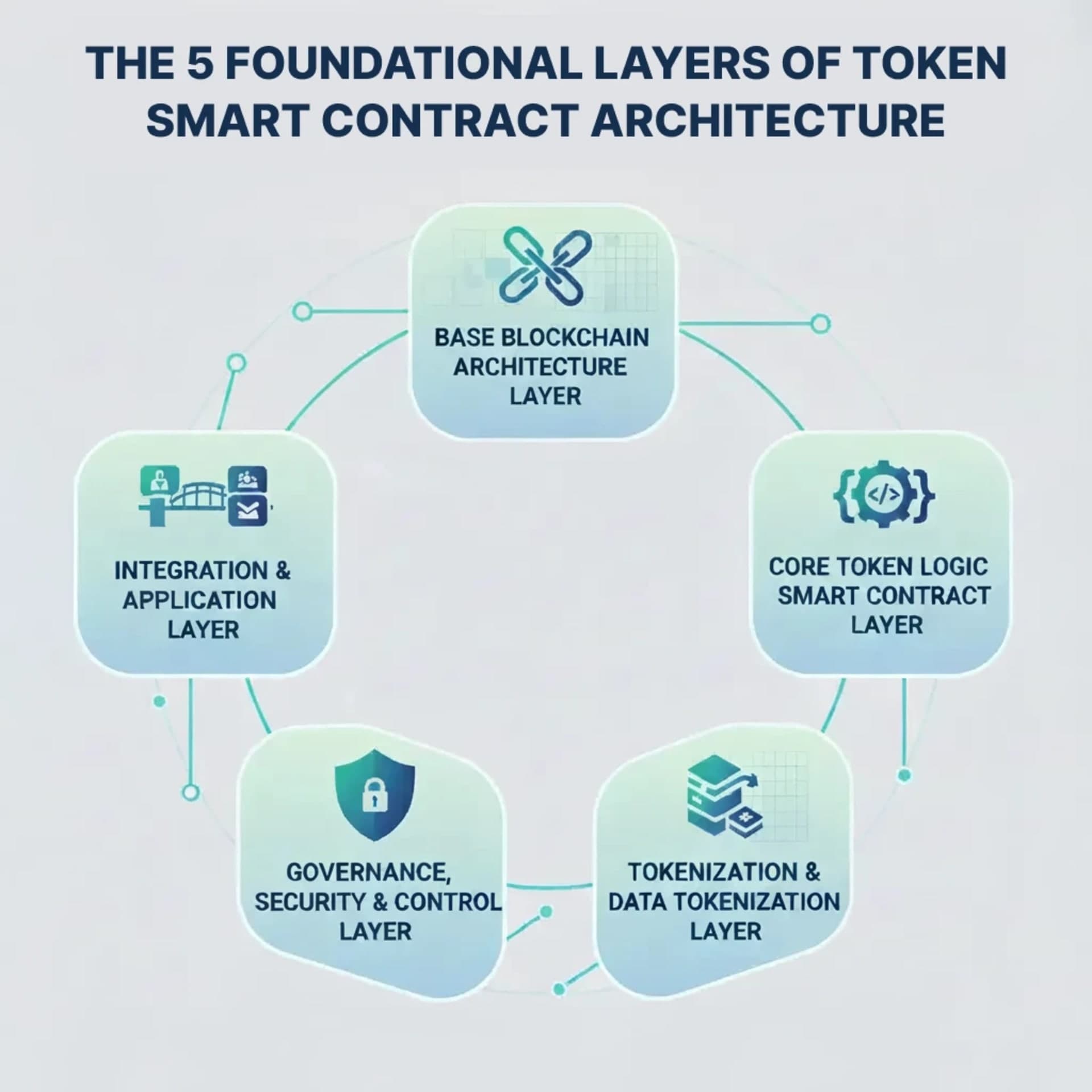
Tokens are often treated as simple digital assets, but modern Web3 systems require a more sophisticated approach. Successful token design isn't just about writing code; it’s about system engineering. This guide deconstructs the five essential layers of token smart contract architecture from the base blockchain execution model and core logic to governance, tokenization, and ecosystem integration. Understanding these layers is the key to building resilient, scalable, and economically meaningful digital assets.
Tokens are often treated as simple digital assets, but in reality, they are complex systems built on multiple layers of logic, governance, security, and integration. A token is not just a contract—it is an ecosystem of rules, infrastructure, and interactions shaped by deliberate smart contract architecture.
Modern token systems extend far beyond a single smart contract or a single blockchain standard. They span multiple chains, standards, and use cases, connecting blockchain architecture, tokenization, and real-world applications into a unified framework.
This guide explains the five foundational layers that define token smart contract architecture across modern blockchain smart contracts and token systems.
1. Base Blockchain Architecture Layer
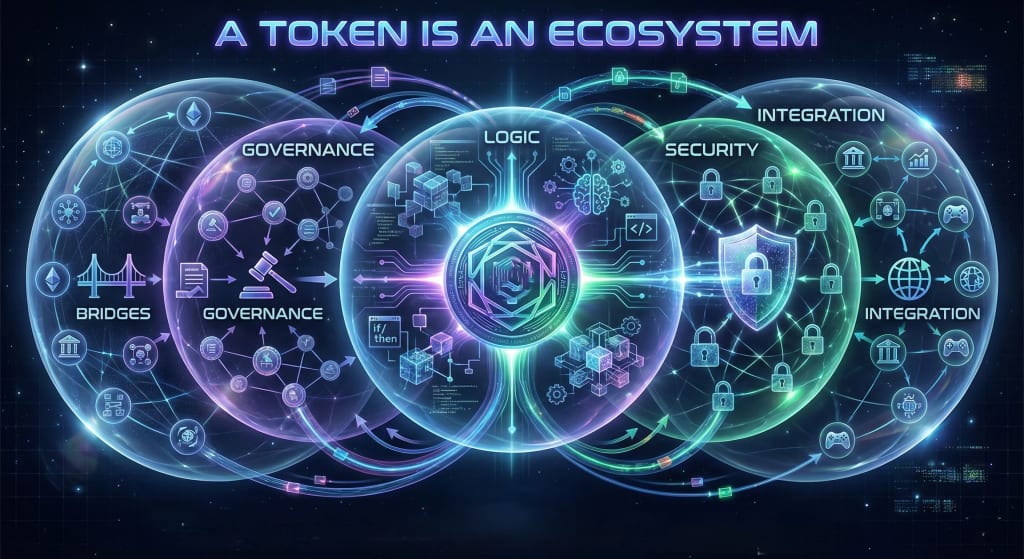
Every token system begins with the underlying blockchain architecture. This layer determines the technical environment in which tokens operate.
Different blockchains impose different architectural constraints:
- execution models (account-based vs parallel execution)
- consensus mechanisms
- transaction throughput and latency
- fee structures and scalability limits
For example, Ethereum-based tokens follow sequential execution models, while Solana-based tokens rely on parallel processing. These differences directly shape how tokens are designed and how smart contracts interact.
Understanding this layer is essential before any crypto token development begins because token behavior is shaped by the blockchain it runs on.
For teams evaluating chain selection, our blockchain consulting services help align technical architecture with product goals.
2. Core Token Logic and Smart Contract Layer
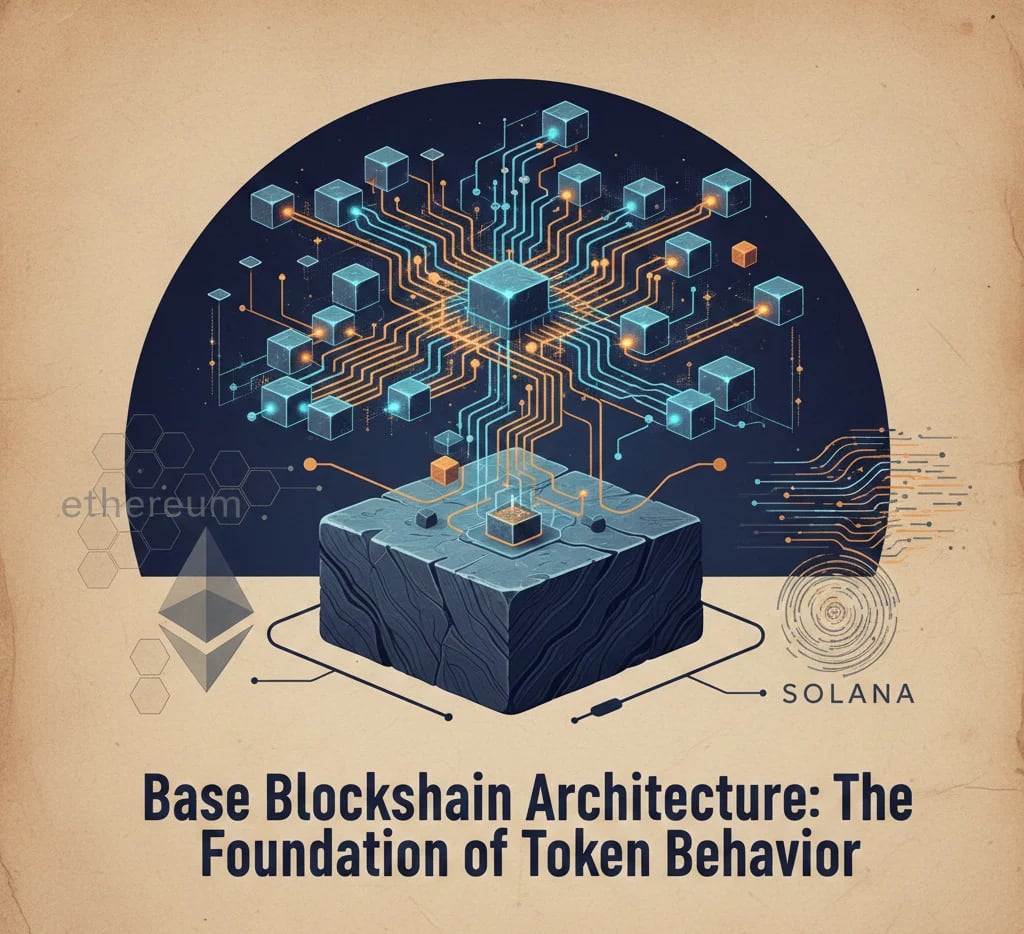
The second layer defines how tokens behave. This is where blockchain smart contracts encode rules for ownership, transferability, supply, and permissions.
This layer is not limited to a single standard. Modern token systems may involve:
- fungible tokens (ERC20, SPL, BEP20)
- non-fungible tokens (ERC721, ERC1155)
- hybrid token models
- chain-specific token frameworks
At this layer, a smart contract translates economic intent into deterministic logic. Every decision—minting rules, burn mechanisms, transfer constraints lives here.
Poorly designed logic at this layer can destabilize entire ecosystems, which is why architecture matters more than syntax in blockchain programming.
Our smart contract development services focus on scalable, modular contract design. Contact EthElite to get a free consultation today.
3. Data Tokenization Layer
Tokens rarely exist without meaning. This layer defines what tokens represent and why they exist.
Through tokenization, tokens can represent:
- real-world assets
- governance rights
- access permissions
- digital ownership
- economic participation
Beyond assets, data tokenization introduces a new paradigm where data itself becomes a programmable resource. Tokens can control access to datasets, APIs, or digital identities.
Here, pointers help clarify impact:
Tokenization enables:
- fractional ownership models
- programmable rights and restrictions
- monetization of digital and physical assets
This layer bridges abstract blockchain logic with real-world value. Without it, tokens become technically functional but economically meaningless.
For teams designing meaningful token models, our token design services help structure sustainable tokenization frameworks.
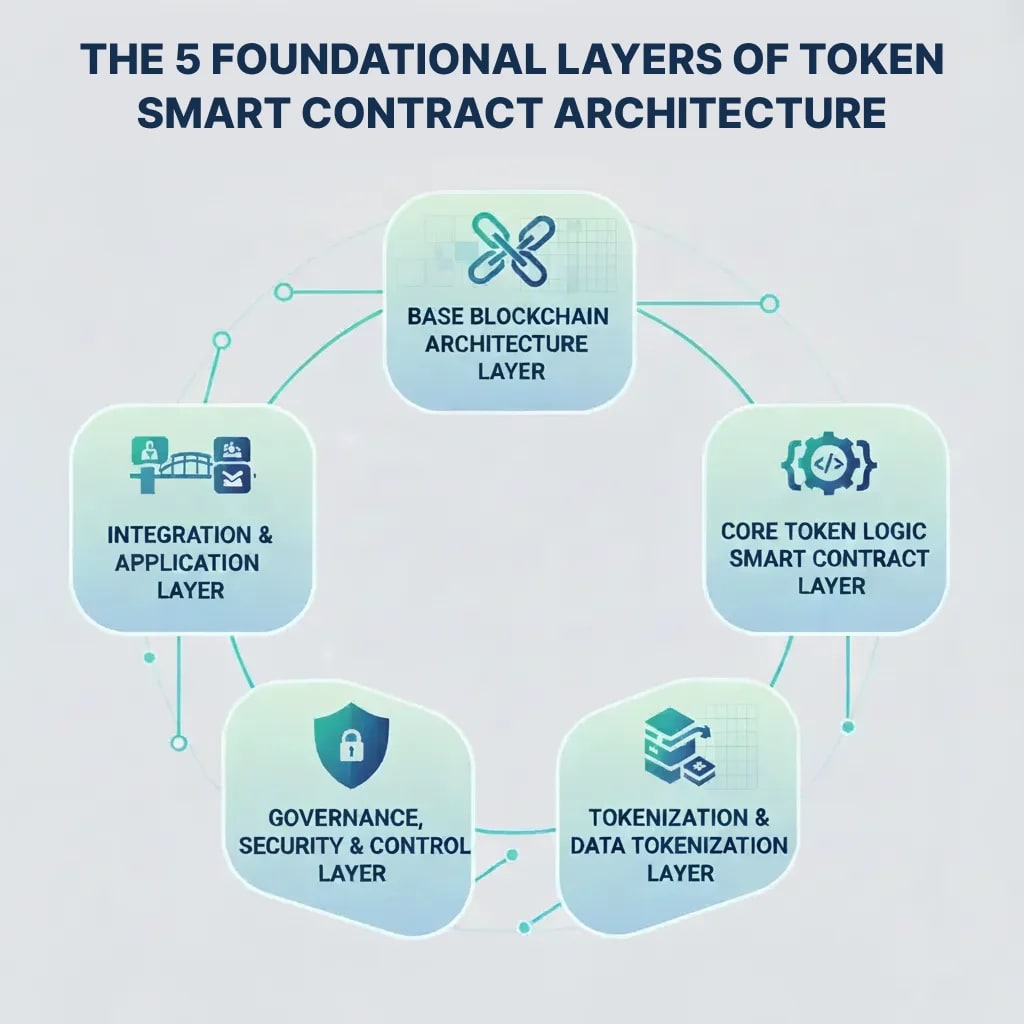
4. Governance, Security, and Control Layer in Smart Contract Architecture
Every token system must answer a difficult question: who controls change?
This layer defines governance mechanisms, upgradeability patterns, and security boundaries within smart contract architecture.
Key components include:
- role-based access control
- multisignature governance
- upgradeable contract patterns
- emergency controls and circuit breakers
This layer determines whether a token system is decentralized, centralized, or somewhere in between. It also defines how resilient the system is under attack or failure.
In modern crypto token development, governance is not an afterthought, it is a structural design decision.
5. Integration and Application Layer
The final layer connects tokens to real-world usage. Tokens gain relevance only when they interact with external systems.
This layer includes:
- wallets and user interfaces
- DeFi protocols and marketplaces
- cross-chain bridges and interoperability tools
- enterprise and consumer applications
At this layer, tokens become part of broader ecosystems rather than isolated contracts. Integration complexity often exceeds contract complexity in mature systems.
This layer also determines composability: the ability of tokens to interact seamlessly with other blockchain smart contracts.
FAQ: Token Smart Contract Architecture
Q: Is smart contract architecture different from writing a smart contract?
A: Yes. Writing code is one part; architecture defines how multiple contracts, chains, and governance systems interact.
Q: Does token architecture depend on blockchain programming?
A: Absolutely. Execution models and chain design shape token behavior.
Q: How is data tokenization different from asset tokenization?
A: Asset tokenization represents ownership of assets, while data tokenization controls access and value of information.
Q: Do all tokens require governance layers?
A: Not all, but scalable systems benefit from structured governance.
Q: Why is blockchain architecture critical for token systems?
A: It determines scalability, security, and interoperability limits.
Conclusion
Token systems are no longer simple smart contracts, they are also layered architectures that combine blockchain programming, tokenization, governance, and integration into unified systems.
Understanding these five layers of smart contract architecture helps teams design tokens that are not only functional but resilient, scalable, and meaningful. This is the approach EthElite applies treating token design as system engineering rather than isolated contract deployment.
In modern Web3 ecosystems, successful blockchain smart contracts are not defined by standards alone, they are also defined by architecture.
Share with your community!